
CEFR B2(中上級) | British English | 1,306 words
はじめに
ピーターラビットと聞くと、青い上着を着たいたずら好きなウサギを思い浮かべる方が多いのではないでしょうか。
けれど、その物語を生み出したビアトリクス・ポターの人生をたどっていくと、絵本の向こう側に、もう一つの大きな物語が見えてきます。
舞台はイングランド北西部の湖水地方。
石垣に囲まれた小道、羊のいる丘、雨に濡れる農場、静かな湖。
ポターはこの土地をただ「美しい風景」として眺めたのではなく、細部まで観察し、物語に描き、やがて自ら農業を営み、守ることを選びました。
今回のエッセイは、ピーターラビットの誕生からヒルトップ、そしてポターが後世へ残した湖水地方の景観までを、旅をするようにたどります。
絵本を知っている方なら、見慣れた世界の背景が少し違って見えてくるはずです。
知らない方にも、一人の女性が「好きな場所」とどう向き合い続けたのかという物語として楽しんでいただければと思います。
Walking Into the World of Peter RabbitBeatrix Potter, Hill Top, and the Lake District
A Rabbit Somewhere Beyond the Wall
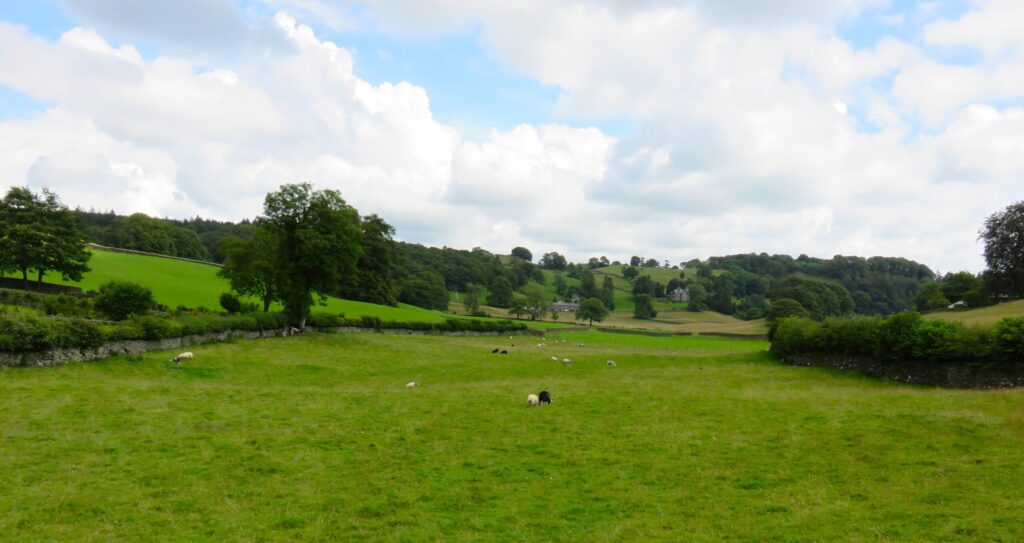
Near Sawrey is the sort of village that makes sensible adults behave strangely. A dry-stone wall runs beside the lane, rain has polished the slate roofs, and a vegetable garden appears behind a gate. Then something moves in the grass. For half a second, I find myself looking for a blue jacket.
This is one of the pleasures of travelling through Beatrix Potter’s Lake District. The world of Peter Rabbit does not feel as though it was placed on top of the landscape by an author. It seems to have grown out of the soil.
The Lake District is full of dramatic views, but Potter country often works through smaller things: a narrow path, a mossy wall, a patch of cabbages, a wooden door, a field rising behind a farmhouse. These are ordinary details, yet they are also the furniture of her stories.
Walk slowly around Near Sawrey and towards Hawkshead and the connection becomes difficult to ignore. Gates matter here. Hedges matter. Weather certainly matters. A shower can arrive without consulting your plans and disappear ten minutes later, leaving the hills newly washed and everyone pretending this was exactly what they expected.
Peter Rabbit belongs naturally in such a place. He is curious about what lies beyond a boundary, and the Lake District is a landscape that continually invites you to look around the next wall.
How Peter Rabbit Was Born

Peter’s story began not in a publisher’s office but in a letter. On 4 September 1893, Beatrix Potter wrote to five-year-old Noel Moore, who was recovering from scarlet fever. She told him a story about four little rabbits — Flopsy, Mopsy, Cottontail and Peter — and illustrated it with small drawings. Peter was inspired in part by her own pet rabbit, Peter Piper.
Years later, encouraged to turn her picture letters into books, Potter reworked the story. She wanted the book to be small enough for a child to hold and inexpensive enough for families to buy. Publishers were not immediately convinced. After several rejections, she paid to have The Tale of Peter Rabbit printed privately in 1901.
Frederick Warne & Co. reconsidered the project, and a colour edition appeared in October 1902. It was an immediate success.
The publishing history is charming, but it also tells us something important about Potter. She was not simply a woman who happened to invent a lovable rabbit. She thought carefully about the physical experience of a child reading a book — its size, its price, its pictures, even the way it sat in small hands.
Her animals were created with the same attention. Potter had spent years observing and drawing the natural world. Rabbits crouch with the weight of rabbits. Squirrels balance like squirrels. Plants are not vague decorations but recognisable living things. She could give an animal a coat, a kitchen and very human worries without forgetting the creature underneath.
That balance is one reason Peter survives so well. He is a storybook character, but he never becomes entirely detached from the garden.
The Real Places Inside the Little Books
Potter’s connection with the Lake District had begun long before Peter became famous. She first visited in 1882, at the age of sixteen, when her family spent a summer at Wray Castle on the shore of Windermere. They returned to the region in later years, and Potter used those holidays to explore, sketch and study the landscape.
This habit of looking closely became part of her creative method.
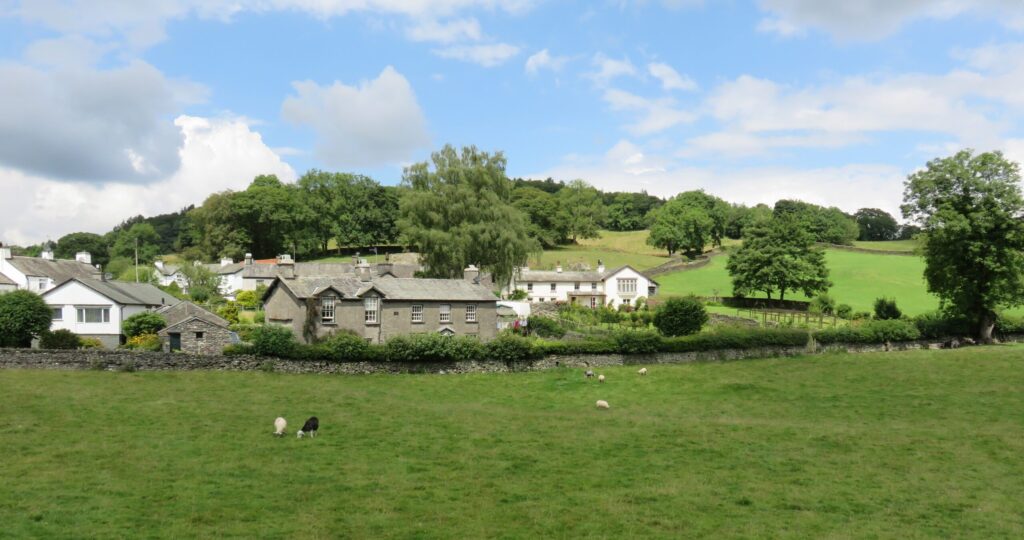
At Lingholm, beside Derwentwater, the wooded shoreline helped shape The Tale of Squirrel Nutkin. In and around Sawrey and Hawkshead, houses, lanes, gardens and farm buildings later appeared in her illustrations. The National Trust notes that the area around these villages provided settings for nine of her little books.
For a traveller, this changes the experience of the stories. You are no longer searching for one exact “Peter Rabbit location”. Instead, you begin noticing how Potter assembled a world from many real details.
A stone wall becomes more interesting because one can imagine a rabbit squeezing beneath it. A cottage window seems ready for a cat to appear. A vegetable patch is no longer merely horticulture; it is temptation arranged in rows.
The books are full of boundaries — gardens, burrows, gates, cupboards, paths and farmyards. Children understand immediately why crossing such boundaries is exciting. Adults may understand something else: the enormous comfort of returning home after making a poor decision.
That is why walking here feels strangely like reading. The landscape keeps offering small visual sentences, and Potter taught generations of readers how to notice them.
Hill Top and a Different Life
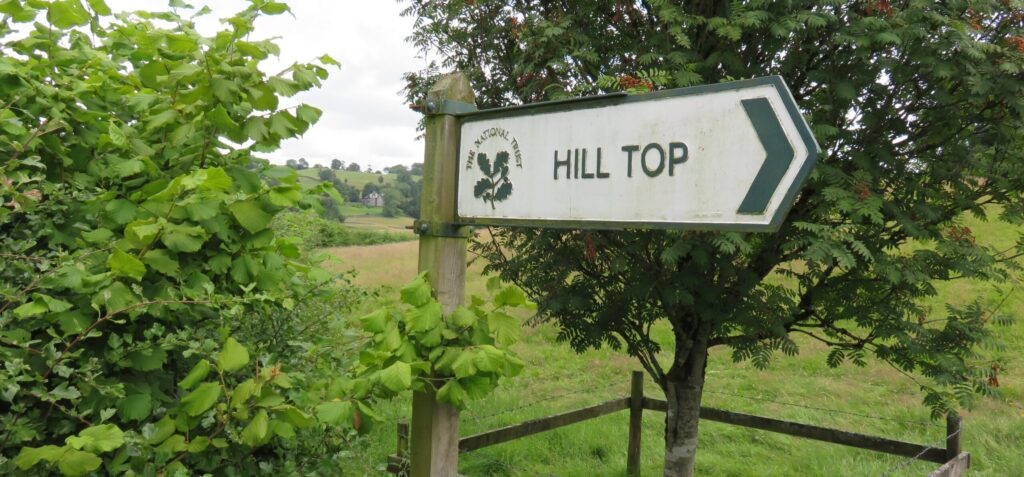
In 1905, using money earned from her books, Potter bought Hill Top, a seventeenth-century farm in Near Sawrey. It was more than a country retreat. It became a turning point.
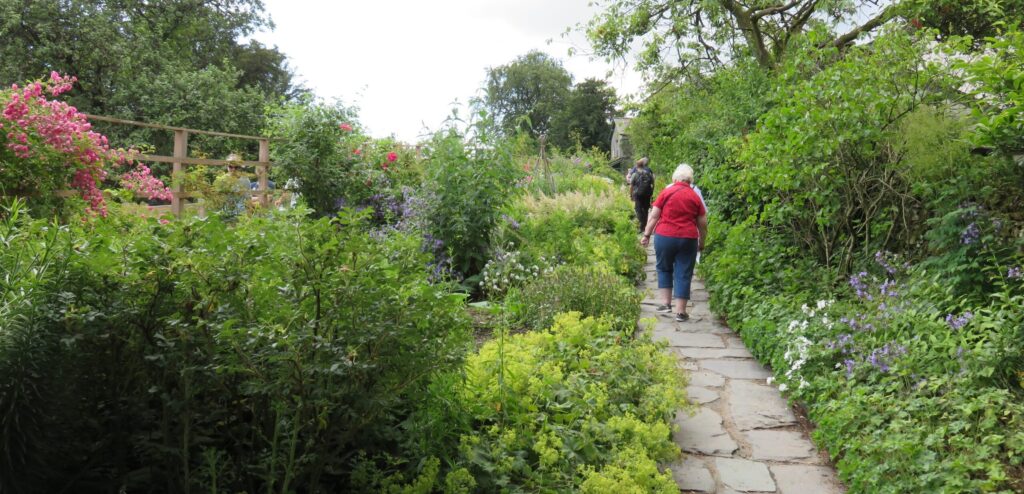
The approach today is wonderfully modest. There is no grand avenue announcing the home of a famous writer. You pass through the village and enter a small cottage garden where flowers, herbs, fruit and vegetables share the space with cheerful informality. The path towards the house is itself familiar from Potter’s illustrations.
Inside, Hill Top feels personal rather than monumental. Rooms are small, furniture is practical, and objects from Potter’s life sit in places that still suggest use. It is easy to understand why scenes from the house and garden entered later books.
But Hill Top also led Potter away from a life defined only by publishing.
She became increasingly serious about farming. She bred Herdwick sheep, learned from local shepherds, entered agricultural shows and earned respect in a community where literary fame was not the most useful qualification.
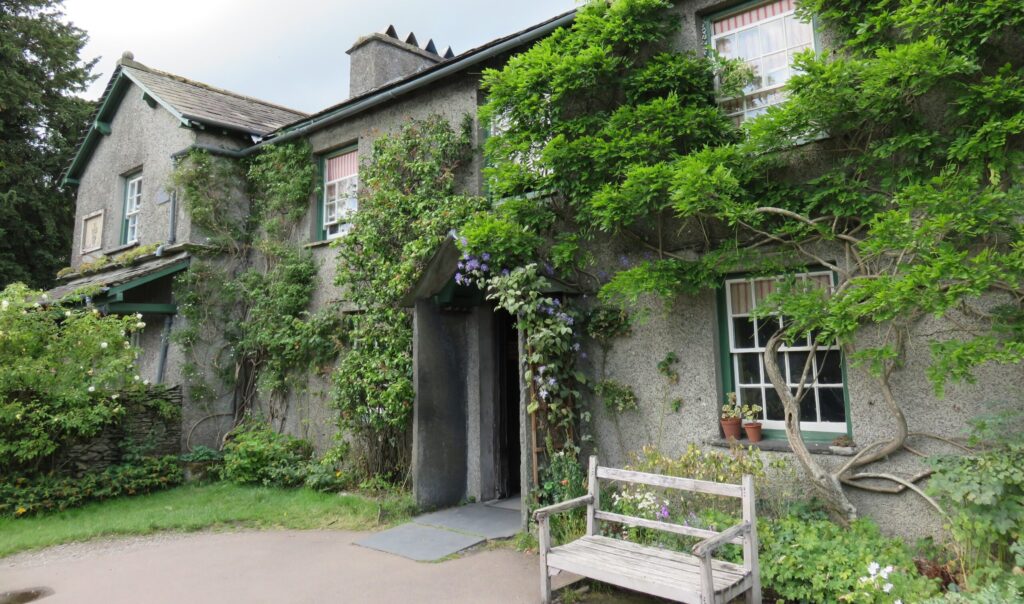
After marrying local solicitor William Heelis in 1913, she lived nearby at Castle Cottage and devoted more of her time to farms, land and village life.
This is the part of her story that can surprise visitors who arrive mainly for Peter Rabbit. The author in the bonnet becomes a farmer discussing sheep. The illustrator of tiny domestic scenes becomes a landowner making practical decisions.
Yet the two lives are not opposites. They grow from the same habit: looking carefully at a place and deciding that it matters.
What Beatrix Potter Left Behind
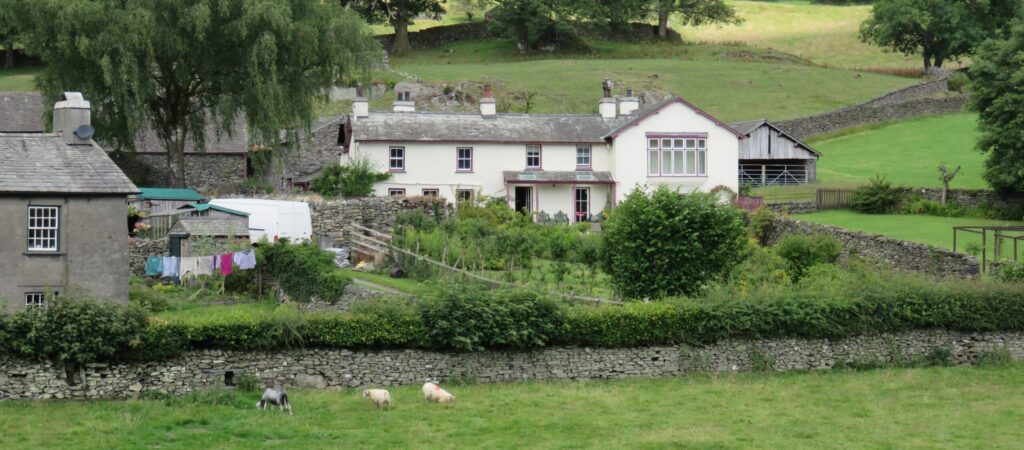
Potter did not only draw the Lake District or write about it. She helped protect it.
Over the years, she bought farms and land, often with the aim of preserving the traditional pattern of Lakeland farming and preventing damaging development. She worked closely with the National Trust, an organisation connected to her life from an early stage through her friendship with Canon Hardwicke Rawnsley, one of its founders.
When Potter died in 1943, she left about 4,000 acres of land to the National Trust, together with farms and Herdwick flocks. Her legacy helped preserve a landscape that was not simply picturesque, but lived in and worked.
That distinction still matters. The English Lake District was inscribed as a UNESCO World Heritage Site in 2017 as a cultural landscape shaped by farming, artistic inspiration and the development of conservation ideas. Its beauty comes partly from the continuing relationship between people and place: sheep on the fells, stone walls across fields, farms tucked into valleys and paths worn by use.
So a Peter Rabbit journey should leave time for more than Peter Rabbit.
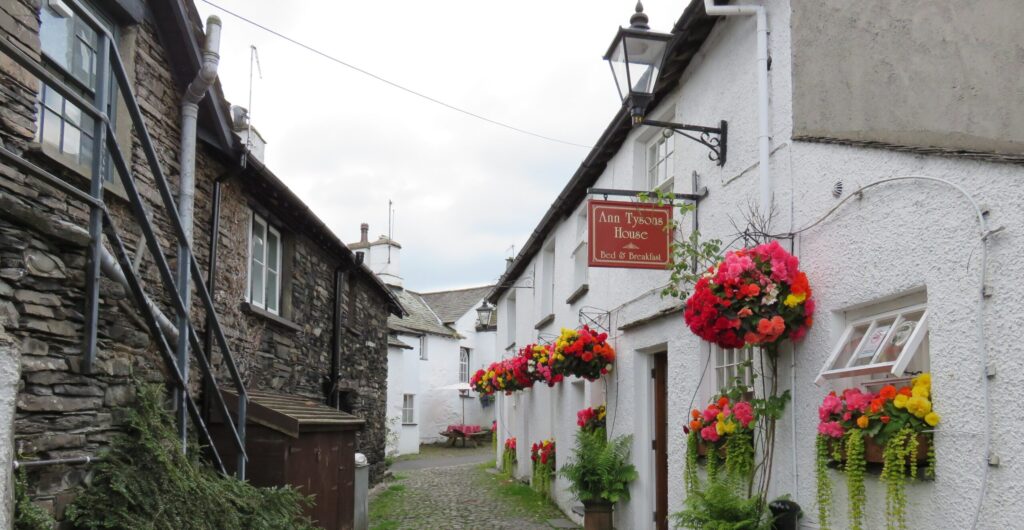
Visit Hill Top, certainly. Walk through Hawkshead. Stand beside Windermere or Derwentwater and watch the light change over the hills. But also notice the walls, gates, working fields and sudden rain. Bring a waterproof. In Britain, this is less a travel tip than a sign of emotional maturity.
By evening, when the fells turn blue-grey and cottage windows begin to glow, Potter’s life makes more sense. She came to this landscape as a girl, studied it as an artist, used it as a storyteller, worked it as a farmer and defended it as a conservationist.
Many visitors arrive looking for the world inside the little books.
The lovely surprise is discovering that much of it is still outside.
ピーターラビットの世界へ|本文和訳ビアトリクス・ポター、ヒルトップ、そして湖水地方
石垣の向こうに、ウサギがいそうな場所
ニア・ソーリーという村にいると、普段なら分別のある大人まで、少しおかしな気分になります。細い道の脇にはドライストーンの石垣が続き、雨に濡れたスレート屋根は深い色に光っています。門の向こうには小さな菜園。草むらで何かが動いた気がすると、ほんの一瞬、「青い上着が見えなかった?」と目で追ってしまうのです。
ビアトリクス・ポターゆかりの湖水地方を旅する楽しさは、まさにそこにあります。ピーターラビットの世界は、作家が現実の風景の上に空想を重ねて作ったというより、この土地そのものから自然に生まれてきたように感じられます。
湖水地方といえば、壮大な山や湖の景色が有名です。けれどポターの物語を思わせるのは、むしろもっと小さなものです。細い小道、苔むした石垣、キャベツ畑、木の扉、農家の裏に続く緑の斜面。どれも珍しいものではないのに、彼女の絵本を知っている人には、物語の舞台装置のように見えてきます。
ニア・ソーリーからホークスヘッドの方へゆっくり歩いてみると、そのつながりはいっそうはっきりします。ここでは門にも、生け垣にも意味があるように思えてきます。
そしてもちろん、天気も重要です。何の相談もなく雨が降り出し、10分後には何事もなかったように晴れる。丘は洗われたように鮮やかになり、周囲の人々も「最初からこうなると思っていました」という顔で歩き続けます。
そんな土地だからこそ、ピーターラビットがよく似合います。
彼はいつも境界の向こう側が気になって仕方のないウサギ。そして湖水地方もまた、「次の石垣の向こうには何があるのだろう」と、歩く人を誘い続ける場所なのです。
ピーターラビットは一通の手紙から生まれた
ピーターの物語が最初に生まれたのは、出版社でも湖水地方の庭でもありませんでした。
1893年9月4日、ビアトリクス・ポターは、猩紅熱から回復途中だった5歳のノエル・ムーアに一通の手紙を書きました。そこに登場したのが、フロプシー、モプシー、カトンテール、そしてピーターという4匹の子ウサギです。
手紙には小さな絵も添えられていました。ピーターのモデルの一つになったのは、ポターが実際に飼っていたウサギ、ピーター・パイパーでした。
数年後、絵入りの手紙を本にしてはどうかと勧められたポターは、この物語を絵本として作り直します。彼女がこだわったのは、子どもの手に収まる小ささと、家庭で気軽に買える価格でした。
ところが出版社の反応は芳しくありません。何度も断られた末、ポターは自分で費用を出し、1901年に『ピーターラビットのおはなし』を私家版として出版します。その後、フレデリック・ウォーン社が企画を再検討し、1902年10月にカラー版が刊行されました。これはたちまち人気を集めます。
この出版までの経緯を知ると、ポターという人の別の一面も見えてきます。彼女は単に「かわいいウサギを思いついた作家」ではありませんでした。子どもが本を手に取るときの感覚まで考えていたのです。本の大きさ、値段、絵の配置、幼い手の中でどのように感じられるか。そのすべてが作品の一部でした。
動物の描き方にも、同じ細やかさがあります。ポターは長年、自然を観察し、描き続けていました。彼女のウサギは、本物のウサギらしい重みで身をかがめます。リスは本物のリスのように枝の上で体のバランスを取ります。植物も、ただ「緑色の背景」として描かれているわけではありません。
服を着せ、台所に立たせ、人間のような心配事を与えても、その下にはきちんと動物がいる。この絶妙なバランスこそ、ピーターが今も古びない理由の一つなのでしょう。
彼は絵本の主人公でありながら、完全に庭から離れてしまったことがないのです。
小さな絵本の中に残る、本物の場所
ポターと湖水地方の関係は、ピーターラビットが有名になるずっと前から始まっていました。
1882年、16歳だった彼女は家族とともに初めて湖水地方を訪れ、ウィンダミア湖畔のレイ・カースルで夏を過ごしました。その後も一家は何度もこの地方で休暇を過ごし、ポターは自然の中を歩きながら、動植物や風景を観察し、スケッチを重ねていきます。
「よく見ること」は、やがて彼女の創作そのものになりました。
ダーウェント湖畔のリングホルムでは、森に包まれた湖岸の風景が『りすのナトキンのおはなし』へとつながりました。
ソーリーやホークスヘッド周辺では、家や小道、庭、農場の建物などが、後の作品の挿絵に次々と姿を変えて登場します。ナショナル・トラストによれば、この地域は9冊もの「小さな絵本」の舞台になりました。
このことを知ってから湖水地方を歩くと、「ピーターラビットのモデルになった場所はどこだろう」と一か所を探す旅ではなくなります。ポターがいくつもの実際の風景や小さな発見を組み合わせて、物語の世界を作っていたことに気づくからです。
石垣を見れば、その下をウサギがくぐれそうだと思う。小さな窓を見れば、今にも猫が顔を出しそうに思える。整然と並ぶ野菜畑さえ、ただの家庭菜園ではなく「誘惑が列になっている場所」に見えてきます。
ポターの物語には、庭、巣穴、門、戸棚、小道、農場といった「境界」がたくさん出てきます。子どもは、その境界を越えるわくわくを直感的に知っています。
一方、大人になると、少し無茶をしたあと家に帰れることの安心もよく分かります。
だからこの土地を歩くことは、どこか本を読むことに似ています。景色の中に短い文章が次々と現れ、ポターが「こんな小さなものにも目を向けてみて」と教えてくれているようなのです。
ヒルトップから始まった、もう一つの人生
1905年、ポターは本の印税を使い、ニア・ソーリーにある17世紀の農場、ヒルトップを購入しました。それは単なる田舎の別荘ではありませんでした。彼女の人生が大きく変わり始めた場所です。
現在ヒルトップを訪れても、「有名作家の家」にふさわしい壮大な入口はありません。村を抜け、小さなコテージガーデンへ入ると、花やハーブ、果物、野菜がほどよく入り混じっています。そして家へ続く庭の小道そのものが、ポターの挿絵で見た景色と重なります。
室内も記念館というより、誰かの暮らしがまだ残っている家という印象です。部屋は小さく、家具は実用的で、ポターが使った品々も、その場所で実際に使われていたことを想像させます。家や庭の景色が後の作品に登場したのも不思議ではありません。
しかしヒルトップは、彼女を出版中心の人生から、別の方向へも導きました。
ポターは次第に農業に本格的に取り組むようになります。湖水地方固有のハードウィック種の羊を育て、地元の羊飼いたちから学び、農業品評会にも参加しました。文学者として有名であることより、羊を見る目や土地を扱う力のほうが重視される世界で、彼女は少しずつ信頼を得ていきます。
1913年に地元の法律家ウィリアム・ヒーリスと結婚した後は、近くのカースル・コテージで暮らし、農場や土地、村での生活に、より多くの時間を注ぐようになりました。
ピーターラビットを目当てに訪れた人にとって、この変化は意外かもしれません。絵本を描く作家が羊を育て、土地の管理について考える農場主になっていく。
けれど、この二つの人生は決して別々ではありません。どちらも、「目の前の場所をよく見て、大切だと思ったものを大切にする」という同じ姿勢から生まれているのです。
ビアトリクス・ポターが残したもの
ポターは湖水地方を描き、物語にしただけではありません。最終的には、この土地そのものを守る側へ回りました。
彼女は長い年月をかけて農場や土地を購入し、湖水地方に受け継がれてきた農業の姿や景観を守ろうとしました。また、レイ・カースルで若い頃に出会ったハードウィック・ローンズリーを通じて縁のあったナショナル・トラストとも深く関わり、土地の取得や保全に協力しました。
1943年に亡くなったとき、ポターは約4,000エーカーの土地と農場、ハードウィック羊の群れなどをナショナル・トラストへ遺しました。その遺産は、美しいだけではなく、人が暮らし、働き続ける湖水地方の景観を守る力になりました。
この点は今も重要です。
イングランド湖水地方は2017年、ユネスコ世界遺産に「文化的景観」として登録されました。そこでは、農業によって形づくられてきた土地、芸術や文学を生み出してきた風景、そして自然保護思想の発展が評価されています。
つまり湖水地方の美しさは、ただ手つかずの自然が残っているからではありません。丘を歩く羊、畑を区切る石垣、谷間の農場、人々が使い続けてきた道。人と土地との長い関係そのものが、この景色を作っています。
だから、ピーターラビットを訪ねる旅には、ピーターラビット以外のものを見る時間も残しておきたいところです。
もちろんヒルトップへ行きましょう。ホークスヘッドも歩きましょう。ウィンダミアやダーウェントウォーターのほとりで、丘を渡る光を眺めるのもいいでしょう。でもその途中で、石垣や門、働いている農場、突然降ってくる雨にも目を向けてみてください。
そして防水の上着は忘れずに。イギリスでは、それは単なる旅行の準備というより、大人としての精神的成熟に近いものです。
夕暮れになると、丘は青みがかった灰色に変わり、家々の窓に明かりがともり始めます。そんな時間にこの土地を眺めると、ポターの人生が一本につながって見えてきます。
少女として湖水地方に出会い、画家として観察し、作家として物語にし、農場主として働き、そして守る人になった。
多くの人は、小さな絵本の中にある世界を探してここへやって来ます。
けれど本当の驚きは、その世界のかなりの部分が、今も本の外に残っていることなのかもしれません。
おわりに
ピーターラビットをきっかけに湖水地方をたどってみると、最後に心に残るのは、かわいいキャラクターだけではないように思います。
ビアトリクス・ポターは、自然をよく見て、それを絵にし、物語にしました。
そして成功したあとも、その土地から離れるのではなく、農場を買い、羊を育て、地域の暮らしの中へ入っていきます。
さらに、自分が大切だと思った景観を次の世代へ残すために行動しました。
「好きだから描く」から、「好きだから守る」へ。
彼女の人生には、そんな静かな変化があります。
私たちも旅先で、美しい景色に出会うことがあります。
でも、その景色がなぜ今そこにあるのかまで考える機会は、意外と少ないものです。
石垣も、畑も、羊も、古い家も、誰かが長い時間をかけて守ってきたものかもしれません。
もし湖水地方を訪れることがあれば、ピーターラビットを探すだけでなく、ぜひ少し歩く速度を落としてみてください。
本の中で見たような小さな風景が、思いがけない場所で待っているかもしれません。



 | British English | 1,306 words はじめに ピーターラビットと聞くと、青い上着を着たいたずら好きなウサギを思い浮かべる方が多いのではない)