
CEFR B1(中級) | British English | 2,119 words
作者と時代背景について
Saki (Hector Hugh Munro, 1870–1916)
Sakiは、イギリスの作家ヘクター・ヒュー・マンロー(1870~1916)の筆名です。
英領ビルマに生まれ、幼くして母を亡くしたのち、兄姉とともにイングランドで、厳格な2人の伯母に育てられました。
警察官としてビルマへ赴任した経験を経て、新聞記者、海外特派員、政治風刺の書き手として活動し、やがて短編小説で名を知られるようになります。
礼儀正しい上流・中流社会の表面を描きながら、その内側にある退屈、虚栄、残酷さ、子どもと大人の対立を、簡潔で冷ややかなユーモアによって暴き出すのがSaki作品の特徴です。
第1次世界大戦に志願して従軍し、1916年、フランスで戦死しました。
はじめにIntroduction
子どもに聞かせる物語は、いつも「正しい教訓」で終わらなければならないのでしょうか。
行儀のよい子は報われ、悪いことをした子は反省し、聞き手は安心して物語を閉じる――そんなお決まりの型に、退屈しているのは子どもたちのほうかもしれません。
Sakiの短編「The Story-Teller」は、蒸し暑い列車の個室で始まる、わずかな時間の物語です。
しかしその中には、子ども、大人、教育、想像力をめぐる鋭い観察が詰まっています。
同じ客室に乗り合わせたのは、伯母に連れられた3人の子どもと、見知らぬ独身男性。
子どもたちは座席をたたき、何度注意されても同じ質問を繰り返します。
伯母は彼らを静かにさせようと、善良な少女が周囲から愛され、その善良さゆえに危機から救われる話を始めます。
けれども子どもたちは、感動するどころか物語の矛盾を見抜き、容赦なく「つまらない」と言い切ります。
そこで独身男性が語り始めるのが、バーサという「恐ろしいほどよい子」の物語です。
彼女は従順、時間厳守、品行方正をたたえる3つの勲章を身につけ、そのご褒美として王子の美しい庭園へ招かれます。
池には色鮮やかな魚が泳ぎ、木には賢いオウムが止まり、庭中を子豚が走り回っています。
ところが、そこへ1匹の狼が現れます。
これまでの道徳物語なら、バーサの善良さが彼女を救うはずです。
しかしSakiは、その期待を鮮やかに裏返します。
この作品のおかしさは、残酷な出来事そのものよりも、それを聞く子どもたちの正直な反応と、大人たちの価値観の衝突にあります。よい物語とは何か。
教訓は、面白さを失った瞬間にも教訓であり続けられるのか。
蒸し暑い列車の客室で始まる、ちょっと意地悪で、とびきり巧みな物語をお楽しみください。
The Story-TellerSaki (Hector Hugh Munro, 1870–1916)
It was a hot afternoon, and the railway carriage was uncomfortably warm. The next stop was Templecombe, almost an hour away.
Outside the windows, the summer countryside passed slowly in the heat. Inside, there was no cool breeze and nowhere to escape the other passengers. Every small movement and repeated question seemed louder because the journey ahead was still so long.
There were five passengers in the compartment: a small girl, an even smaller girl, a young boy named Cyril, the children's aunt, and a bachelor who did not know any of them. The aunt sat in one corner. The bachelor occupied the far corner opposite her. The children, however, seemed to occupy the entire carriage.
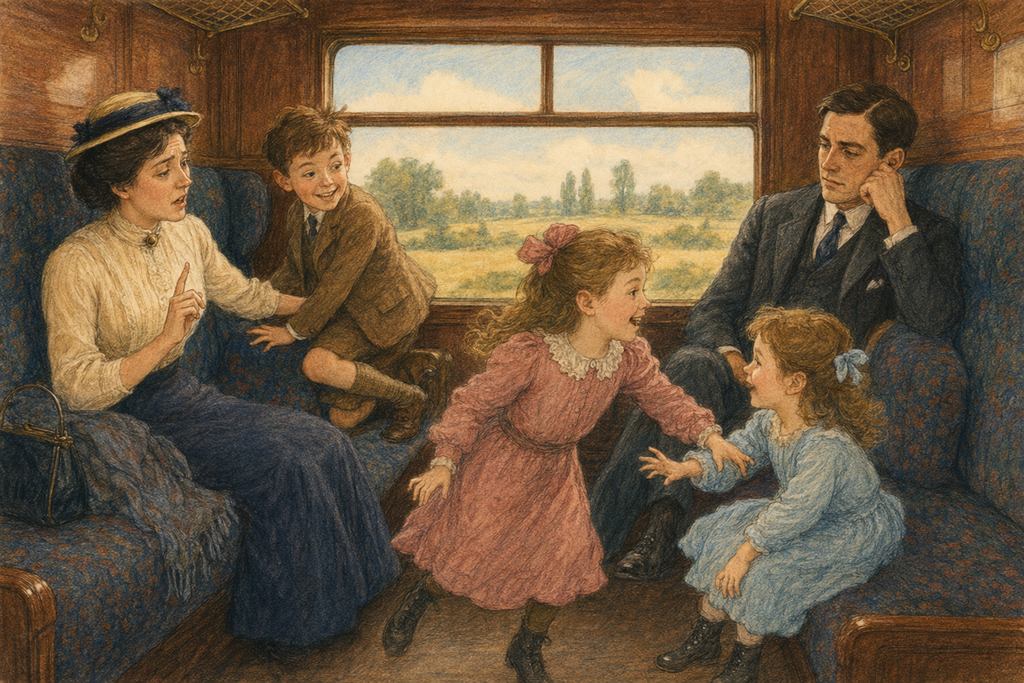
They moved from seat to seat, leaned towards the window, and returned to the same questions with tireless energy. Their aunt was responsible for them, but responsibility had given her neither authority nor imagination. She corrected each disturbance without ever preventing the next one.
The aunt and the children continued a limited but determined conversation. Their voices were as persistent as a housefly that would not be discouraged. Most of the aunt's remarks began with “Don't,” while nearly every sentence from the children began with “Why?”
The pattern repeated itself so often that no real conversation developed. The aunt offered instructions instead of explanations, and the children treated every answer as the beginning of another question. The bachelor could hear the struggle moving in circles around him.
The bachelor said nothing aloud. He watched as Cyril began striking the seat cushion with his hand. Each blow produced a small cloud of dust.
“Don't, Cyril, don't,” cried the aunt.
“Come over here and look out of the window,” she added.
Cyril moved unwillingly towards the window. “Why are those sheep being driven out of that field?” he asked.
“I suppose they are being taken to another field where there is more grass,” said the aunt uncertainly.
“But there is plenty of grass in that field,” said Cyril. “There is nothing else but grass. Aunt, there is plenty of grass there.”
“Perhaps the grass in the other field is better,” the aunt replied foolishly.
“Why is it better?” came the immediate question.
The bachelor frowned. The aunt noticed him looking twice in her direction and once towards the communication cord, which passengers could pull in an emergency.
The cord was not meant for rescuing travellers from irritating children, of course, but his glance made his feelings plain. The aunt understood that she must attempt something more effective before her fellow passenger's patience disappeared completely.
“Come over here and listen to a story,” she said quickly.
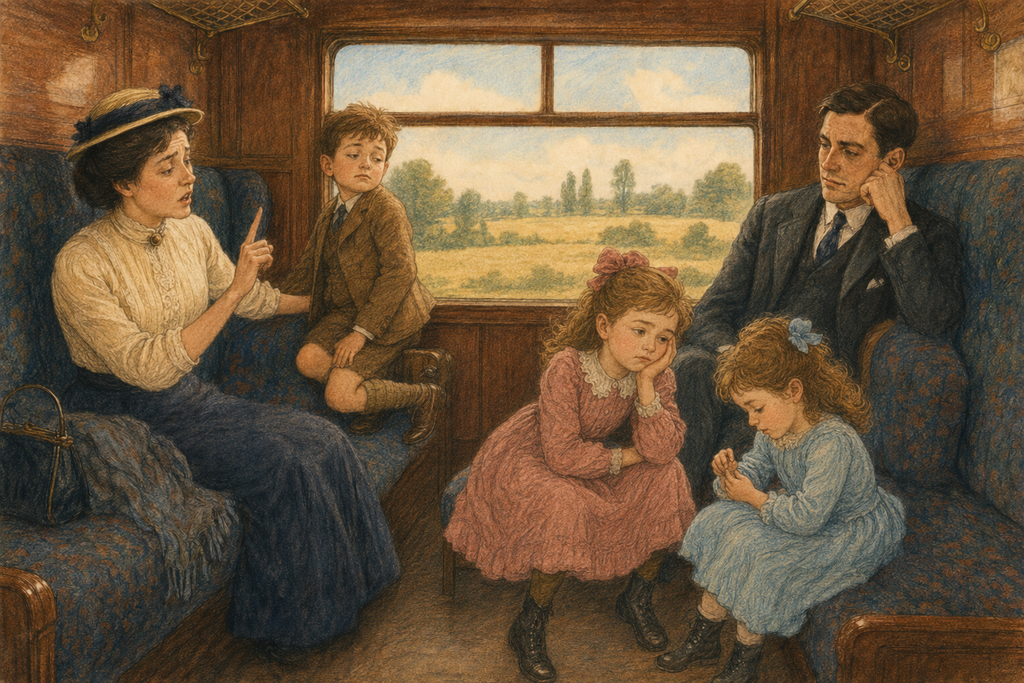
The children moved without enthusiasm to her end of the carriage. Clearly, their aunt did not enjoy a high reputation as a story-teller.
In a low, confidential voice, repeatedly interrupted by loud and impatient questions, she began a safe and thoroughly uninteresting tale. It concerned a little girl who was very good. Because of her goodness, she made friends with everyone. In the end, a group of people rescued her from a mad bull because they admired her excellent character.
The story had been designed to teach rather than to delight. Its good girl was good because the aunt said so, its rescuers behaved as the lesson required, and nothing unexpected was allowed to enter. The children recognised the machinery of the moral almost immediately.
“Wouldn't they have saved her if she hadn't been good?” asked the older girl.
It was exactly the question the bachelor had wanted to ask.
“Well, yes,” the aunt admitted weakly. “But I don't think they would have run quite so fast if they had not liked her so much.”
“That is the stupidest story I have ever heard,” said the older girl with complete confidence.
“I stopped listening after the first part because it was so stupid,” said Cyril.
The smaller girl offered no direct opinion. Long before the story ended, she had returned to quietly repeating her favourite line from a song.
“You don't appear to be very successful as a story-teller,” the bachelor said suddenly from his corner.
The aunt immediately became defensive. “It is very difficult to tell stories that children can both understand and appreciate,” she replied stiffly.
“I disagree,” said the bachelor.
“Perhaps you would like to tell them a story,” the aunt answered.
“Tell us a story,” demanded the older girl.
The bachelor began. “Once upon a time, there was a little girl called Bertha, who was extraordinarily good.”
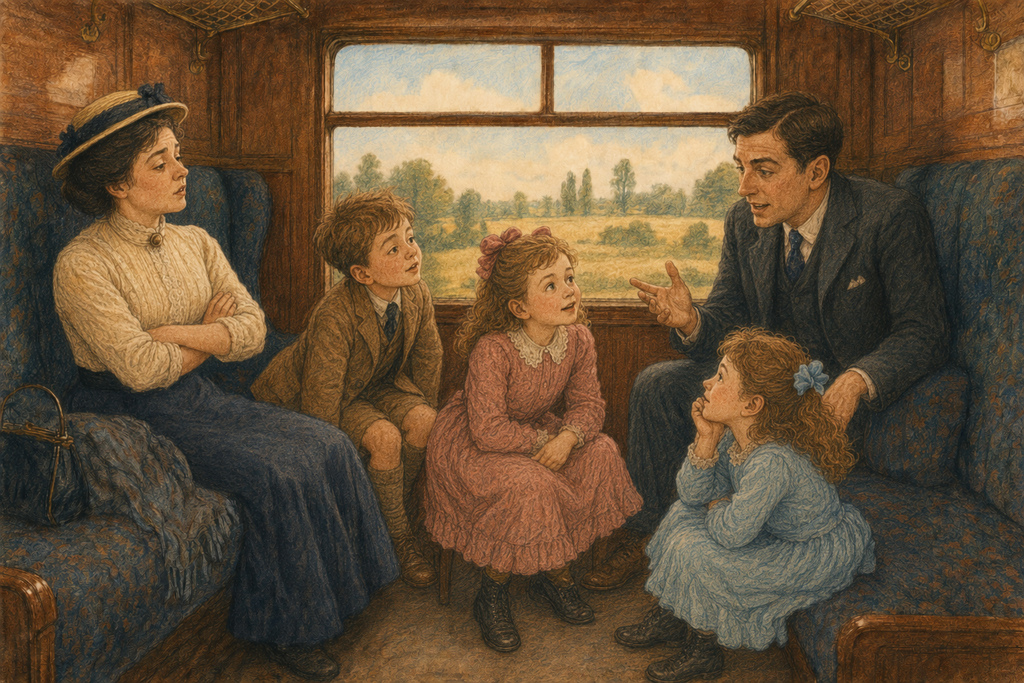
He did not raise his voice or promise excitement. At first, his beginning sounded no different from the aunt's. Yet he watched his listeners carefully, and when their attention weakened, he chose the exact word that would bring it back.
The children's brief interest immediately began to disappear. All stories seemed painfully alike, whoever told them.
“She always did exactly as she was told,” the bachelor continued. “She never lied. She kept her clothes clean, ate milk pudding as eagerly as if it were a jam tart, learned every lesson perfectly, and was always polite.”
“Was she pretty?” asked the older girl.
“Not as pretty as any of you,” said the bachelor, “but she was horribly good.”
The words *horribly good* changed the children's attitude. It was a new way to describe goodness, and it sounded more truthful than the aunt's usual tales about perfect children.
They shifted nearer. Goodness had usually been presented to them as sweet, admirable, and dull. Calling it horrible made Bertha less like an example in a lesson and more like a real person whose unusual nature might cause something unexpected.
“Bertha was so good,” the bachelor went on, “that she won several medals. She received one for obedience, one for always being on time, and one for good behaviour. They were large metal medals, and she wore all three pinned to her dress. Whenever she walked, they knocked against one another with a clinking sound. No other child in her town had three medals, so everyone knew she must be unusually good.”
“Horribly good,” Cyril corrected him.
“Yes, horribly good. Everyone talked about Bertha's goodness. Eventually, the Prince who ruled the country heard about it. He announced that, because she was so very good, she could walk in his private park once a week. Children were never normally allowed there, so this was a great honour.”
For Bertha, the invitation proved that goodness produced rewards. She could enter a place closed to every ordinary child, and she could enjoy that privilege while remembering that she had earned it. The three medals made the connection visible to everyone she passed.
“Were there any sheep in the park?” Cyril asked.
“No,” said the bachelor. “There were no sheep.”
“Why weren't there any sheep?”
The aunt allowed herself a small smile. She was sure the bachelor had become trapped by the same endless questioning that had defeated her.
“There were no sheep,” he answered calmly, “because the Prince's mother had once dreamed that her son would either be killed by a sheep or by a clock falling on him. For that reason, the Prince kept no sheep in his park and no clocks in his palace.”
The aunt almost gasped with admiration at the speed of his invention.
“Was the Prince killed by a sheep or by a clock?” Cyril asked.
“He is still alive, so we cannot know whether the dream will come true,” said the bachelor. “In any case, there were no sheep in the park. But there were many little pigs running everywhere.”
“What colour were they?” the children asked.
“Some were black with white faces. Some were white with black spots. Others were completely black, grey with white patches, or entirely white.”
The bachelor paused, giving the children time to imagine the park and all its pigs.
“Bertha was disappointed to discover that there were no flowers. Before entering the park, she had promised her aunts, with tears in her eyes, that she would not pick any of the kind Prince's flowers. She had truly intended to keep her promise. Naturally, she felt rather foolish when she found there were no flowers to pick.”
“Why weren't there any flowers?”
“Because the pigs had eaten them all,” the bachelor answered at once. “The gardeners had told the Prince that he could have pigs or flowers, but not both. The Prince chose pigs.”
The children murmured their approval. Many adults would have made the opposite and far less interesting choice.
The bachelor's park was becoming a place shaped by choices the children understood. Each answer created another clear picture: no sheep because of a dream, no clocks because of the same warning, and no flowers because the Prince preferred lively pigs. Even the absurd details followed their own logic.
“The park contained many other wonderful things. There were ponds filled with gold, blue, and green fish. Beautiful parrots sat in the trees and made clever remarks without warning. Hummingbirds hummed all the popular tunes of the day.
“Bertha walked through the park and enjoyed herself enormously. She thought, ‘If I were not so extraordinarily good, I would never have been allowed into this beautiful place.’ As she walked, her three medals clinked together, reminding her of just how good she was.
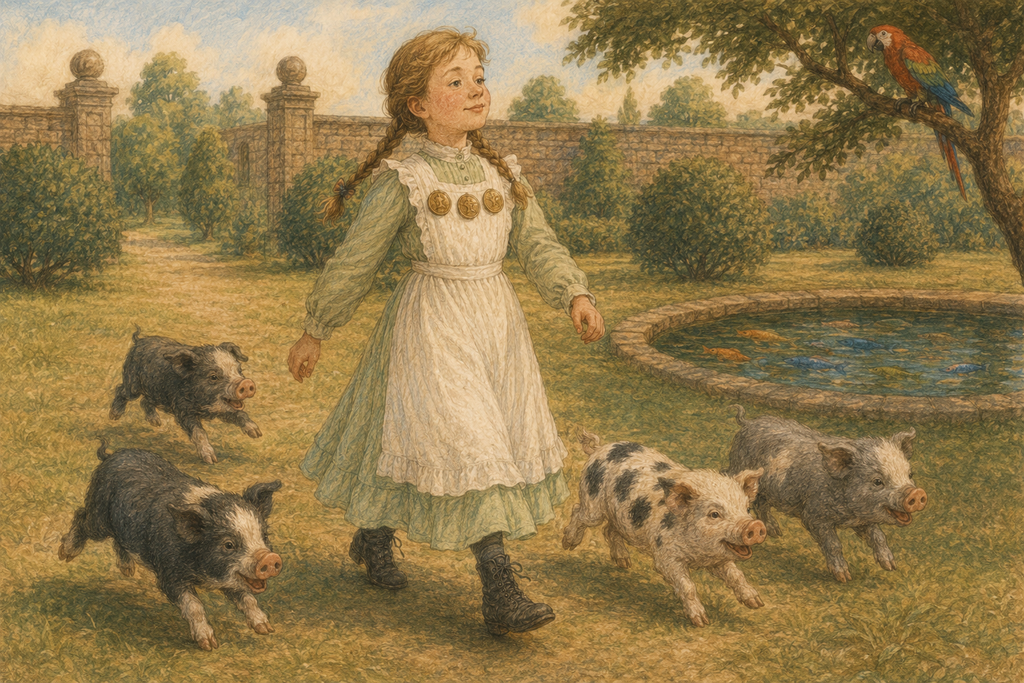
“At that moment, an enormous wolf entered the park, hoping to catch a fat little pig for its supper.”
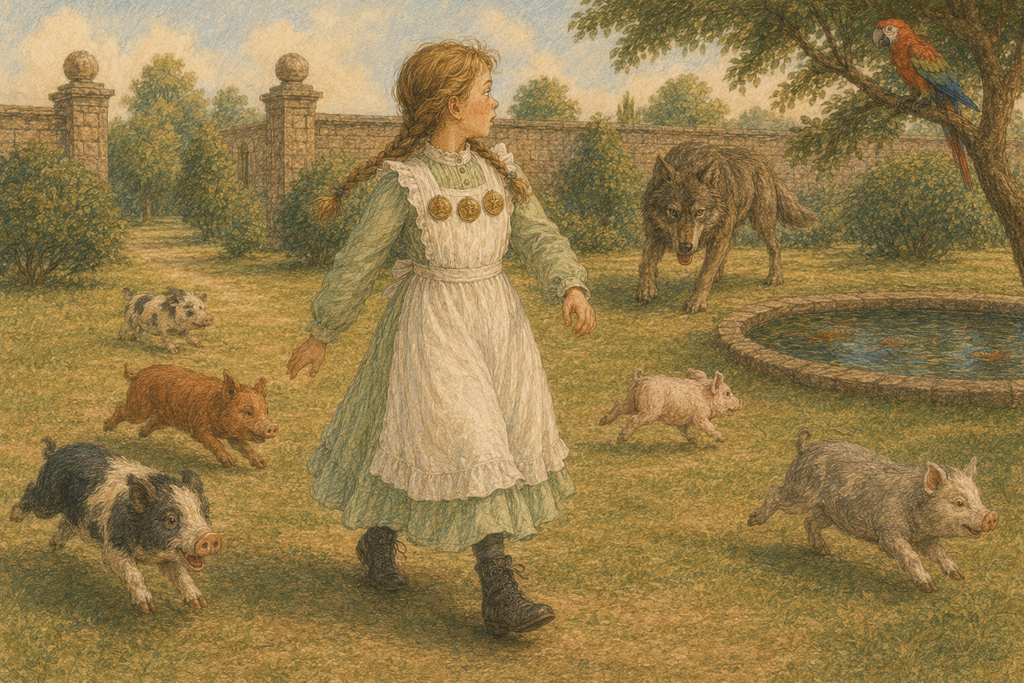
The children sat up. Their interest increased at once.
“What colour was the wolf?” they asked.
“It was the colour of mud all over,” said the bachelor. “It had a black tongue and pale grey eyes that shone with terrible fierceness.
“The first thing the wolf noticed was Bertha. Her pinafore was so perfectly white that it could be seen from a great distance. Bertha saw the wolf creeping towards her and immediately wished she had never been invited into the Prince's park.
“She ran as fast as she could. The wolf followed in enormous leaps. Bertha reached a thick group of myrtle bushes and hid herself deep among the branches.
“For the first time, all the privileges created by her goodness seemed useless. The Prince was not there to protect her, and the people who praised her were far away. Her only hope was to remain completely still and silent until the wolf lost interest.
“The wolf prowled around the bushes, sniffing. Its black tongue hung from its mouth, and its pale grey eyes glared. Bertha was terribly frightened. She thought, ‘If I had not been so extraordinarily good, I would be safely at home in the town now.’
“The scent of the myrtle was so strong that the wolf could not smell exactly where Bertha was. The bushes were so thick that it could not see her either. After searching for a while, the wolf decided that it might as well leave and catch one of the little pigs instead.
“Bertha trembled with fear as the wolf moved close to her hiding place. While she was shaking, the medal for obedience struck the medals for good behaviour and punctuality. They made a faint clinking sound.
“The very things that had announced her goodness to the town now announced her presence to the wolf. Bertha tried to control her trembling, but fear moved the medals again. In the quiet bushes, the small metallic sound was impossible to miss.
“The wolf stopped and listened.
“The medals clinked again inside a nearby bush. The wolf rushed into the branches, its pale grey eyes shining with triumph. It pulled Bertha out and ate her completely. All that remained were her shoes, a few pieces of clothing, and the three medals she had won for being so good.”
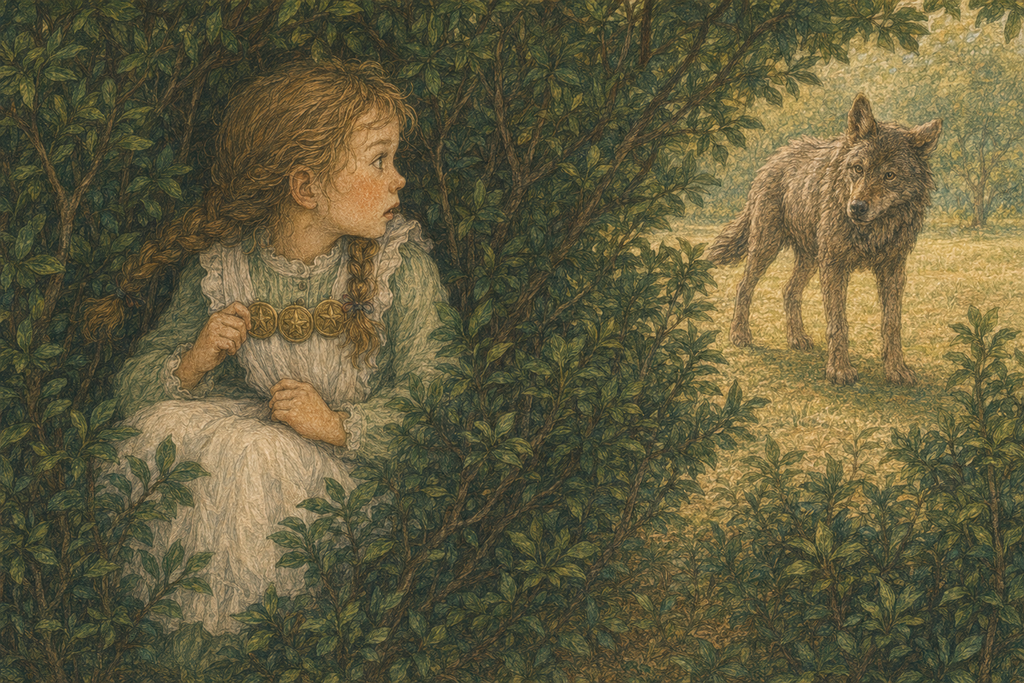
For a moment, the children considered this ending.
“Were any of the little pigs killed?” asked the smaller girl.
“No,” said the bachelor. “They all escaped.”
“The story began badly,” the smaller girl decided, “but it had a beautiful ending.”
“It is the most beautiful story I have ever heard,” said the older girl firmly.
“It is the only beautiful story I have ever heard,” said Cyril.
The aunt did not agree.
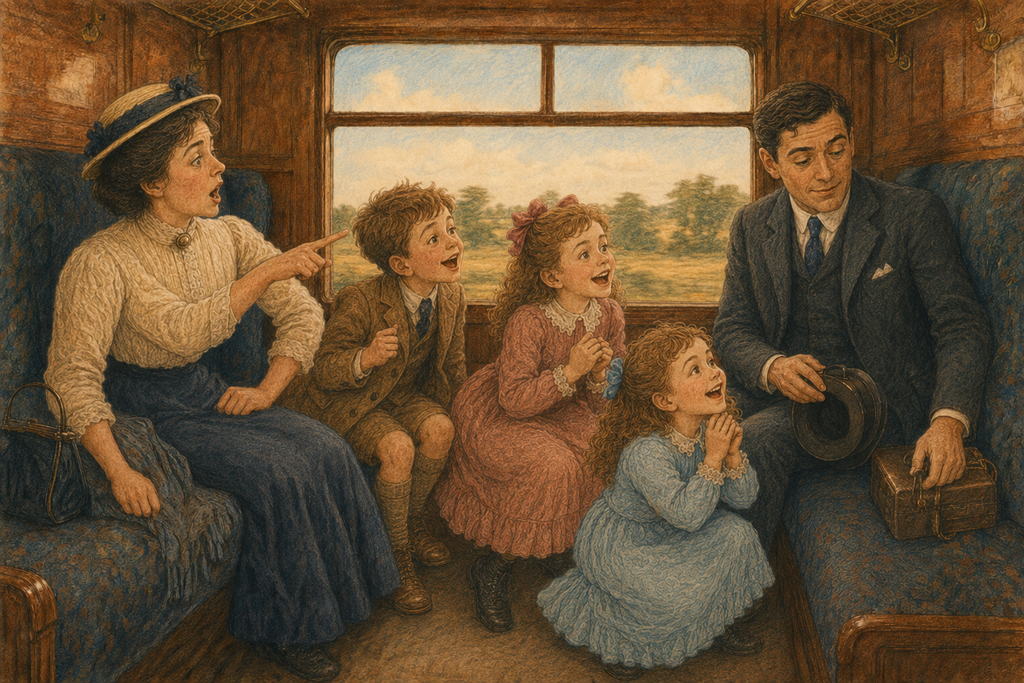
“That was a most unsuitable story to tell young children!” she exclaimed. “You have ruined the effect of years of careful teaching.”
“At least I kept them quiet for ten minutes,” said the bachelor as he gathered his belongings, “which is more than you were able to do.”
The train reached Templecombe, and he left the compartment. As he walked down the platform, he thought about the aunt he had left behind.
“Unhappy woman,” he said to himself. “For the next six months, those children will embarrass her in public by demanding an unsuitable story.”
— END —
ストーリーテラー|本文和訳Saki (Hector Hugh Munro, 1870–1916)
暑い午後だった。列車の客室は、息苦しいほど蒸し暑かった。
次の停車駅テンプルクームまでは、まだ1時間近くある。
窓の外では、夏の田園風景が暑さの中をゆっくりと流れていた。
客室内には涼しい風が入らず、ほかの乗客から逃げられる場所もない。
まだ長い時間を過ごさなければならないため、小さな動きも繰り返される質問も、いつも以上に大きく感じられた。
個室に乗っていたのは5人だった。
小さな女の子と、さらに小さな女の子、シリルという少年、その子どもたちの伯母、そして彼らとは面識のない独身男性。
伯母は片隅の座席に座り、独身男性はその向かい側の遠い隅にいた。
けれども3人の子どもたちは、まるで客室全体を占領しているかのようだった。
子どもたちは座席から座席へ移り、窓へ身を寄せ、疲れを知らない勢いで同じ質問へ戻ってくる。
彼らを預かっているのは伯母だが、責任があるからといって、彼女に威厳や想像力が備わるわけではなかった。
騒ぎが起きるたびに注意はするものの、次の騒ぎを防ぐことはできない。
伯母と子どもたちは、話題こそ乏しいものの、根気強く会話を続けていた。
その声は、追い払ってもあきらめないハエのようにしつこい。伯母の言葉のほとんどは「だめ」で始まり、子どもたちの言葉はほぼすべて「どうして?」で始まっていた。
同じやり取りがあまりに何度も繰り返されるため、本当の意味での会話は少しも進まない。
伯母は説明ではなく指示を与え、子どもたちはどの答えも次の質問の始まりとして受け取る。
独身男性には、その攻防が自分の周囲をぐるぐる回り続けているように聞こえた。
独身男性は、声には出さずに黙っていた。
シリルが手で座席のクッションをたたき始めるのを眺めている。
たたくたびに、小さな埃の雲が立った。
「だめよ、シリル。やめなさい」と伯母が叫んだ。
「こちらへ来て、窓の外を見なさい」と彼女は続けた。
シリルは気の進まない様子で窓へ寄った。「どうして、あの羊たちはあの野原から追い出されているの?」
「もっと草の多い別の野原へ連れていくんでしょうね」と伯母は自信なさそうに答えた。
「でも、あの野原には草がたくさんあるよ」とシリルは言った。
「草しかないじゃない。伯母さん、あそこには草がいっぱいあるよ」
「たぶん、別の野原の草のほうがおいしいのよ」と伯母は、うかつな返事をした。
「どうして、そっちの草のほうがおいしいの?」と、すぐに次の質問が飛んできた。
独身男性が眉をひそめた。
伯母は、彼がこちらを2度見たあと、緊急時に乗客が引く通報用のひもへ1度目を向けたことに気づいた。
もちろん、そのひもは、いらだたしい子どもから乗客を救うためにあるのではない。
けれども、その視線だけで彼の気持ちは十分に伝わった。
伯母は、同乗者の忍耐が完全に尽きてしまう前に、もっと効果のあることを試さなければならないと悟った。
「こちらへ来て、お話を聞きなさい」と彼女は急いで言った。
子どもたちは、まるで気乗りしない様子で伯母のいる側へ移動した。
どうやら伯母は、物語の語り手として高い評価を受けてはいないらしい。
伯母は声を落とし、内緒話でもするように語り始めた。
とはいえ、子どもたちの大きく苛立った質問に、何度も話を遮られる。
内容は安全で、どうしようもなく退屈な物語だった。
とてもよい子が、その善良さのおかげで誰からも好かれる。
そして最後には、その立派な人柄を尊敬する人々によって、暴れ牛から救われるという話だ。
その物語は、楽しませるためではなく、教えるために作られていた。よい子は、伯母がそう言うからよい子であり、救助する人々は教訓に必要なとおりに行動し、予想外のものが入り込む余地はない。
子どもたちは、その道徳の仕掛けをほとんどすぐに見抜いた。
「その子がよい子じゃなかったら、みんなは助けなかったの?」と年上の女の子が聞いた。
それはまさに、独身男性も尋ねたいと思っていた質問だった。
「ええ、まあ、助けたでしょうね」と伯母は弱々しく認めた。
「でも、それほど好かれていなかったら、みんなもあんなに急いで走ってはくれなかったと思うわ」
「今まで聞いた中で、いちばんばかな話」と年上の女の子は、揺るぎない確信を込めて言った。
「あまりにもばかばかしいから、最初のところのあとは聞いてなかった」とシリルも言った。
小さいほうの女の子は、物語について直接の感想を述べなかった。
話が終わるずっと前から、お気に入りの歌の一節を小さな声で繰り返していたからだ。
「あなたは、物語の語り手としてはあまり成功していないようですね」と、独身男性が隅の席から突然言った。
伯母はたちまち身構えた。「子どもが理解できて、しかも面白いと思う話をするのは、とても難しいことです」と、硬い口調で答えた。
「私はそうは思いません」と独身男性は言った。
「では、あなたがお話をなさったらいかがです」と伯母は言い返した。
「お話して」と年上の女の子が要求した。
独身男性は語り始めた。「昔々、バーサという、とてつもなくよい子がいました」
彼は声を張り上げることも、面白い話だと約束することもしなかった。
最初のうちは、伯母の話と少しも変わらない始まりに聞こえる。
けれども彼は聞き手を注意深く見ており、興味が薄れた瞬間、それを呼び戻すのにぴったりの言葉を選んだ。
一瞬だけ生まれた子どもたちの興味が、たちまち薄れ始めた。
誰が語っても、物語はどれもこれも、うんざりするほど似ているようだった。
「バーサは言われたとおりのことを、いつもきちんとしました」と独身男性は続けた。
「うそは決してつかず、服はいつも清潔。ミルクプディングをジャムタルトのように喜んで食べ、勉強は完璧に覚え、礼儀正しく振る舞いました」
「かわいかったの?」と年上の女の子が聞いた。
「あなたたちの誰よりもかわいくはなかった」と独身男性は答えた。
「けれども、恐ろしいほどよい子だった」
「恐ろしいほどよい子」という言葉が、子どもたちの態度を変えた。
善良さを表すには新鮮な言い方であり、伯母がいつも語る完璧な子どもの話より、ずっと本当らしく聞こえたのだ。
子どもたちは少し近くへ寄った。
善良さはいつも、優しく、立派で、退屈なものとして示されてきた。
それを「恐ろしい」と呼ぶことで、バーサは教訓の中の模範ではなく、その変わった性質のせいで何か予想外のことを起こしそうな、実在する人物のようになった。
「バーサはあまりにもよい子だったので、いくつもの勲章をもらいました」と独身男性は続けた。
「従順であることに1つ、いつも時間を守ることに1つ、行いがよいことに1つ。どれも大きな金属の勲章で、バーサは3つとも服に留めていました。歩くたびに、勲章同士がぶつかって、カチャカチャと音を立てます。町のほかの子どもで、勲章を3つも持っている子はいません。ですから誰もが、バーサは特別によい子に違いないと分かりました」
「恐ろしいほどよい子」とシリルが訂正した。
「そう、恐ろしいほどよい子です。誰もがバーサの善良さを話題にしました。やがてその評判は、この国を治める王子の耳にも届きます。王子は、バーサがそれほどよい子なら、週に1度、自分の庭園を散歩してもよいと告げました。ふだんは子どもが決して入れない場所ですから、これは大変な名誉でした」
バーサにとって、その招待は、善良であれば報いが得られることの証明だった。
普通の子どもには閉ざされた場所へ入り、それが自分で勝ち取った特権だと覚えていながら楽しむことができる。
3つの勲章は、彼女とすれ違う誰の目にも、その結びつきをはっきり示した。
「庭園に羊はいた?」とシリルが尋ねた。
「いいえ」と独身男性は答えた。
「羊はいませんでした」
「どうして羊はいなかったの?」
伯母は、わずかに笑みを浮かべた。独身男性も、自分を困らせた果てしない質問に捕まったと確信したのだ。
「羊がいなかったのは」と独身男性は落ち着いて答えた。
「以前、王子の母親が、息子は羊に殺されるか、落ちてきた時計に当たって死ぬか、そのどちらかだという夢を見たからです。そのため王子は、庭園では羊を飼わず、宮殿には時計を置きませんでした」
伯母は、彼がこれほど素早く話を作ったことに感心し、思わず息をのみそうになった。
「王子は羊に殺されたの? それとも時計に?」とシリルが聞いた。
「王子は今も生きています。ですから、その夢が本当になるかどうかは分かりません」と独身男性は言った。
「とにかく庭園に羊はいませんでした。その代わり、たくさんの子豚が、あちらこちらを走り回っていました」
「何色だったの?」と子どもたちが尋ねた。
「白い顔の黒い子豚もいれば、黒い斑点のある白い子豚もいました。全身が黒い子、灰色に白い模様のある子、それに真っ白な子もいました」
独身男性はそこで言葉を止め、子どもたちが庭園と、そこにいるすべての子豚を思い描く時間を与えた。
「バーサは、庭園に花が1輪もないと知って、がっかりしました。庭園へ入る前、彼女は涙を浮かべながら、親切な王子の花は決して摘まないと伯母たちに約束していました。そして、その約束を本当に守るつもりでした。ですから、摘む花など初めからないと分かると、当然ながら、少しばかり間抜けな気分になりました」
「どうして花がなかったの?」
「子豚が全部食べてしまったからです」と独身男性は即座に答えた。
「庭師たちは王子に、子豚か花のどちらかなら持てますが、両方は無理だと言いました。そこで王子は、子豚を選びました」
子どもたちは、満足そうに声を上げた。多くの大人なら、反対の、そしてずっとつまらない選択をしただろう。
独身男性が語る庭園は、子どもたちにも納得できる選択によって形づくられた場所になりつつあった。
夢のお告げがあるから羊はいない。
同じ警告があるから時計もない。
王子が生き生きした子豚を好んだから花もない。
ばかばかしい細部でさえ、その世界なりの筋道に従っていた。
「庭園には、ほかにもすばらしいものがたくさんありました。池には金色、青、緑の魚が泳いでいます。美しいオウムが木に止まり、前触れもなく気の利いたことを言いました。ハチドリたちは、その時代に人気のある歌を何でも口ずさみました」
「バーサは庭園を歩き回り、心から楽しみました。そして、『私がこれほどよい子でなかったら、こんなに美しい場所へ入れてもらえなかったでしょう』と考えました。歩くたびに3つの勲章がカチャカチャとぶつかり、自分がどれほどよい子なのかを思い出させてくれました」
「ちょうどそのとき、1匹の巨大な狼が、夕食に太った子豚を捕まえようと、庭園へ入ってきました」
子どもたちは身を起こした。興味が一気に高まったのだ。
「狼は何色?」と子どもたちが尋ねた。
「全身が泥の色でした」と独身男性は答えた。
「舌は黒く、青白い灰色の目は、言葉にできないほど恐ろしい光を放っていました。
「狼が最初に気づいたのは、バーサでした。彼女のエプロンドレスは、あまりにも真っ白で清潔だったため、遠くからでもよく見えたのです。バーサは狼が忍び寄ってくるのを見て、王子の庭園へ招かれなければよかったと、たちまち思いました。
「バーサは力いっぱい走りました。狼は大きく跳びながら追いかけます。バーサはギンバイカの茂みにたどり着き、枝の奥深くへ身を隠しました」
「初めて、善良さによって得た特権のすべてが、何の役にも立たないものに思えました。王子は彼女を守る場所におらず、彼女をほめた人々は遠くにいます。助かるためには、狼が興味を失うまで、完全に動かず、物音を立てずにいるしかありません」
「狼は茂みの周囲をうろつき、鼻を鳴らしました。黒い舌が口から垂れ、青白い灰色の目がぎらついています。バーサは恐怖に震えました。そして、『私がこれほどよい子でなかったら、今ごろ町の家で安全に過ごしていたでしょうに』と考えました」
「ギンバイカの香りがあまりにも強いため、狼にはバーサがどこにいるのか、匂いでは正確に分かりません。茂みは深く、姿も見えませんでした。しばらく探したあと、狼はあきらめ、代わりに子豚を1匹捕まえに行こうと考えました」
「狼がすぐ近くを動き回るあいだ、バーサは恐ろしさのあまり震え続けていました。その震えで、従順の勲章が、品行方正と時間厳守の勲章にぶつかりました。かすかなカチャカチャという音がします」
「町中に彼女の善良さを知らせていたものが、今度は狼に彼女の居場所を知らせました。バーサは震えを抑えようとしましたが、恐怖がもう1度、勲章を動かします。静かな茂みの中で、その小さな金属音を聞き逃すことはできませんでした」
「狼は足を止め、耳を澄ませました」
「近くの茂みの中で、勲章がもう1度鳴りました。狼は、青白い灰色の目を勝ち誇ったように輝かせ、枝の中へ飛び込みました。そしてバーサを引きずり出し、すっかり食べてしまいました。残ったのは、彼女の靴と、衣服の切れ端、それから、よい子であるためにもらった3つの勲章だけでした」
子どもたちはしばらく、この結末について考えた。
「子豚は1匹も殺されなかったの?」と小さい女の子が尋ねた。
「ええ」と独身男性は答えた。
「みんな逃げ切りました」
「最初はよくないお話だったけれど」と小さい女の子は結論を出した。
「最後はきれいだった」
「今まで聞いた中で、いちばんすてきな物語」と年上の女の子は、きっぱりと言った。
「ぼくが今まで聞いた中で、すてきだった物語はこれだけ」とシリルも言った。
伯母は同意しなかった。
「幼い子どもに聞かせるには、まったく不適切なお話です!」と彼女は叫んだ。「長年かけて注意深く教えてきたことを、あなたは台なしにしてしまいました」
「少なくとも、私はこの子たちを10分間静かにさせました」と独身男性は、降りる支度をしながら言った。
「あなたにはできなかったことです」
列車はテンプルクーム駅に着き、独身男性は客室を降りた。
ホームを歩きながら、あとに残してきた伯母のことを考えた。
「気の毒な人だ」と彼は心の中でつぶやいた。
「この先6か月ほど、あの子たちは人前で『不適切なお話をして』とせがみ、彼女を困らせ続けるだろう」
— おわり —
この作品について
「The Story-Teller」は、1914年の短編集『Beasts and Super-Beasts』に収録されました。
舞台となるのは、テンプルクームへ向かう列車の個室です。
20世紀初頭のイギリスの鉄道では、廊下のない区切られた客室も一般的で、いったん乗り合わせると、次の駅まで同じ空間から逃れにくい状況が生まれました。
本作の蒸し暑さと1時間近い停車間隔は、子どもの落ち着かなさ、伯母の焦り、独身男性の苛立ちを増幅させます。
短い物語でありながら、冒頭の数段落だけで、5人の力関係が鮮明に伝わります。
伯母の物語が失敗する理由は、単に道徳的だからではありません。
細部に説得力がなく、子どもの疑問に耐えられないからです。
「よい子だから救助者が速く走った」という説明は、善良さと救出の因果関係を無理に結びつけています。
対照的に、独身男性は子どもたちの質問を妨害とみなさず、その場で物語を豊かにする材料として使います。
羊がいない理由、子豚の色、花がない理由を即座に答え、聞き手の興味に合わせて世界を広げていきます。
Sakiは、語り手の権威ではなく、聞き手の想像力に応答できることが、物語を生かすのだと示しています。
物語内の少女バーサは、従順、時間厳守、品行方正という3つの勲章を身につけています。
これらは大人の社会が子どもへ求める美徳を、目に見える形にしたものです。
ところが、その善良さの証拠である勲章の音が狼に居場所を知らせ、彼女の破滅を招きます。
また、服を清潔に保っていたため、遠くから狼に見つかりやすくなりました。
善行が不幸を招くという反転は、善良さそのものを否定するというより、「よい子は必ず報われる」と機械的に教える物語への風刺です。
子どもたちが最も気にするのがバーサではなく、子豚が助かったかどうかである点も、感傷的な大人の期待を愉快に裏切ります。
狼がバーサを食べる結末は、現代の感覚でも刺激が強く、幼い子ども向けの読み聞かせとして無条件に推奨できる内容ではありません。
しかし作品の中心は、残酷さを楽しませることではなく、教育目的だけで作られた退屈な物語と、聞き手を夢中にさせる危険な物語の対比にあります。
独身男性は子どもたちを10分間静かにさせますが、伯母の教育を助けたわけではありません。
むしろ、彼女が今後何か月も「不適切なお話」をせがまれる未来まで作って去ります。
最後まで勝者らしい勝者はいない、その意地悪な余韻こそ、Sakiらしいブラックユーモアです。
まとめ
列車の中で独身男性が成し遂げたことは、とても小さなものです。
騒がしかった3人の子どもを、わずか10分間、静かにさせただけ。
しかしその10分間に、伯母の善良な少女の話は完全に忘れられ、バーサと3つの勲章、色とりどりの子豚、泥色の狼は、子どもたちの想像の中にくっきりと残りました。
Sakiは、正しい教訓を用意することと、心に残る物語を語ることが、必ずしも同じではないと見せます。
伯母は子どもたちへ「よい子であれば愛され、救われる」と教えようとしました。
けれども、その筋書きには、子どもが納得できる理由がありません。
独身男性の話は道徳的には不穏でも、細部には一貫した原因と結果があります。
バーサは善良さの褒美として庭園へ入り、清潔な服のため狼に見つかり、善行の勲章が鳴ったため隠れ場所を知られてしまう。
皮肉で残酷ではあっても、物語としては見事に組み立てられています。
だからといって、この作品が「子どもには残酷な話を聞かせるべきだ」と単純に主張しているわけではないでしょう。
むしろ問いかけているのは、大人が子どもを、自分の価値観を入れるための空の器のように扱っていないか、ということです。
子どもたちは、矛盾に気づき、細部を求め、予想外のものに笑います。
彼らは伯母が考えるより、ずっと注意深い聞き手です。
独身男性は教育者として優れているのではなく、その注意深さを見抜く語り手として優れていました。
テンプルクームで彼が降りたあと、伯母には厄介な時間が待っています。
子どもたちはきっと、人前で何度も「不適切なお話をして」とせがむでしょう。
それは独身男性が残した、最も意地悪な置き土産です。
そして読者の中にも、善良な少女を救った名もない人々より、カチャカチャと鳴る3つの勲章のほうが長く残ります。
教訓を伝えたいときこそ、まず聞き手の想像力を尊重しなければならない――笑いのあとに残るその気づきが、この短編を今も鮮やかにしています。



 | British English | 2,119 words この小説は、パブリックドメインとなっている英語作品をもとに、原作の語り口を保持したまま、学習者向けの分か)