
CEFR B2(中上級) | British English | 1,320 words
はじめに
ピーターラビットの作者、ビアトリクス・ポター。
そう聞けば、青い上着を着たウサギや、湖水地方の美しい農場を思い浮かべる方が多いでしょう。
ところが、彼女が絵本作家として成功する前、長い時間を注いでいたのはキノコの研究でした。
顕微鏡をのぞき、胞子を発芽させ、数百点もの精密な菌類画を残す。
その姿は、私たちがよく知る「かわいらしい絵本の作者」というイメージとは少し違います。
2026年にはキューガーデンズでも、女性と菌類学を扱う企画展の中で、ポターの忘れられた科学研究が紹介されました。
今回のエッセイでは、彼女を単に「女性差別によって科学者になれなかった悲劇の人」として描きません。
研究機関の壁、支えてくれた人々、完成しなかった論文、そして科学的な観察眼が絵本の中にどう残ったのかを、できる限り丁寧にたどります。
ピーターラビットの動物たちが、服を着て話をしているのに、どこか本物の動物らしく見える理由。
その答えは、キノコを見つめていた若い日のポターにあるのかもしれません。
Before Peter Rabbit, There Were MushroomsBeatrix Potter, Science, and the Art of Looking Closely
The Other Beatrix Potter
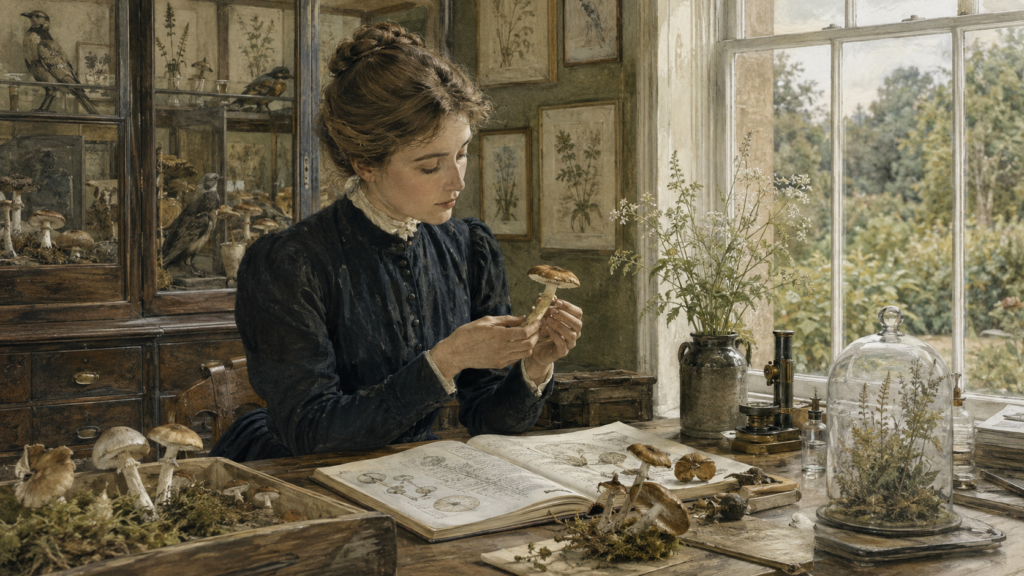
In a quiet reading room at Kew, Peter Rabbit is nowhere to be seen. There are no blue jackets, no garden gates and no worried Mrs Rabbit. Instead, the cases contain notebooks, letters and watercolours of fungi: pale stems, spotted caps, delicate gills and shapes that seem to have risen from wet leaves only moments ago.
The name beside them is Beatrix Potter.
For many visitors, the surprise is immediate. Potter is so firmly connected with small animals in clothes that it is easy to imagine her career beginning with a mischievous rabbit. In fact, before The Tale of Peter Rabbit became a book, she had spent years studying the natural world. Her deepest scientific interest was mycology, the study of fungi.
This was not a decorative hobby. Potter collected specimens, identified species, used a microscope and investigated how spores germinated. She produced hundreds of careful studies. A mushroom was not simply a pleasing shape to paint. It was a living structure that asked questions.
Once we know this, the familiar story of Potter's life changes. Peter Rabbit does not disappear, but he moves a little to one side, and another figure comes into view: a serious, self-educated Victorian woman looking through a microscope and trying to understand what other people had overlooked.
An Education Built from Curiosity
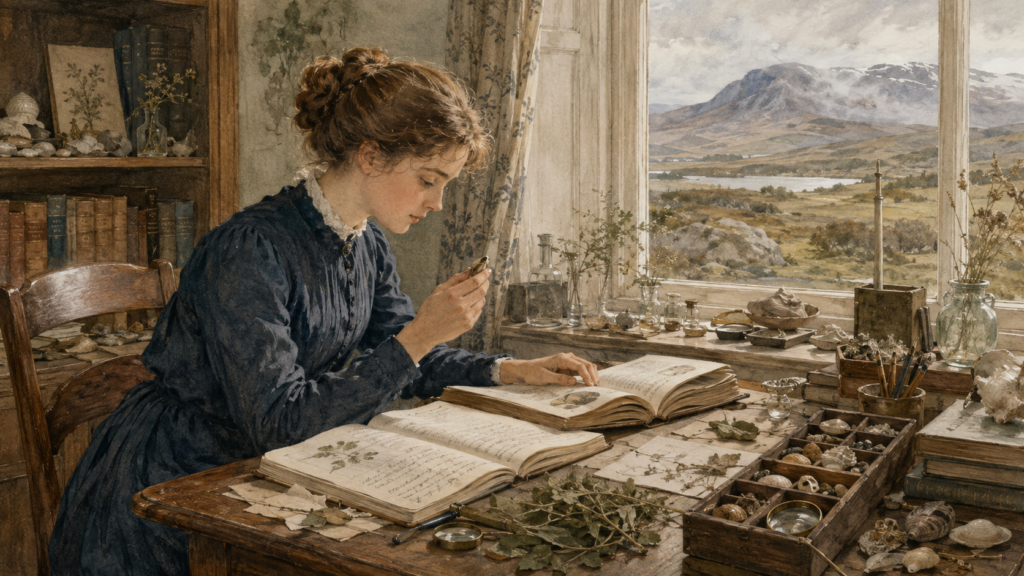
Potter grew up in a prosperous London household, but privilege did not give her an ordinary public education or an easy professional path. Like many middle-class girls of her period, she was educated at home by governesses. Her world could be comfortable and still be narrow.
Nature widened it. She and her younger brother Bertram kept an extraordinary collection of animals in their schoolroom: rabbits, mice, bats, frogs, salamanders and other temporary residents that would have tested the patience of most Victorian parents. During long family holidays in Scotland and the Lake District, Potter had more freedom to walk, collect and draw.
Her education became something she assembled for herself. She studied animals at close range, visited museums, read scientific books and learned to draw what she saw through a microscope. In Scotland she developed a valuable friendship with the naturalist Charles McIntosh, who sent her specimens, helped with identification and took her questions seriously.
That last point mattered. Curiosity needs information, but it also needs someone willing to answer. Potter was not working inside a university laboratory. She built a small network through letters, family introductions, museum visits and persistence. In the 1890s she became a regular visitor to the herbarium at Kew, even though some of her encounters with senior botanists were less encouraging than she had hoped.
Her route into science was therefore neither fully private nor fully accepted. She could enter important rooms, but not on equal terms. She had knowledge, discipline and artistic skill, yet she remained a visitor in institutions designed mainly by and for men.
Drawing What Other People Missed
Potter's fungal paintings are beautiful, but beauty was not their only purpose. She recorded the shape of caps and stems, the structure beneath a cap, changes in colour and the appearance of specimens at different stages. Some studies include enlarged details that could only have been seen with considerable magnification.
By 1896 she was growing spores on glass plates and following their development under a microscope. The Linnean Society now describes her as a capable and enthusiastic mycologist and notes that she eventually produced more than 350 illustrations of fungi. The Armitt Museum in Ambleside holds more than 300 of her fungal and microscopic works.
Accuracy gave these pictures a life beyond art. Her drawings could assist with the identification of fungi because she painted from observation rather than repeating an ideal specimen from a book. She noticed irregularity, damage, growth and decay. She also continued to ask whether the accepted categories were sufficient for what she saw.
There is something quietly radical in that method. To look closely is to accept that the object may not match the label prepared for it. The mushroom on the table has no obligation to behave like the mushroom in a textbook.
This habit later became one of the strengths of Potter's children's books. Her rabbits stand upright and wear coats, but their bodies still have the weight and balance of rabbits. A frog may sit at a table, yet it remains damp, awkward and frog-like. Plants and garden vegetables are recognisable rather than invented green scenery. Imagination enters the natural world without erasing it.
The Paper That Was Not Simply Rejected
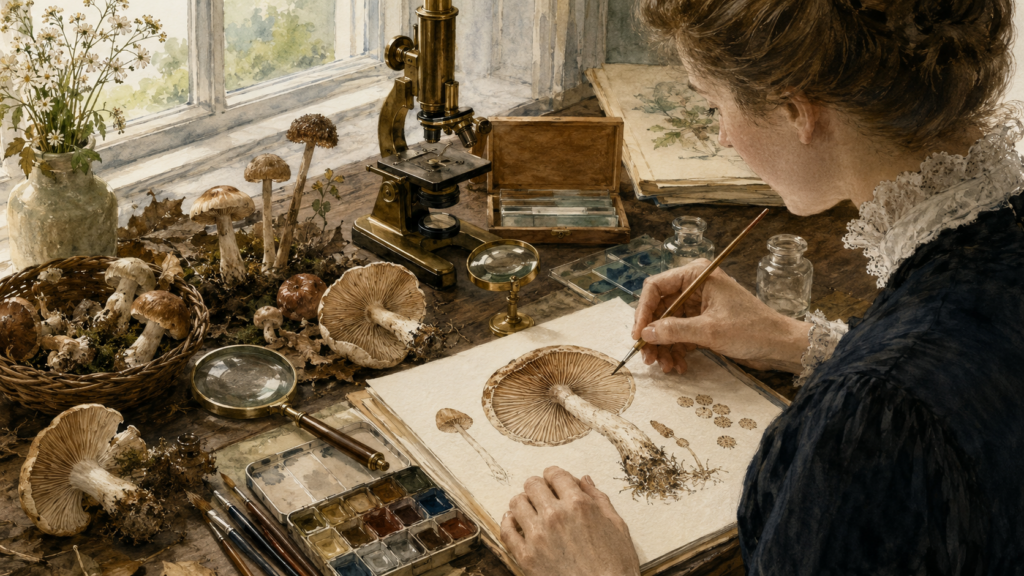
The best-known episode in Potter's scientific life concerns a paper titled On the Germination of the Spores of the Agaricineae. It is often retold as a simple injustice: a woman submitted an important paper, male scientists rejected it, and she was driven away from science.
The truth still contains inequality, but the surviving record is more complicated.
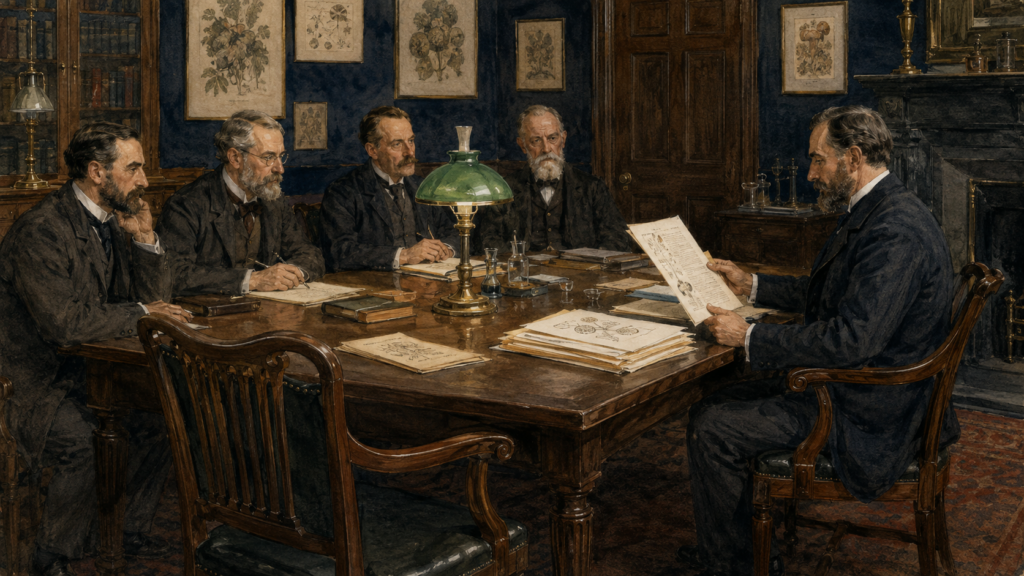
Women were not admitted as Fellows of the Linnean Society until 1905, so Potter could not belong to the Society on the same terms as male scientists. Yet the Society's records do not show that her paper was rejected outright. George Massee of Kew read it on 1 April 1897, following the usual practice of having papers presented by an officer or another member. It was read and discussed. Potter withdrew it a week later after being told that more work was needed before publication. She never submitted a revised version, and the paper itself is now lost.
This distinction matters because a tidy legend can hide the more interesting difficulty. Potter did not meet one locked door and immediately turn away. She worked in an uncertain borderland between amateur and professional science. Some specialists supported her; others were dismissive. Her evidence was respected in part, questioned in part and never developed into a published scientific career.
We cannot know what would have happened if she had revised the paper, received formal training or entered a more welcoming institution. Nor should we turn every unfulfilled possibility into a stolen destiny. Potter's scientific theories were not all correct. Science is not proved by sympathy.
What we can say is that she had earned the right to be taken seriously. Her work shows patience, technical curiosity and an unusual ability to see. Those qualities remained hers even when the paper vanished.
Science Did Not Disappear
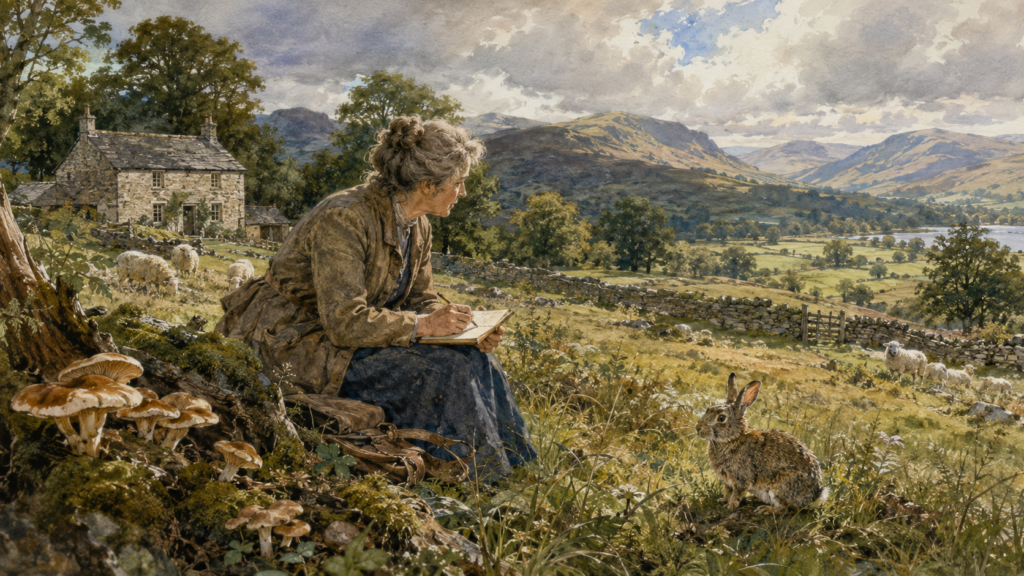
It is tempting to divide Potter's life into abandoned science and successful art. Lives rarely separate so neatly.
When The Tale of Peter Rabbit appeared commercially in 1902, readers met an author who already understood the discipline of observation. The small books may be fantasies, but they are built from measured attention: the angle of an animal's back, the position of its paws, the plants growing beside a wall and the practical geography of a garden. Potter knew that accurate detail does not restrict imagination. It gives imagination somewhere solid to stand.
The same way of looking shaped her later life as a farmer and conservationist. At Hill Top and across the Lake District, she learned about land, livestock and local farming practices. She protected not an abstract view but a working landscape made from particular sheep, fields, walls, farms and human knowledge.
Recognition from science arrived late and in unexpected forms. Her fungal watercolours are now preserved and studied by museums. In 2023, researchers named an ancient fossil fungus Potteromyces asteroxylicola in her honour. The name does not turn Potter into a modern professional scientist, but it acknowledges that her careful work still belongs within the history of mycology.
Back in the reading room at Kew, the painted fungi seem both exact and slightly mysterious. Potter has not made them cute. She has made them visible.
Perhaps that is the thread connecting the microscope, Peter Rabbit and the Lake District. Her great subject was not childhood, animals or even nature by itself. It was the act of paying attention.
Long before millions of readers looked for a blue jacket beyond a garden wall, Beatrix Potter was already teaching herself how to see.
ピーターラビットの前に、彼女はキノコを見つめていた|本文和訳ビアトリクス・ポター、科学、そして「よく見る」ということ
もう一人のビアトリクス・ポター
キューガーデンズの静かな閲覧室に、ピーターラビットの姿はありません。
青い上着も、庭の門も、心配そうなお母さんウサギも見当たりません。
ガラスケースに並んでいるのは、ノートや手紙、そして菌類を描いた水彩画です。
淡い茎、斑点のある傘、繊細なひだ。
つい先ほどまで湿った落ち葉の間に生えていたかのようなキノコが、紙の上に息づいています。
そこに記された作者名は、ビアトリクス・ポターです。
ポターといえば、服を着た小さな動物たちを思い浮かべる人がほとんどでしょう。
そのため、彼女の創作人生は、いたずら好きなウサギから始まったように見えます。
しかし『ピーターラビットのおはなし』が絵本になる以前から、彼女は長い年月をかけて自然を観察していました。
なかでも強く惹かれていたのが、菌類を研究する菌類学でした。
それは、美しいキノコを描いて楽しむだけの趣味ではありません。
標本を集め、種類を調べ、顕微鏡を使い、胞子がどのように発芽するかを実験しました。
残された作品は数百点に及びます。
彼女にとってキノコは、絵になる形であると同時に、いくつもの問いを投げかけてくる生き物でした。
この事実を知ると、よく知られたポターの人生が少し違って見えてきます。
ピーターラビットの姿が消えるわけではありません。
ただ、その隣にもう一人のポターが現れます。
顕微鏡をのぞき、ほかの人が見落としているものを理解しようとした、独学のヴィクトリア朝の女性です。
好奇心から組み立てた教育
ポターはロンドンの裕福な家庭に育ちました。
しかし、恵まれた暮らしが、一般的な学校教育や職業への道を与えてくれたわけではありません。
当時の中流以上の家庭の少女たちと同じように、彼女は家庭教師から教育を受けました。
快適な生活であっても、その世界は狭いものでした。
その世界を広げたのが自然でした。
弟のバートラムとともに、学校部屋でウサギ、ネズミ、コウモリ、カエル、サンショウウオなど、驚くほど多くの動物を飼いました。
スコットランドや湖水地方で長い休暇を過ごすときには、ロンドンにいるときより自由に歩き、標本を集め、絵を描くことができました。
彼女は自分に必要な教育を、自分で少しずつ組み立てていきます。
動物を間近で観察し、博物館を訪ね、科学書を読み、顕微鏡で見たものを描く技術を身につけました。
スコットランドでは博物学者チャールズ・マッキントッシュと知り合い、標本の提供や同定の助言を受けます。
彼はポターの質問を、真剣な問いとして受け止めてくれる人物でした。
好奇心には知識が必要ですが、問いかけに耳を傾けてくれる相手も必要です。
大学の研究室に所属していなかったポターは、手紙、家族からの紹介、博物館訪問、そして粘り強さによって、小さな研究のネットワークを築きました。
1890年代にはキューの植物標本室へ何度も通います。
ただし、そこで出会った専門家全員が、彼女を歓迎したわけではありません。
彼女は重要な研究の場へ入ることはできても、男性研究者と同じ立場ではありませんでした。
知識も規律も画力もありながら、男性を中心につくられた制度の中では、あくまで訪問者として扱われていたのです。
ほかの人が見落としたものを描く
ポターの菌類画は美しい作品ですが、美しさだけを目的にしたものではありません。
傘と茎の形、傘の裏側にあるひだ、色の変化、成長段階による違いまで記録しています。
なかには、高倍率の顕微鏡を使わなければ見えない細部を拡大して描いたものもあります。
1896年には、ガラス板の上で胞子を発芽させ、顕微鏡で成長を追っていました。
リンネ協会は現在、彼女を熱心で力量のある菌類研究者と評価し、菌類画は最終的に350点を超えたとしています。
アンブルサイドのアーミット博物館には、菌類画と顕微鏡による研究画が300点以上所蔵されています。
正確に描かれていたため、その絵は芸術の領域を越え、菌類の同定にも役立ちました。
本に載っている理想的な姿を写したのではなく、目の前の標本を観察して描いたからです。
形の不揃いさ、傷み、成長、腐敗も含めて記録し、既存の分類だけで本当に足りるのか問い続けました。
そこには、静かながらも大胆な姿勢があります。
注意深く見るということは、目の前のものが、用意された名称や説明に当てはまらない可能性を受け入れることでもあります。
テーブルの上のキノコは、教科書どおりの姿をしてくれるとは限りません。
この観察の習慣は、後の絵本にも生きています。
ポターのウサギは二本足で立ち、上着を着ていますが、その体には本物のウサギらしい重さとバランスがあります。
カエルが食卓についていても、どこか湿っていて、不器用で、やはりカエルらしい。植物や野菜も、漠然とした緑色の背景ではなく、種類が分かるほど具体的です。
彼女の空想は、自然を消すことなく、その中へ入り込んでいきます。
「女性だから却下された」だけではない論文の真相
ポターの科学研究で最もよく知られているのが、『ハラタケ類の胞子の発芽について』という論文です。
この出来事はしばしば、分かりやすい不正義の物語として語られます。
女性が重要な論文を提出したものの、男性科学者たちに拒絶され、科学の道を断念した、という筋書きです。
そこに性別による不平等があったことは確かです。
しかし、残された記録をたどると、事実はもう少し複雑です。
リンネ協会が女性を会員として認めたのは1905年です。
そのため、ポターは男性科学者と同じ資格で協会に参加できませんでした。
ただし協会の記録には、論文が即座に却下されたとは書かれていません。
1897年4月1日、キューの菌類学者ジョージ・マッシーが、当時の慣例に従って代理で論文を読み、内容は出席者によって議論されました。
その後、出版には追加の研究が必要だと伝えられ、ポターは1週間後に論文を取り下げます。
改訂版が再提出されることはなく、原稿そのものも現在は失われています。
この違いは重要です。
分かりやすい伝説にしてしまうと、本当の難しさが見えなくなるからです。
ポターは一つの閉ざされた扉に出会い、すぐに科学を諦めたわけではありません。
アマチュアと専門家の境界で研究を続け、彼女を支援する研究者もいれば、冷淡に扱う研究者もいました。
証拠の一部は評価され、一部は疑問を持たれ、最終的に正式な科学論文として発展することはありませんでした。
もし論文を改訂していたら。
正規の科学教育を受けていたら。
もっと女性に開かれた研究機関があったなら。
何が起きたかは分かりません。
実現しなかった可能性をすべて「奪われた運命」と呼ぶべきでもないでしょう。
ポターの科学的な考えが、すべて正しかったわけでもありません。
科学の正しさは、同情によって証明されるものではないからです。
それでも、彼女が真剣に評価されるだけの仕事をしていたことは確かです。
残された作品には、忍耐、技術的な好奇心、そして並外れた観察力があります。
論文が失われても、その力まで消えたわけではありません。
科学は消えず、物語の中に残った
ポターの人生を、「諦めた科学」と「成功した絵本」に分けたくなるかもしれません。
しかし、人の人生はそれほどきれいに切り分けられるものではありません。
1902年に『ピーターラビットのおはなし』が商業出版されたとき、その作者はすでに、観察することの厳しさを知っていました。
小さな絵本は空想の物語ですが、動物の背中の角度、前足の位置、石垣のそばに生える植物、庭の通路や境界など、細部まで確かな観察によって支えられています。
正確さは想像力を狭めるものではありません。
想像力が立つための、確かな地面になります。
同じ見方は、後に農場主、自然保護活動家となった彼女の人生にもつながっています。
ヒルトップや湖水地方で、土地、家畜、地域に伝わる農業を学びました。彼女が守ろうとしたのは、漠然とした美しい景色ではありません。
特定の羊、畑、石垣、農場、そして人々が受け継いできた知恵によって成り立つ、働く風景でした。
科学の世界からの評価は、ずっと後になって意外な形で届きます。
菌類の水彩画は博物館に保存され、現在も研究されています。
2023年には、研究者たちが古代の化石菌類をポターにちなみ、ポッテロマイセス・アステロキシリコラと命名しました。
この名前によって彼女が現代的な意味での職業科学者になるわけではありません。
それでも、彼女の仕事が菌類学史の一部であることを認める出来事でした。
キューの閲覧室で菌類画を見つめると、それらは驚くほど正確でありながら、少し不思議な雰囲気もたたえています。
ポターはキノコをかわいらしく描いたのではありません。私たちに見えるように描いたのです。
顕微鏡とピーターラビット、そして湖水地方を結ぶものがあるとすれば、それは「注意深く見る」という行為なのかもしれません。
何百万人もの読者が石垣の向こうに青い上着を探し始めるよりずっと前から、ビアトリクス・ポターは、自分の目で世界を見る方法を学び続けていたのです。
おわりに
このエッセイを読んで、ポターの科学者としての道が途切れたことを、惜しいと感じた方もいるかもしれません。
もし時代が違っていたら、彼女は菌類学者として論文を発表し、研究を続けていたのでしょうか。
そう考えずにはいられません。
一方で、科学と絵本を二つの別々の人生として見る必要もないのだと思います。
顕微鏡で胞子を追った目は、ウサギの体の重みや、カエルの不器用な姿、庭に生える植物を描く目へとつながりました。
さらにその観察力は、羊を育て、土地の価値を見極め、湖水地方の暮らしと景観を守る力にもなっていきます。
私たちは、夢が当初の形で実現しなかったとき、それまで費やした時間を「無駄だった」と考えてしまうことがあります。
でも、身につけた見方や考え方は、別の場所で思いがけず生き続けることがあります。
ポターにとって科学は、失敗して終わった過去ではなく、作品と人生の土台として残りました。
今日、道端の小さなキノコや、庭を横切る動物を見かけたら、ほんの少しだけ立ち止まってみてください。
名前を知らなくても構いません。まずはよく見ること。ポターの物語は、そこから始まったのです。



 | British English | 1,320 words はじめに ピーターラビットの作者、ビアトリクス・ポター。 そう聞けば、青い上着を着たウサギや、湖水地方)