

CEFR B2(中上級) | British English | 1,000 words
はじめに
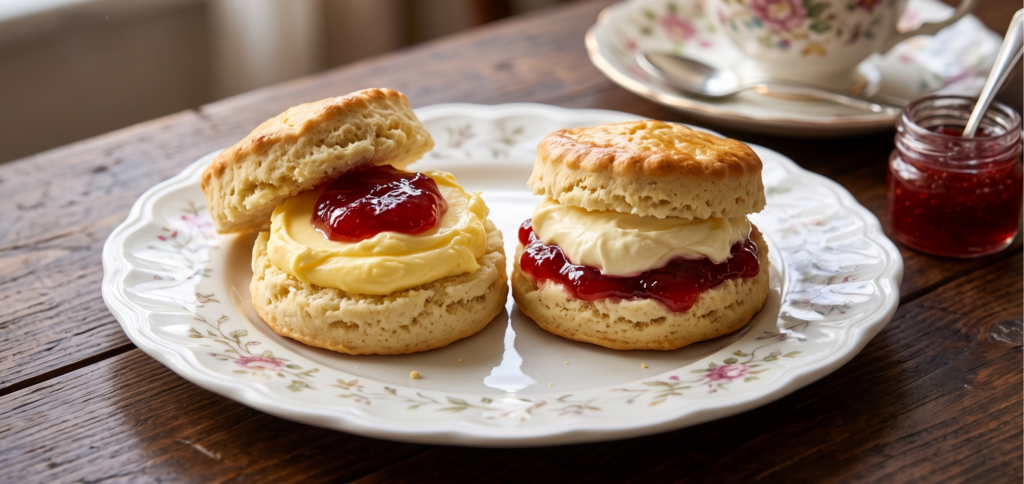
英国のティールームで、温かなスコーンとクロテッドクリーム、イチゴジャム、ポットの紅茶が運ばれてきたら、皆さんはまず、何から始めますか?
スコーンを割り、クリームを塗ってからジャムを載せる。それとも、赤いジャムの上にクリームをたっぷり置くでしょうか。ほんの小さな順番の違いですが、英国南西部では、それが土地の境界線を示すことがあります。
デヴォンではクリームが先、テイマー川を越えたコーンウォールではジャムが先。材料は同じでも、どちらの方法が「正しい」かを尋ねれば、地元の人々は笑顔のまま、なかなか譲ってくれません。
けれど、クリームティの魅力は、この愉快な論争だけではありません。何段もの皿にサンドイッチやケーキが並ぶアフタヌーンティよりも素朴で、旅の途中のティールームにも、家庭の台所にもよく似合います。
焼きたてのスコーンを自分の手で仕上げ、ポットの紅茶を飲みながら会話を楽しむ時間そのものが、英国らしい食文化の一部です。
華やかすぎず、堅苦しすぎないのに、土地の物語は驚くほど豊かです。今回のエッセイでは、小さな皿の上に現れるデヴォンとコーンウォールの歴史、風景、郷土への誇りをたどります。
A Border Drawn in Jam and CreamDevon, Cornwall and Britain’s Sweetest Rivalry

Introduction
A traveller crosses the River Tamar in south-west England and stops at a tearoom. The plate looks identical to the one served in the previous county: warm scones, red jam, clotted cream and a pot of tea.
Then the knife moves towards the scone, and an invisible border appears.
In Devon, the cream goes first. In Cornwall, the jam goes first.
The ingredients have not changed, yet the “correct” method has been reversed by crossing a river. Ask a local which order is proper and the answer will come with a smile. The smile, however, should not be mistaken for a willingness to compromise.
Few British disagreements are as peaceful, or as delicious, as the argument served with a cream tea.
A Small British Performance

Despite its name, a cream tea is not tea with cream poured into it. It is a simple meal of scones, jam, clotted cream and tea. Compared with afternoon tea, with its sandwiches, cakes and tiers of china, a cream tea is modest and direct. It suits a grand hotel, but is equally at home in a village tearoom, a garden or a family kitchen.
Split open a freshly baked scone and the warm centre releases the smell of flour and butter. Add cool, dense cream and sharp, sweet jam. The crumbly scone, rich dairy flavour and bright fruit meet in one mouthful. A sip of tea clears the richness.
There are only four main characters, but the guest completes the performance. The scone must be split, the toppings chosen and the order decided. Sometimes the meal includes a debate about what another person has done wrong.
Devon’s Story of the Beginning
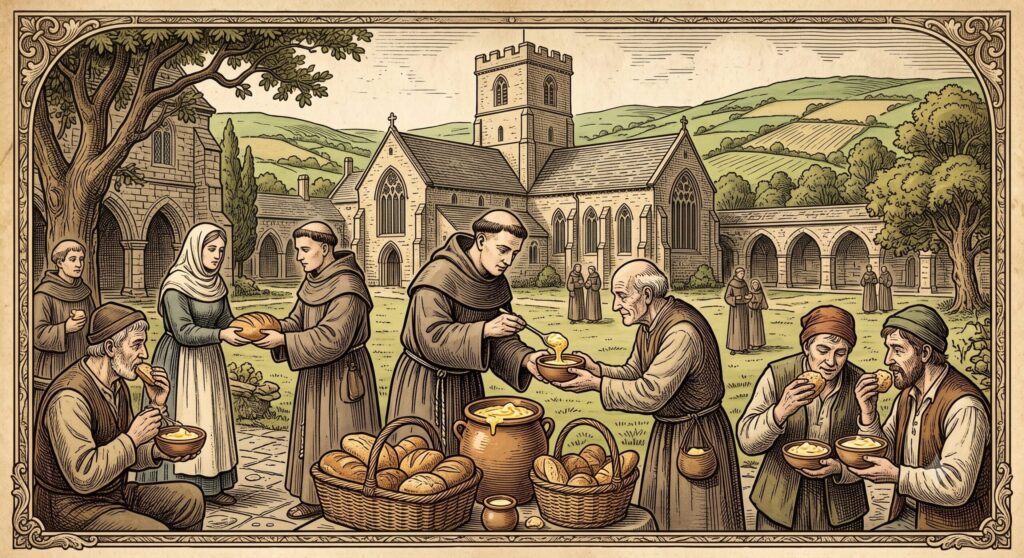
The Devon method begins with a generous layer of clotted cream, spread across the scone like butter. Jam is placed on top, bright red against the pale cream.
Devon also has a famous story connecting the cream tea to its own soil. According to local legend, Tavistock Abbey was rebuilt after Viking raiders destroyed it in 997. The monks are said to have rewarded the workers with bread, cream and fruit preserves, creating an ancestor of the modern cream tea.
There is no proof that an eleventh-century table held the same scones and strawberry jam found in tearooms today. The tale is better understood as a cherished local legend than as a historical certificate.
Yet food traditions do not live by evidence alone. Stories can become part of the flavour.
Devon is a county of farmland, dairy cattle and wooded valleys. Here, cream does not feel like a decorative extra. It forms the base of the dish, thick enough to support everything above it. At Watersmeet in north Devon, cream teas have been served since the beginning of the twentieth century. After a riverside walk, with wet boots and a dripping coat, tea and scones can feel like a return to civilisation.
Devon claims more than a method. It claims a story of beginning and continuation, woven into its landscape and daily life.
Cornwall’s Claim to the Land

Across the Tamar, Cornwall reverses the order. Jam is spread first, and clotted cream is placed proudly on top.
There are practical reasons. Thick cream can be spooned on to jam more easily than spread across a slippery surface. The jam may also protect it from the warmth of the scone.
But there is a more Cornish answer: why hide the cream?
Cornwall has a powerful sense of identity, shaped by its language, Atlantic coast and mining history. During the eighteenth and nineteenth centuries, copper and tin transformed its towns and landscape, while Cornish mining skills travelled around the world. Clotted cream, too, has roots not only in tourism but in farms and working lives.
Today, Cornish Clotted Cream is legally protected as a product connected to Cornwall. It must be made from Cornish milk and according to particular standards. Its thick texture and pale golden crust belong to a product tied to place.
For Cornwall, the cream is not a topping that could have come from anywhere. It represents local milk, pasture, skill and memory. Placing it above the jam makes it the visible centre of the scone.
Devon treats cream as the foundation. Cornwall wears it as the crown.
The Argument Is Part of the Meal

Which version actually tastes better?
Probably neither by very much. If the ingredients and quantities are the same, they will be mixed together a few seconds later. Anyone hoping for a scientific verdict may be disappointed.
The argument survives because taste is not the only thing being defended.
Devon tells a story about beginnings. Cornwall points to the land and the cream itself. One county places cream underneath; the other gives it the highest position. The difference allows people to say, lightly but sincerely, “This is how we do it where I come from.”
Far from spoiling the cream tea, the disagreement helps to complete it.
A cream tea is not fast food, even when prepared quickly. Tea is poured, scones are split, bowls are passed and someone notices the next plate. Conversation grows between these small actions. On an afternoon when rain has ruined the plan, a hot cup and a warm scone can still rescue the day.
The cream tea is both ordinary and ceremonial. It requires no silver cutlery or perfect manners, yet it creates a pause. It is open to everyone, yet no one remains entirely neutral once the jam and cream appear.
In Devon, try the cream first. In Cornwall, begin with the jam. Elsewhere, follow your appetite—but allow the person beside you the pleasure of explaining why you are wrong.
The border between jam and cream cannot be found in an atlas. It appears only when a scone is split, and disappears with the final bite. The next afternoon, in another tearoom, it will be drawn again in red and pale gold while the tea is still hot, and Britain’s sweetest rivalry will begin as if for the first time.
ジャムとクリームで引かれた境界線|本文和訳デヴォンとコーンウォール、英国で最も甘い対立
はじめに
英国南西部を旅して、テイマー川を越えたばかりの人がティールームに入る。運ばれてきたのは、さっきまでいた町とほとんど同じ皿だ。温かなスコーン、赤いジャム、厚いクロテッドクリーム、そしてポットの紅茶。
ところが、ナイフを伸ばした瞬間、見えない境界線が現れる。
デヴォンではクリームが先。コーンウォールではジャムが先。
旅人の手が一瞬止まる。材料は同じなのに、川を1本越えただけで「正しい食べ方」が逆になったからだ。しかも地元の人に尋ねれば、どちらも冗談めかして笑いながら、少しも譲る気はない。
英国には、政治や天気以外にも議論を始める方法がある。なかでもクリームティほど、平和で、甘く、皿の上だけで完結する論争は珍しい。
クリームティという小さな舞台
初めて名前を聞いた人は、紅茶にクリームを浮かべた飲み物を想像するかもしれない。けれど、クリームティは飲み物の名前ではない。一般的には、スコーン、ジャム、クロテッドクリーム、ポットの紅茶から成る、英国らしい軽食である。
フィンガーサンドイッチや小さなケーキが何段もの皿に並ぶアフタヌーンティと比べると、ずっと簡素だ。銀のティースタンドも、特別な服装もいらない。村のティールームにも、海辺のホテルにも、庭にも、教会の集会所にもよく似合う。
しかし、簡素であることは、味気ないことではない。
焼きたてのスコーンを横に割ると、まだ少し温かい断面から小麦とバターの香りが立つ。そこへ、冷たく濃厚なクリームと、甘酸っぱいジャムを載せる。口の中では、ほろりとした生地、乳脂肪の厚み、果物の明るい酸味が重なる。紅茶をひと口飲めば、濃さがほどけ、また次のひと口へ戻りたくなる。
登場するのは4つだけだが、どれか1つが欠ければ舞台は成立しない。アフタヌーンティが眺める楽しさを含む華やかな演目だとすれば、クリームティは食べる人自身が手を動かして完成させる、小さな参加型の劇である。そして、その劇にはしばしば、順番をめぐる即興の言い争いまで付いてくる。
デヴォンが語る「始まり」
デヴォン式では、まずスコーンにクロテッドクリームをたっぷり塗り、その上にジャムを載せる。クリームをバターのような土台として使う食べ方だ。白いクリームの上に赤いジャムが置かれるので、見た目にも鮮やかである。
デヴォンには、この食文化の始まりを自分たちの土地に結びつける有名な物語がある。
伝説によれば、997年にヴァイキングの襲撃で破壊されたタヴィストック修道院が再建される際、修道士たちは働く人々にパンとクリーム、果物の保存食を振る舞ったという。それが後のクリームティにつながった、というのだ。
もちろん、11世紀のテーブルに現在と同じスコーンとイチゴジャムが並んでいたことが証明されているわけではない。起源というより、デヴォンで長く語り継がれてきた郷土の物語と考えたほうがよいだろう。
けれど、食文化にとって、物語は証明書とは別の力を持つ。
なだらかな農地と酪農の風景を持つデヴォンでは、クリームは脇役ではない。先に厚く塗られ、スコーン全体を支える。北デヴォンの深い谷にあるウォーターズミートのティールームでは、20世紀初頭からクリームティが供されてきた。森を歩き、川沿いの道で雨に降られたあと、温かい紅茶とスコーンに迎えられる。その経験まで含めて、クリームティは土地の味になる。
デヴォンが誇っているのは、単なる塗り方ではないのかもしれない。「この習慣を昔から自分たちの暮らしの中で育ててきた」という、始まりと継続の物語なのである。
コーンウォールが見せる「土地」
テイマー川の向こう、コーンウォールでは順番が逆になる。まずジャムを塗り、その上にクロテッドクリームを載せる。
理由は実用的だ。固く濃厚なクリームは、滑りやすいジャムの上に無理に塗るのではなく、スプーンですくって載せればよい。温かなスコーンとクリームの間にジャムが入るため、クリームが溶けにくいとも言われる。
しかし、もっとコーンウォールらしい理由もある。
黄金色の薄い膜をまとったクロテッドクリームを、なぜジャムの下に隠す必要があるのか。
コーンウォールには、独自の言語と文化、海と鉱山に形づくられた強い地域意識がある。18世紀から19世紀にかけて、銅や錫の採掘は景観と町を変え、そこで生まれた技術は世界へ渡った。濃厚なクリームもまた、優雅な観光客のためだけではなく、農場や働く人々の暮らしに根を持っていた。
現在、「コーニッシュ・クロテッドクリーム」という名称は、コーンウォール産の牛乳と土地に結びついた製法を条件に、原産地名称として保護されている。つまり、コーンウォールにとってクリームは、どこからでも運べる白い添え物ではない。土地の牧草、牛乳、技術、記憶を含んだ名産品である。
そう考えると、ジャムの上にクリームを堂々と載せる方法は、単なる好み以上のものに見えてくる。デヴォンがクリームを「すべてを支える土台」と考えるなら、コーンウォールはクリームを「最後に載せる王冠」と考えているのだ。
同じものを大切にしているからこそ、扱い方が正反対になる。
論争も一緒に供される
では、実際にはどちらがおいしいのだろう。
おそらく、思っているほど大きな差はない。材料も量も同じなら、数秒後には口の中で一緒になる。科学的な決着を期待する人には、少し残念な結論である。
それでも論争が消えないのは、争っているのが味だけではないからだ。
デヴォンは始まりの物語を語る。コーンウォールは土地そのものを見せる。一方はクリームを土台にし、もう一方は頂上に置く。スコーンの上の小さな順番が、「自分たちの土地ではこうする」という帰属意識を、重苦しくない形で表している。
そして、その言い争いはクリームティの魅力を損なうどころか、かえって完成させている。
クリームティは、急いで栄養を補給するための食事ではない。ポットから紅茶を注ぎ、スコーンを割り、ジャムとクリームを回し、隣の人の皿を見て口を出す。そんな小さな動作の間に、会話が生まれる。雨で予定が崩れた午後も、濡れたコートを椅子に掛け、湯気の立つカップを持てば、まだ救いようがあるように思えてくる。
高級ホテルでも、村のティールームでも、クリームティは同じように人を少しだけ立ち止まらせる。堅苦しい作法はないが、土地ごとの作法はある。誰でも楽しめるが、誰も完全には中立でいられない。
デヴォンではクリームを先に。コーンウォールではジャムを先に。それ以外の場所では、好きなほうを選べばよい。ただし、同じテーブルの誰かが、その選択について意見を述べる権利まで奪ってはいけない。
ジャムとクリームの境界線は、地図帳には載っていない。スコーンを割ったときにだけ皿の上に現れ、最後のひとかけを食べれば消えてしまう。
けれど次の午後には、また別のティールームで、赤と白のあいだに静かに引き直される。その横では紅茶が冷めないうちに注がれ、英国で最も甘い対立が、何事もなかったように始まるのである。
おわりに
クリームを先に塗っても、ジャムを先に塗っても、口に入れば数秒後には同じ味になるかもしれません。それでも、この論争が長く愛されているのは、人々が味の順番だけを守っているのではないからでしょう。
デヴォンはクリームティの始まりにつながる物語を語り、コーンウォールは土地の牛乳と技術から生まれるクロテッドクリームを誇ります。ひとつのスコーンが、その土地で受け継がれてきた記憶や帰属意識を、深刻になりすぎない形で伝えているのです。
旅先でクリームティを注文する機会があれば、ぜひその土地の食べ方を試してみてください。いつもとは違う順番でジャムとクリームを乗せるだけでも、食べ物の向こうにある風景が少し近く感じられるはずです。
そして、同じテーブルの人が別の方法を選んだなら、どちらが正しいかよりも、その違いまでを会話の一部として楽しむのも素敵ですね。



 | British English | 1,000 words はじめに 英国のティールームで、温かなスコーンとクロテッドクリ)