
CEFR A2(初級) | British English | 500 words
はじめに
新しいノートを開いたとき、なぜか最初の1ページだけは、いつもより丁寧に書きたくなります。
日付の位置をそろえ、タイトルを少し大きくし、文字の間隔まで気にする。
その瞬間、私たちはノートに予定や言葉を書き込んでいるだけではなく、「今度こそ、きちんと暮らしたい」という小さな願いまで託しているのかもしれません。
けれど、ページが進むにつれて、文字は傾き、矢印や買い物メモが増え、ノートは少しずつ騒がしくなっていきます。
今回のエッセイは、そんな「きれいに始まり、生活になじんでいくノート」の変化を通して、理想の自分と実際に生きる自分の両方を、やさしく見つめ直すおはなしです。
Why the First Page of a New Notebook Is Always So Neat
Introduction
When we open a new notebook, we become a slightly more serious version of ourselves.
There is something special about a clean, empty page. We sit up straighter and choose our pen more carefully than usual. It feels as if the first page will represent everything that comes after it.
A Small Promise on the First Page
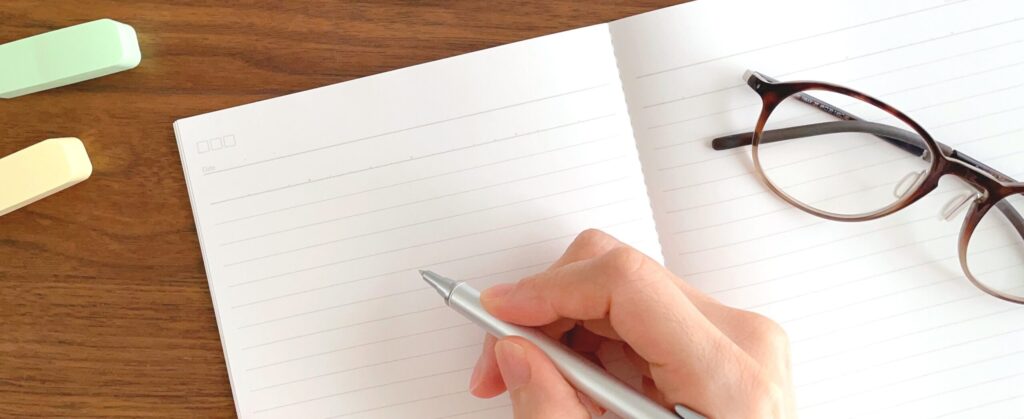
We write the date neatly in the top corner. We make the title a little larger and try to leave equal spaces between the words. Even our handwriting looks better than usual.
“This time, I will keep everything organised,” we tell ourselves.
We will write down our plans clearly. We will record good ideas before we forget them. We will create a notebook that we can read again without feeling embarrassed.
At that moment, we have great trust in our future selves.
However, this promise does not usually last very long.
On page 2, the writing begins to lean slightly. On page 3, a hurried arrow appears. By page 4, a quick note has escaped from the lines and found its way into the corner.
Soon, shopping lists, unfinished ideas and strange numbers written during telephone calls are all living together.
The beautiful notebook has become a rather noisy place.
When Messy Writing Becomes Part of Life
But is this really a failure?
If a notebook stayed as neat as its first page until the end, it would probably be a notebook that nobody had really used.
Its writing might be beautiful. There might be no mistakes, crossed-out words or signs of hurry. It would be lovely to look at, but there would be little room for real life.
A well-used notebook holds part of its owner’s time.
The writing from a busy day may lean forwards. A page from a difficult day may have several words rubbed out. Important sentences have lines under them, and cancelled plans have large crosses through them.
Perhaps one corner is folded. There may be a small tea stain. There may even be a page that the owner no longer understands.
It may not be perfectly neat, but it is alive.
The Person We Hoped to Be
When we buy a new notebook, perhaps we are not only buying paper.
We are buying a picture of the person we hope to become: someone who lives carefully, remembers every plan and keeps every thought in the right place.
We are buying a small future in which nothing has gone wrong yet.
That is why the writing on the first page is so neat.
Of course, life does not continue as planned. Plans change, ideas become mixed, and our handwriting slowly becomes less careful. But this does not make the first promise meaningless.
The first page shows the person we hoped to be.
The later pages show the person who actually lived.
Both are real.
So let us continue to write carefully on the first page of every new notebook. It does not matter if the careful writing lasts for only 3 pages. It does not matter if the words begin to lean on page 4 or if a shopping list appears in the margin.
A notebook that did not stay perfect is not a failed notebook.
Little by little, it has simply learnt how to fit into its owner’s life.
新しいノートの1ページ目だけ字が丁寧になる|本文和訳
イントロダクション
新しいノートを開くと、人は少しだけ立派になる。
まだ何も書かれていない白いページを前にすると、いつもより姿勢を正し、ペンまで慎重に選びたくなる。
まるで、その1ページ目が、これから始まる生活のすべてを代表しているかのように。
1ページ目には、小さな決意がある
日付は、右上の決めた位置に書く。タイトルは少し大きく、読みやすい字で。文字の間隔にも気を配り、普段なら気にしない「とめ」や「はらい」まで丁寧に書く。
「今度こそ、きちんと使おう」新しいノートを手にしたとき、私たちは心の中でそう約束する。
予定を分かりやすく整理しよう。思いついたことを忘れないように書き留めよう。あとで読み返しても恥ずかしくない、整ったノートにしよう。
このときの私たちは、未来の自分をかなり信用している。
けれど、その決意はあまり長く続かない。
2ページ目では、少し字が傾く。3ページ目には、急いで書いた矢印が現れる。4ページ目になると、行を無視した走り書きがページの隅に入り込む。
やがて、買い物リスト、思いついた言葉、電話中に書いた意味不明な数字まで同居し始める。
あれほど美しかったノートは、いつの間にか、ずいぶん騒がしい場所になっている。
乱れた文字に、生活が宿る
けれど、それは失敗なのだろうか。
もし最後まで1ページ目のように美しいノートがあったなら、おそらく、それはほとんど使われていないノートだ。
整った文字だけが並び、書き直しも、迷いも、急いだ跡もない。眺めるには美しいが、そこには生活が入り込む余地がない。
使われたノートには、その人の時間が残る。
急いでいた日の文字は前のめりになり、考え込んだ日のページには何度も消した跡がある。大事な言葉には線が引かれ、必要のなくなった予定には大きなバツがついている。
紙の端が少し折れ、飲み物の染みがつき、何について書いたのか自分でも分からないページが1枚くらいある。
きれいではないかもしれない。しかし、確かに生きている。
理想の自分と、実際に生きた自分
私たちは、新しいノートを買うとき、紙だけを買っているのではないのだと思う。
今度こそ丁寧に暮らせる自分。予定を守れる自分。考えをきちんと整理できる自分。
まだ何も失敗していない、小さな未来を1冊買っている。
だから、1ページ目の字は丁寧になる。
もちろん、その理想どおりには進まない。予定は変わり、考えはまとまらず、文字は少しずつ乱れていく。それでも、最初の決意が無駄だったわけではない。
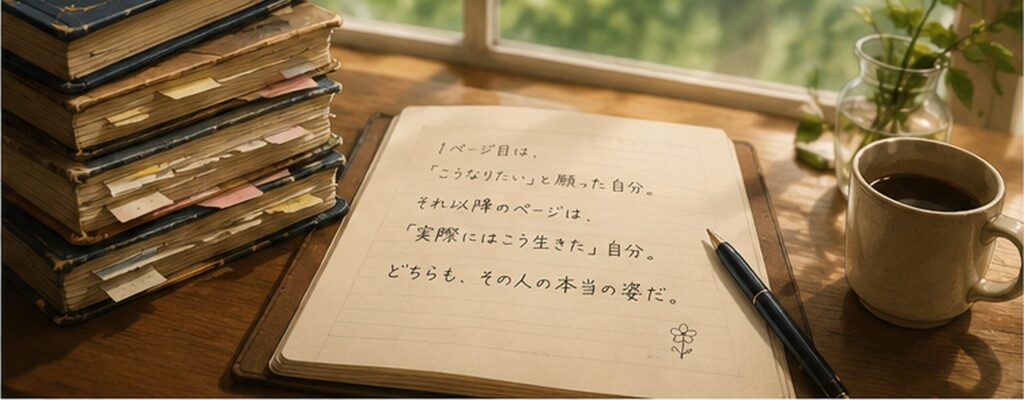
1ページ目は、「こうなりたい」と願った自分。
それ以降のページは、「実際にはこう生きた」という自分。
どちらも、その人の本当の姿だ。
新しい1ページ目を書くときは、また丁寧な字を書こう。それが3ページしか続かなくても構わない。4ページ目から文字が斜めになっても、余白に買い物リストが入り込んでもよい。
理想どおりに使えなかったノートは、失敗したノートではない。
少しずつきれいではなくなっていくのは、そのノートがようやく、持ち主の暮らしになじみ始めた証拠なのだから。
おわりに
読み終えたあと、手元にある使いかけのノートを、少し違った目で見たくなりました。
途中で乱れた文字も、消した跡も、余白にはみ出したメモも、だらしなさの証拠ではなく、その日その日の時間が残った跡なのかもしれません。
最初の1ページには「こうなりたい」と願う自分がいて、その後のページには、予定どおりにはいかなくても毎日を進んできた自分がいる。
どちらか一方だけが本当なのではなく、どちらも自分です。
新しいノートを開くたび、また少し丁寧に書き始めればいい。
たとえ数ページしか続かなくても、その先に生活の跡が重なっていくことこそ、ノートが自分のものになっていく過程なのだと思います。



 | British English | 500 words はじめに 新しいノートを開いたとき、なぜか最初の1ページだけは、いつもより丁寧に書きたくなります。 日付の位)