
CEFR B2(中上級) | British English | 800 words
はじめに
標高3,454メートル、ヨーロッパで最も高い場所にある鉄道駅へ。
スイスを代表する観光地ユングフラウヨッホでは、列車とゴンドラを乗り継ぐ道のりそのものが、壮大な旅の一部です。
山の内部を走る鉄道、眼下に広がるアレッチ氷河、氷で造られた宮殿、そして雲の上にもきちんと用意されたレストランやチョコレートショップ。手つかずの大自然と、驚くほど緻密な観光システムが共存する風景には、観光立国スイスらしさが凝縮されています。
今回の英文エッセイでは、スイスを愛する紀行ライターの少し皮肉な案内とともに、「トップ・オブ・ヨーロッパ」の魅力を訪ねます。
JungfraujochSwitzerland’s Grand Balcony Above the Clouds
The Journey Is Part of the Spectacle
Switzerland has many mountains, but we have never been content merely to admire them from below. We prefer to place a railway inside one, add polished signs in several languages, and invite the world up for coffee. Jungfraujoch is perhaps our finest example of this national habit.
The destination lies 3,454 metres above sea level, between the Jungfrau and the Mönch, and contains Europe’s highest railway station. “Top of Europe” is the famous slogan. It does not mean that you are standing on Europe’s highest mountain, of course, but Switzerland has always understood that accurate geography and excellent marketing can travel together quite peacefully.
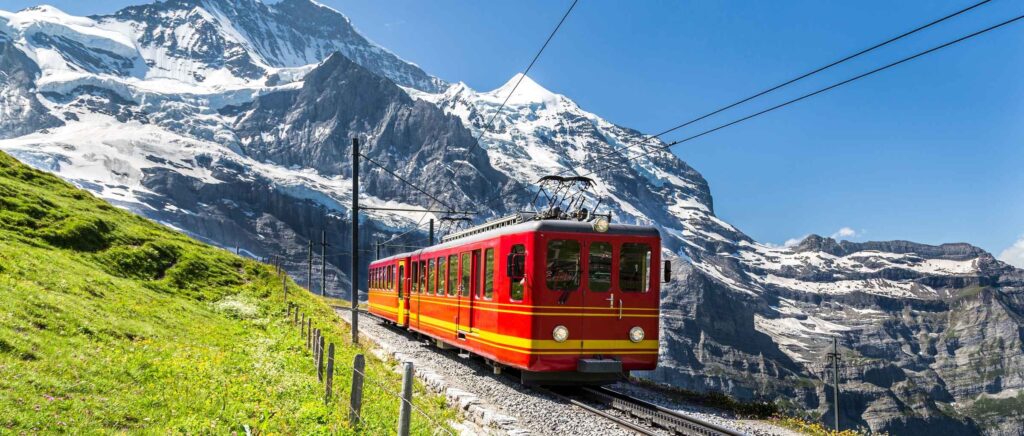
Most visitors begin around Interlaken and continue through Grindelwald or Lauterbrunnen. The modern route from Grindelwald Terminal uses the Eiger Express gondola to reach Eigergletscher, where passengers change to the Jungfrau Railway. The older approach through Lauterbrunnen, Wengen and Kleine Scheidegg takes longer, but rewards travellers with a gentler unfolding of meadows, villages and mountain walls. One route is efficient; the other is romantic. Naturally, Switzerland sells both.
The final railway climbs through tunnels inside the Eiger and Mönch. This extraordinary line has carried passengers to Jungfraujoch since 1912. Construction began in 1896 and demanded years of labour in brutal high-altitude conditions. Thirty workers lost their lives, a fact worth remembering when today’s passenger complains that the Wi-Fi briefly disappeared inside the mountain.
ed. Sometimes the meal includes a debate about what another person has done wrong.
Ice, Engineering and a Very Swiss View
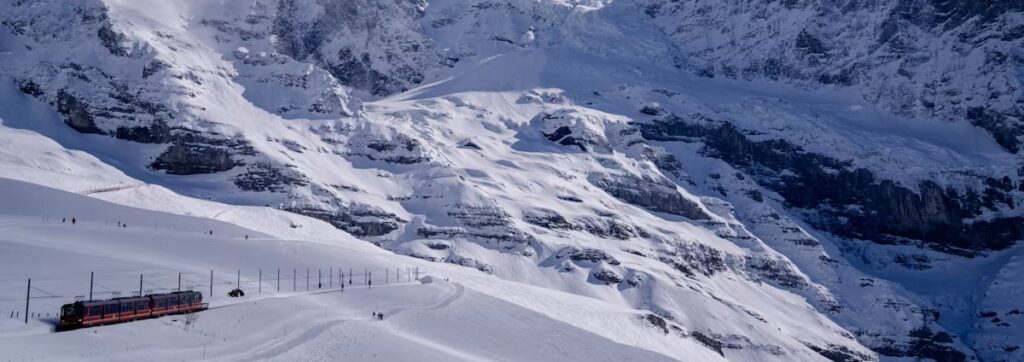
When the train doors open, the first surprise is often physical. The air is thinner, the temperature may be below freezing even when the valleys are warm, and enthusiastic visitors sometimes discover that climbing one staircase feels strangely heroic. Walk slowly, drink water, wear proper shoes and bring layers. The Alps are magnificent, but they do not adjust themselves to match your summer wardrobe.
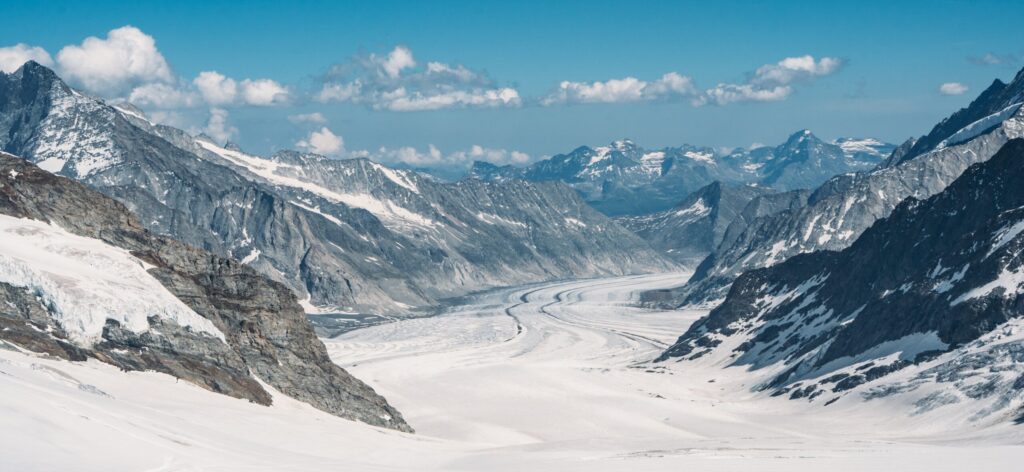
A lift carries visitors towards the Sphinx terrace, at 3,571 metres, where the landscape suddenly expands. On a clear day, the Aletsch Glacier flows away below like a vast white river between dark ridges and four-thousand-metre peaks. It is the largest and longest glacier in the Alps and forms part of the UNESCO World Heritage site Swiss Alps Jungfrau-Aletsch, recognised for both its beauty and its geological importance.
This is the moment when even professional travel writers become temporarily useless. We produce words such as “majestic”, “timeless” and “breathtaking”, then realise that thousands of people have already used them. The glacier remains unimpressed. It simply continues across the landscape, carrying within its ice the record of changing seasons and a climate that is changing far too quickly.
Back inside, Jungfraujoch becomes an alpine attraction complex. Visitors can walk carefully through the Ice Palace, where polished passages and sculptures are carved into ice. The Alpine Sensation exhibition tells the story of the railway and the people who built it. There are restaurants, shops, panoramic displays and, because this is Switzerland, an exceptionally well-placed opportunity to buy chocolate.
Purists sometimes complain that commerce weakens the mountain experience. I understand the concern. Yet there is something honest about Jungfraujoch’s mixture of wilderness and machinery. You are not pretending to be a lonely explorer. You have arrived by a carefully engineered public transport system, probably carrying a timed reservation and standing beside visitors from five continents. The mountain is real; so is tourism. For all our seriousness, we are rather pleased that the mountains still know how to make us look ridiculous.
How to Enjoy the Top of Europe
The best visit begins with realistic expectations. Check the weather and webcams before travelling, but remember that conditions change quickly. Reserve enough time for the journey and do not treat Jungfraujoch as a hurried photograph between breakfast and dinner. The official advice is to allow a full day, which is sensible. Swiss trains may be efficient, but wonder should not be placed on a seven-minute connection.
Crowds are part of the experience, especially in busy seasons. Arriving early can make the visit calmer, and advance seat reservations may be required or strongly advised depending on the date. More importantly, pause occasionally. Look away from the signs, the gift shops and the queue for the perfect photograph. Watch clouds move across the peaks. Listen to the wind. Notice how small the trains appear below.

Jungfraujoch is expensive, carefully organised and shamelessly famous. It is also astonishing. That combination explains Switzerland rather well. We protect dramatic landscapes, build improbable transport into them, charge accordingly, and then deliver a view that makes visitors forgive us.
At the end of the day, the train descends towards green fields, wooden chalets and ordinary oxygen. The glacier disappears behind rock, and the world becomes softer again. You may return with chocolate, photographs and a slightly lighter wallet. More importantly, you return with the strange feeling that, for a few hours, Switzerland allowed you to visit another planet—and ensured that the connection departed on time.
ユングフラウヨッホ|本文和訳雲の上に広がるスイスの壮大なバルコニー
目的地へ向かう旅そのものが、ひとつの見せ場
スイスには山がたくさんあります。しかし私たちスイス人は、山を下から眺めるだけでは、どうも満足できなかったようです。山の内部に鉄道を通し、何か国語もの案内表示をきれいに並べ、世界中の人々をコーヒーに招待する。ユングフラウヨッホは、そんな私たちの国民的な習性を最も見事に表した場所かもしれません。
ユングフラウとメンヒの間に位置するユングフラウヨッホには、標高3,454メートルにあるヨーロッパ最高地点の鉄道駅があります。有名な宣伝文句は「トップ・オブ・ヨーロッパ」です。もちろん、ここがヨーロッパで最も高い山だという意味ではありません。しかしスイスは昔から、正確な地理と優秀なマーケティングが、実に平和に共存できることをよく理解しています。
多くの旅行者はインターラーケン周辺から出発し、グリンデルワルトまたはラウターブルンネンを経由して山を目指します。グリンデルワルト・ターミナルから向かう現代的なルートでは、アイガー・エクスプレスというゴンドラに乗ってアイガーグレッチャーへ行き、そこでユングフラウ鉄道に乗り換えます。一方、ラウターブルンネン、ヴェンゲン、クライネ・シャイデックを経由する昔ながらの道のりは、もう少し時間がかかります。その代わり、牧草地、山村、そびえ立つ岩壁が少しずつ姿を現していく、穏やかで美しい旅を楽しめます。片方は効率的で、もう片方はロマンチック。当然ながら、スイスはその両方を販売しています。
最後に乗るユングフラウ鉄道は、アイガーとメンヒの内部に掘られたトンネルを登っていきます。この驚くべき鉄道路線は、1912年から旅行者をユングフラウヨッホへ運び続けています。建設が始まったのは1896年。厳しい高地環境のなかで、長年にわたる過酷な労働が必要でした。工事では30人もの労働者が命を落としています。そのことは、山の中でWi-Fiが一瞬途切れただけで不満を漏らす現代の乗客が、少し思い出してもよい事実でしょう。
氷と土木技術、そして実にスイスらしい眺め
列車の扉が開いたとき、最初の驚きは景色ではなく、身体にやって来ることがあります。空気は薄く、谷では暖かい日でも、山上の気温は氷点下になることがあります。元気いっぱいだった旅行者が、階段を一つ上っただけで、なぜか英雄的な偉業を達成したような気分になることも珍しくありません。ゆっくり歩き、水分を取り、歩きやすい靴を履き、重ね着を用意しましょう。アルプスは壮大ですが、あなたの夏服に合わせて気候を調整してはくれません。
エレベーターに乗ると、標高3,571メートルのスフィンクス展望台へ向かうことができます。そこでは、景色が突然、大きく開けます。晴れた日には、アレッチ氷河が、暗い尾根と標高4,000メートル級の山々の間を流れる巨大な白い川のように見えます。アレッチ氷河はアルプスで最大かつ最長の氷河で、「スイス・アルプス ユングフラウ=アレッチ」としてユネスコ世界自然遺産の一部に登録されています。その美しさだけでなく、地質学的な重要性も高く評価されている地域です。
この光景を前にすると、プロの紀行ライターでさえ、一時的に役に立たなくなります。「雄大な」「時を超えた」「息をのむような」といった表現を並べてから、そのどれもが、すでに何千人もの人に使われてきたことに気づくのです。もちろん、氷河はそんなことを気にしません。ただ静かに大地を横切りながら、その氷の中に移り変わる季節の記録と、あまりにも急速に変化する気候の痕跡を抱えています。
建物の中へ戻ると、ユングフラウヨッホは高山の観光施設へと姿を変えます。氷をくり抜いて造られた「アイスパレス」では、磨かれた氷の通路や彫刻の間を、足元に気をつけながら歩きます。「アルパイン・センセーション」では、ユングフラウ鉄道と、それを建設した人々の物語を知ることができます。さらにレストラン、売店、パノラマ映像の施設もあります。そして、ここはスイスですから、雲の上という実に都合のよい場所にも、チョコレートを買う機会が用意されています。
商業施設が増えると、山本来の体験が損なわれると批判する人もいます。その心配は私にも理解できます。しかしユングフラウヨッホにある、大自然と機械技術の組み合わせには、ある種の正直さがあります。ここで、自分を孤独な探検家だと思い込む必要はありません。あなたは精密に設計された公共交通機関で到着し、おそらく時間指定の予約券を持ち、五大陸からやって来た旅行者たちと肩を並べています。山が本物であるのと同じように、観光もまた本物です。そして、何事にも真面目な私たちスイス人は、山々が今でも人間を少し滑稽に見せる方法を知っていることを、内心ではかなり喜んでいるのです。
「トップ・オブ・ヨーロッパ」を楽しむ方法
ユングフラウヨッホを満喫するには、現実的な期待を持って出かけることが大切です。出発前に天気予報やウェブカメラを確認しましょう。ただし、山の天候は急に変わります。旅には十分な時間を取り、朝食と夕食の間に写真を一枚撮るだけの慌ただしい観光地として扱わないでください。公式案内では、一日を確保することが勧められています。これは賢明な助言です。スイスの鉄道がいくら効率的でも、感動まで7分間の乗り換え時間に押し込むべきではありません。
混雑も、特に観光シーズンには体験の一部です。早い時間に到着すれば、比較的静かに見学できます。また、時期によっては座席予約が必要、あるいは強く推奨されます。しかし、それ以上に大切なのは、ときどき立ち止まることです。案内板や土産物店、「完璧な一枚」を撮るための行列から目を離してみてください。山頂を横切る雲を眺め、風の音を聞き、はるか下を走る列車がどれほど小さく見えるかに気づいてください。
ユングフラウヨッホは高価で、細部まで計画され、少しも遠慮することなく世界的に有名です。そして同時に、本当に驚くべき場所でもあります。その組み合わせは、スイスという国を実によく表しています。私たちは劇的な自然景観を守り、その中へ常識では考えにくい交通機関を造り、それに見合った料金を請求し、最後には旅行者がすべてを許してしまうような景色を提供するのです。
一日の終わり、列車は緑の牧草地、木造のシャレー、そして普通の濃さの酸素がある世界へと下っていきます。氷河は岩山の向こうへ消え、周囲の景色は再び穏やかになります。手元には、チョコレートと写真、そして少し軽くなった財布が残っているかもしれません。けれど、それ以上に心に残るのは、ほんの数時間、スイスが別の惑星への訪問を許してくれたような、不思議な感覚です。そしてもちろん、その惑星からの帰りの接続列車も、きちんと定刻に出発したのです。
おわりに
ユングフラウヨッホは、雄大な自然を眺めるだけの場所ではありません。
山の内部を走る鉄道、氷河を見渡す展望台、そして雲の上にまで行き届いた観光設備。そのすべてが、自然を愛しながら、驚くほど効率よく旅人を迎えるスイスらしさを物語っています。
少し高価で、少し混雑し、それでも一度は訪れたくなる場所。
列車で谷へ戻るころには、なんとなく別の惑星を旅したような不思議な記憶も残っていることでしょう。



 | British English | 800 words はじめに 標高3,454メートル、ヨーロッパで最も高い場所にある鉄道駅へ。 スイスを代表する観光地ユングフ)