

CEFR B1(中級) | Canadian English | 1,550 words
この作品について
「My Financial Career」は、カナダの作家 Stephen Leacock によるユーモア短編です。
銀行に入るだけで極度に緊張してしまう語り手が、初めて口座を開こうとして失敗を重ねます。
語り手は立派に振る舞おうとするほど不自然になり、支配人や銀行員はその態度を別の意味に受け取ります。
物語の面白さは、本人の意図と周囲の解釈が少しずつずれていく過程にあります。
Stephen Leacock
1869年にイギリスで生まれ、カナダで活躍した作家・大学教授です。
日常の小さな失敗や人間の思い込みを、軽快な語りと誇張で笑いに変える作品で知られています。
20世紀初頭の銀行
ATMやオンラインバンキングがない時代で、入出金には窓口で銀行員と話し、入金票や小切手へ手書きする必要がありました。
銀行は現在よりも形式張った場所に感じられた可能性があります。
文化的な名前
作品の中に出てくる「Pinkerton detectives」とは、広く知られた私立探偵組織です。
また「Rothschild」と「Gould」は大富豪を連想させる名前です。
語り手の秘密めいた態度から、支配人の想像が「探偵」から「富豪」へ飛躍してしまいます。
My Financial CareerStephen Leacock (1869–1944)
Whenever I enter a bank, I lose the ability to behave like a sensible person. The clerks make me nervous. The counter windows make me nervous. The sight of all that money makes me nervous. In fact, everything about a bank makes me nervous. The moment I step through the door and try to conduct even the simplest business, my mind seems to stop working. I become a different person: confused, helpless, and unable to say what I mean.
I knew this about myself before the day my financial career began. Until then, however, I had never had enough money to make the problem important. Then my salary was raised to fifty dollars a month. To me, this seemed a serious income that required serious financial arrangements. I decided that a bank was the only proper place for it. I therefore collected all the money I had—fifty-six dollars—and went to open an account. My intention was to deposit the fifty-six dollars immediately and add my full salary every month.
I entered the bank slowly and looked around. Behind a row of counter windows, clerks were writing in large books, counting money, and moving papers from one place to another. Coins clicked against the counters, papers were stamped, and customers appeared to know exactly where to go. Everyone seemed calm, efficient, and completely at home. I, on the other hand, felt as if I had entered a building where everyone understood a complicated secret except me.
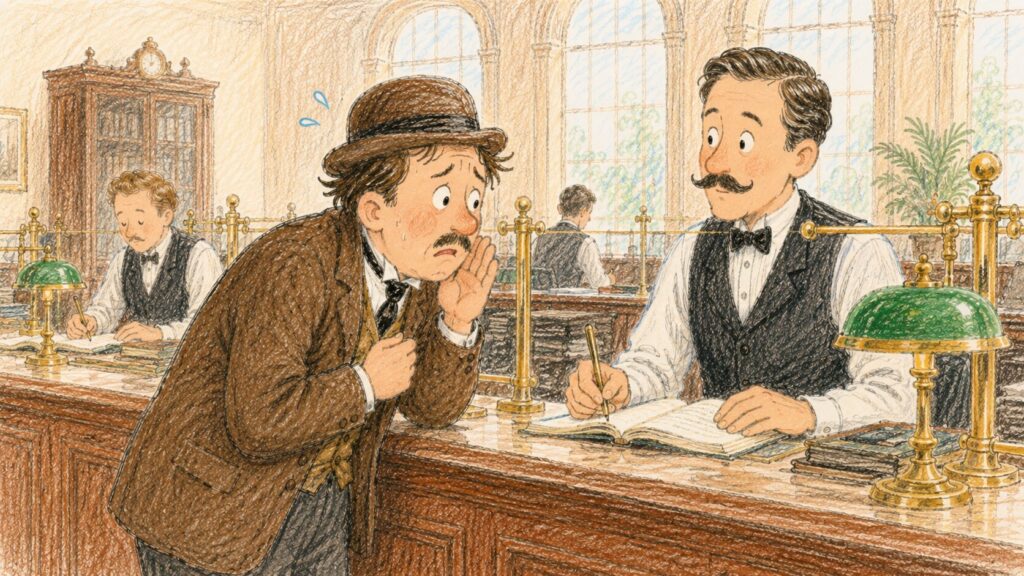
I believed that anyone opening an account had to speak personally to the manager. I do not know where I got this idea, but I was certain of it. I approached a window marked “Accountant.” The accountant was a tall, cool-looking man named Mr. Montgomery. He seemed so confident that the sight of him made me even more anxious.
“Can I see the manager?” I asked in a low, serious voice.
Then, for no sensible reason, I added, “Alone.”
The word sounded mysterious as soon as I said it. I had only meant that I wished to speak to the manager privately, but even that was unnecessary. Mr. Montgomery looked at me for a moment and then went to fetch him.
The manager came over. He was a grave, calm man with the expression of someone who was prepared to deal with important matters. Meanwhile, I stood with my fifty-six dollars crushed into a tight ball inside my pocket.
“Are you the manager?” I asked.
There was no reason to doubt that he was, but I could think of nothing else to say.
“Yes,” he replied.
“Can I see you,” I asked, “alone?”
Again I used that terrible word. Without it, however, the request somehow seemed unfinished.
The manager looked slightly alarmed. My secretive manner had clearly given him the impression that I had come with serious information. He led me into a private room, closed the door, and turned the key in the lock.
“We will not be interrupted here,” he said. “Please sit down.”
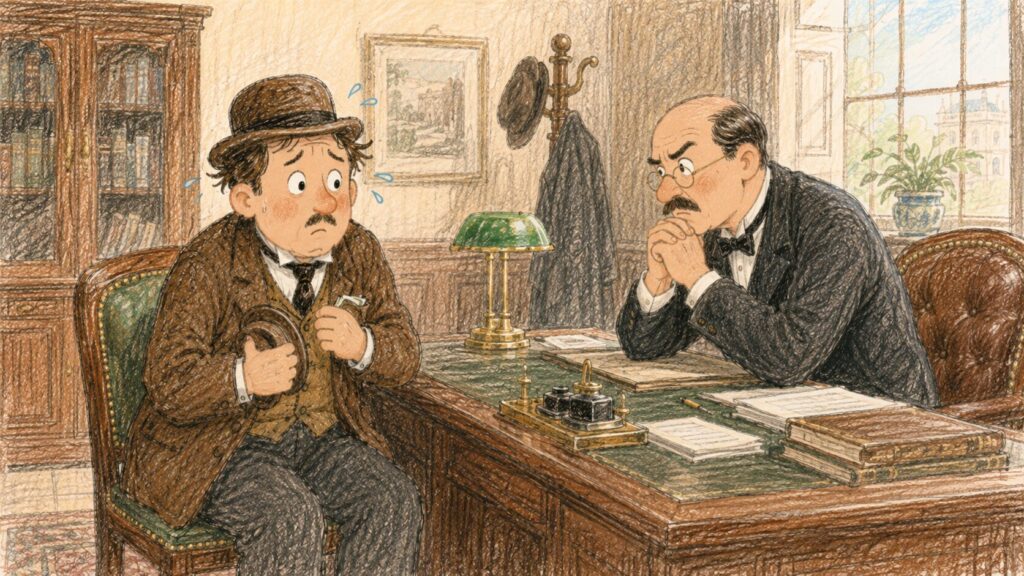
We sat facing each other across a desk. The room was quiet. The manager waited. I tried to speak, but no words came. My plan had been simple: tell him I wanted an account, give him the money, and leave. Yet in that locked room, the plan suddenly seemed impossible. The longer the silence continued, the more important and dangerous my visit appeared.
At last the manager leaned towards me.
“You are a Pinkerton detective, I suppose,” he said.
Pinkerton detectives were well known at the time, and the manager had decided that my mysterious behaviour must have some professional explanation. I understood his mistake at once. Unfortunately, knowing what he thought only made me more nervous.
“No, I am not from Pinkerton’s,” I said.
The way I said it seemed to suggest that I belonged to a rival detective agency.
“To tell the truth,” I continued, as though I had first intended to hide it, “I am not a detective at all. I have come to open an account. I intend to keep all my money in this bank.”
The manager looked relieved, but he remained serious. Now he apparently imagined that I was the son of Baron Rothschild or a young member of the wealthy Gould family.
“A large account, I suppose?” he asked.
“Fairly large,” I whispered.
I could feel the ball of money in my pocket growing warmer in my hand.
“I wish to deposit fifty-six dollars today,” I said, “and then fifty dollars every month.”
For a brief moment, the manager said nothing. Then he stood, unlocked the door, and called out to the accountant.
“Mr. Montgomery,” he said in a voice that seemed unnecessarily loud, “this gentleman is opening an account. He will deposit fifty-six dollars. Good morning.”
The grand private meeting was over. The manager’s loud announcement also made the size of my fortune clear to everyone nearby.
I rose quickly. Beside the manager’s office stood a large iron door, which happened to be open. In my confusion, I assumed it was the way out.
“Good morning,” I said, and stepped through it.
I had walked into the bank vault.
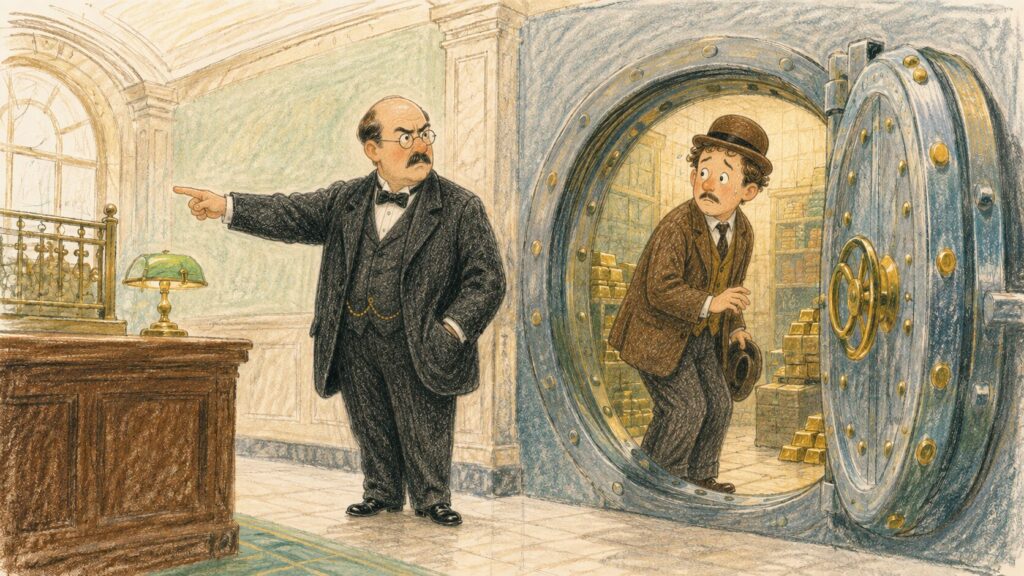
“Come out,” said the manager coldly.
He pointed towards the proper door. I came out of the vault and returned to the public area, feeling that my financial career had already suffered a serious defeat.
I went back to Mr. Montgomery’s counter. Still holding the money in a crushed ball, I pushed it towards him with a sudden movement, as if I were performing a magic trick.
“Here,” I said. “Deposit it.”
My face felt cold and pale. My tone seemed to say, “Let us finish this painful act while I still have the courage.”
Mr. Montgomery took the money and passed it to another clerk. Then he gave me a deposit slip and told me to write down the amount. After that, I had to sign my name in a large book. By this time, I no longer understood what I was doing. The counter, the clerks, and the walls of the bank seemed to move before my eyes.
“Is it deposited?” I asked in a hollow voice.
“It is,” said the accountant.
I should have thanked him and left. That would have been the sensible end to the matter. But I needed six dollars for my immediate expenses.
“Then I want to draw a cheque,” I said.
Someone passed a chequebook to me through a counter window. Another clerk began explaining how to fill in the cheque. Because of my pale face, my trembling hands, and my strange behaviour, the people in the bank seemed to think that I was a sick millionaire carrying out an exhausting financial transaction.
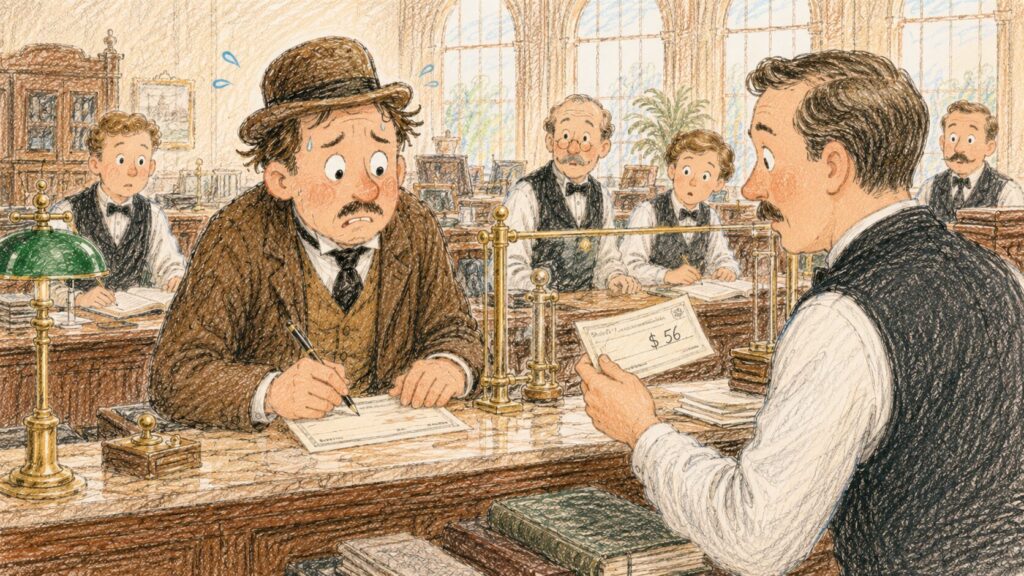
I tried to listen to the instructions. I intended to write a cheque for six dollars. Instead, my hand wrote fifty-six.
I pushed the cheque towards the clerk. He examined it, then looked up in surprise.
“What? Are you withdrawing all of it again?” he asked.
Only then did I see my mistake. I had deposited fifty-six dollars and immediately written a cheque for the full fifty-six, rather than the six dollars I needed. The correction would have taken only a few seconds, but to me it felt like a public confession of complete failure.
Under ordinary conditions, I could simply have said, “I am sorry. I wrote the wrong amount.” The clerk could have returned the cheque, and I could have written another. But I was far beyond ordinary conditions. My mind told me that an explanation was now impossible.
Around me, the clerks had stopped writing. They were looking at me. I felt that the entire bank was waiting to hear what I would say.
Misery made me reckless.
“Yes,” I answered. “The whole amount.”
“You wish to withdraw all your money from the bank?” the clerk asked.
“Every cent of it.”
“Are you not going to deposit any more?”
“Never.”
A foolish hope entered my mind. Perhaps the clerks would believe that something had offended me while I was writing the cheque. Perhaps they would think I was a wealthy man with a violent temper who had suddenly decided to end his relationship with the bank.
I tried to look deeply insulted. In reality, I probably looked frightened and ill.
The clerk prepared the money.
“How would you like it?” he asked.
“What?” I said.
“How would you like the money?”
At last I understood that he was asking what kind of banknotes I wanted. Without stopping to think, I replied, “In fifties.”
He handed me one fifty-dollar note.
“And the six dollars?” he asked dryly.
My mind failed for the final time.
“In sixes,” I said.
There were, of course, no six-dollar banknotes. The clerk gave me the remaining six dollars in ordinary money. I took it and rushed towards the door.
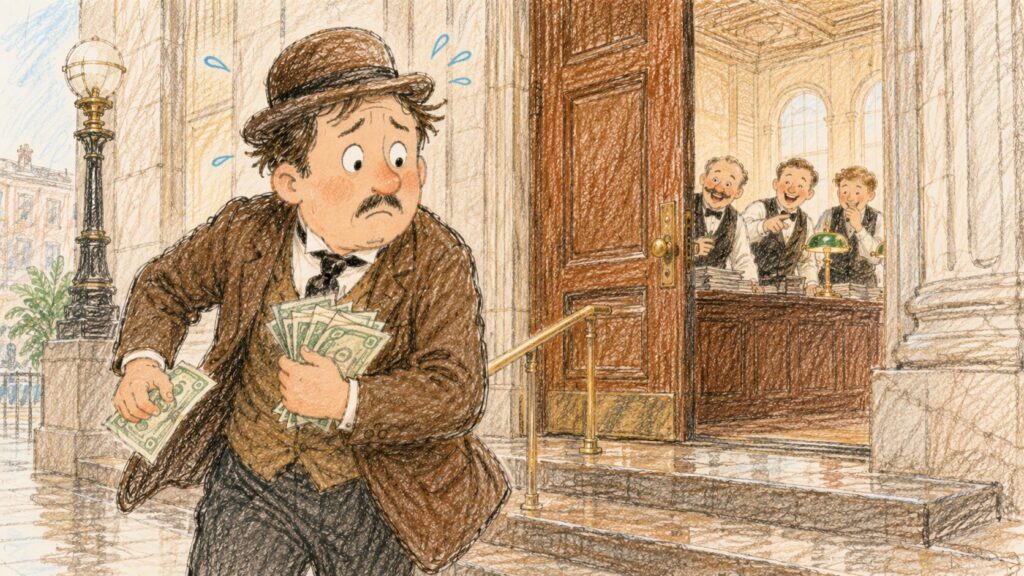
As the great bank door swung shut behind me, I heard a roar of laughter rise towards the high ceiling. The clerks had waited until I was almost outside, but not quite far enough.
That was the end of my financial career. Since that day, I have never used a bank. I carry my spending money in cash in my trouser pocket, and I keep my savings in silver dollars inside a sock.
— END —
私の銀行初体験|本文和訳Stephen Leacock (1869–1944)
私は銀行に入ると、分別のある人間らしく振る舞う力を失ってしまう。
銀行員を見ると緊張する。
カウンターの窓口を見ても緊張する。
そこにある大金を見るだけでも緊張する。
要するに、銀行に関するものは何もかも私を緊張させるのだ。
ひとたび扉をくぐり、どれほど簡単な用事であっても済ませようとすると、頭の働きが止まってしまうように感じる。
私は別人になる。
混乱し、何もできなくなり、言いたいことさえ言えなくなるのだ。
自分がそういう人間だということは、私の金融人生が始まったあの日より前から分かっていた。
ただ、それまでは、この問題が重要になるほどのお金を持ったことがなかった。
ところが、給料が月50ドルに上がった。
私には、それがきちんとした金銭管理を必要とする、かなりの収入に思えた。
そのお金を置くのにふさわしい場所は銀行しかない、と私は考えた。
そこで、持っていたお金をすべて——56ドル——集め、口座を開くために銀行へ向かった。
まず56ドルを預け、その後は毎月、給料の全額を入金するつもりだった。
私はゆっくりと銀行に入り、辺りを見回した。並んだ窓口の向こうでは、銀行員たちが大きな帳簿に文字を書き、お金を数え、書類をあちらからこちらへ動かしていた。
硬貨がカウンターに当たって音を立て、書類には印が押され、客たちは自分がどこへ行けばよいのかを正確に知っているように見えた。
誰もが落ち着き、てきぱきと働き、そこにいることにすっかり慣れているようだった。
一方の私は、複雑な秘密を自分以外の全員が理解している建物へ入ってしまったような気分だった。
口座を開く人は、誰でも支配人と直接話さなければならない、と私は信じていた。
なぜそんな考えを持ったのかは分からないが、私はそう確信していた。
「会計係」と書かれた窓口に近づいた。
会計係はモンゴメリー氏という、背が高く、冷静そうな男性だった。
あまりにも自信に満ちて見えたため、彼を見ただけで私はさらに不安になった。
「支配人にお会いできますか」と、私は低く、重々しい声で尋ねた。
そして、何のまともな理由もないのに、こう付け加えた。
「2人きりで」
口にした瞬間、その言葉は謎めいて聞こえた。
私が言いたかったのは、支配人と個人的に話したいということだけだったが、そもそもそれさえ必要なかった。
モンゴメリー氏はしばらく私を見つめ、それから支配人を呼びに行った。
支配人がやって来た。
重大な案件に対処する用意ができている人のような表情をした、厳粛で落ち着いた男性だった。
その間、私はポケットの中で56ドルを固い塊になるほど握りしめながら立っていた。
「あなたが支配人ですか」と、私は尋ねた。
彼が支配人であることを疑う理由などなかったが、ほかに何も言葉が思い浮かばなかった。
「そうです」と、彼は答えた。
「お話しできますか」と私は尋ねた。
「2人きりで」
また、あの恐ろしい言葉を使ってしまった。
けれども、その言葉がなければ、どういうわけか頼みが最後まで言い終わっていないように感じられた。
支配人は少し不安そうな顔をした。
私の秘密めいた態度から、何か重大な情報を持って来たと思ったらしい。
彼は私を個室へ案内し、扉を閉め、鍵をかけた。
「ここなら邪魔は入りません」と彼は言った。
「どうぞお掛けください」
私たちは机を挟んで向かい合って座った。
部屋は静かだった。
支配人は待っていた。
私は話そうとしたが、言葉が出てこなかった。
計画は簡単なものだった。
口座を開きたいと伝え、お金を渡し、帰る。
それだけだった。
ところが、鍵のかかったその部屋では、突然、その計画が実行不可能に思えた。
沈黙が長く続くほど、私の訪問はますます重大で危険なものに見えてきた。
ついに、支配人が身を乗り出した。
「あなたはピンカートン探偵社の探偵なのでしょう」と、彼は言った。
当時、ピンカートンの探偵たちは広く知られており、支配人は、私の謎めいた振る舞いには仕事上の理由があるに違いない、と判断したのだった。
私は彼の勘違いにすぐ気づいた。
だが困ったことに、彼が何を考えているのか分かったせいで、私はいっそう緊張した。
「いいえ、私はピンカートンの者ではありません」と、私は言った。
その言い方では、まるで私が別の探偵社に所属しているかのように聞こえた。
「実を言いますと」と私は続けた。
まるで最初は隠しておくつもりだったかのような言い方だった。
「私は探偵ではありません。口座を開きに来たのです。自分のお金はすべて、この銀行に預けるつもりです」
支配人はほっとした様子だったが、真剣な態度は崩さなかった。
今度はどうやら、私をロスチャイルド男爵の息子か、富豪グールド家の若い一員だと想像したらしい。
「大口の口座なのでしょうね」と、彼は尋ねた。
「かなり大口です」と、私は小声で答えた。
ポケットの中で握っていたお金の塊が、手の中でどんどん熱くなっていくのを感じた。
「今日は56ドルを預けたいのです」と私は言った。
「その後は毎月50ドルずつ預けます」
ほんの一瞬、支配人は何も言わなかった。
それから立ち上がり、扉の鍵を開け、会計係に向かって声を掛けた。
「モンゴメリー君」と、必要以上に大きく思える声で彼は言った。
「こちらの方が口座を開設される。56ドルを預けるそうだ。では、失礼」
大げさな個室での会談は終わった。
支配人が大声で告げたため、私の財産の大きさも、近くにいた全員にはっきり伝わった。
私は急いで立ち上がった。
支配人室の隣には、たまたま開いている大きな鉄の扉があった。
混乱していた私は、それが出口だと思い込んだ。
「では、失礼します」と言って、私はその扉の中へ足を踏み入れた。
私は銀行の金庫室へ入ってしまったのだった。
「出てきなさい」と、支配人は冷たく言った。
彼は正しい出口の扉を指さした。
私は金庫室から出て、客のいる場所へ戻った。
私の金融人生は、すでに大きな敗北を喫したように感じられた。
私はモンゴメリー氏の窓口へ戻った。
まだお金を握りつぶしたような塊のまま持ち、まるで手品を披露するかのように、突然それを彼のほうへ突き出した。
「これを」と私は言った。
「預けてください」
顔が冷たく、青ざめていくのを感じた。
私の口調は、「まだ勇気が残っているうちに、このつらい行為を終わらせてください」と言っているようだった。
モンゴメリー氏はお金を受け取り、別の銀行員へ渡した。
それから入金票を私に差し出し、金額を書くように言った。その後、大きな帳簿に署名しなければならなかった。
この頃には、自分が何をしているのか、もう分からなくなっていた。
カウンターも銀行員も銀行の壁も、目の前で動いているように見えた。
「入金されたのですか」と、私は虚ろな声で尋ねた。
「されました」と、会計係は言った。
私は礼を言って立ち去るべきだった。
そうすれば、事は分別のある形で終わっていただろう。
だが、当面の生活費として6ドルが必要だった。
「では、小切手でお金を引き出したいのですが」と、私は言った。
誰かがカウンターの窓口から小切手帳を渡してくれた。
別の銀行員が、小切手への記入方法を説明し始めた。
私の青ざめた顔、震える手、奇妙な振る舞いのせいで、銀行の人々は、病弱な大富豪が疲れ果てるほど大変な金融取引を行っていると思っているようだった。
私は説明を聞こうとした。
6ドルの小切手を書くつもりだった。
ところが、私の手は56と書いた。
私は小切手を銀行員のほうへ押し出した。
彼はそれを調べ、それから驚いて顔を上げた。
「えっ? もう全額を引き出すのですか」と、彼は尋ねた。
そのとき初めて、自分の間違いに気づいた。
私は56ドルを預けた直後、必要な6ドルではなく、全額の56ドルを引き出す小切手を書いてしまったのだ。
訂正には数秒しかかからなかったはずだが、私には、自分が完全に失敗したことを皆の前で告白するように感じられた。
普通の状態なら、ただ「すみません。金額を間違えて書きました」と言えばよかった。
銀行員は小切手を返し、私は新しく書き直せばよかったのだ。
だが、私はもはや普通の状態からはるかに遠いところにいた。
説明することなど、もう不可能だと頭が告げていた。
周りを見ると、銀行員たちは書く手を止め、私を見ていた。
銀行中の人が、私が何を言うのか待っているように感じられた。
惨めさのあまり、私は自暴自棄になった。
「そうです」と答えた。
「全額です」
「銀行にあるお金をすべて引き出されるのですか」と、銀行員は尋ねた。
「1セント残らず」
「もうお預けになる予定はないのですか」
「二度とありません」
愚かな希望が頭に浮かんだ。
小切手を書いている間に、何かが私の気に障ったのだと銀行員たちは思うかもしれない。
突然この銀行との関係を打ち切ることにした、激しい気性の富豪だと思ってくれるかもしれない。
私はひどく侮辱されたような顔をしようとした。
実際には、恐怖におびえ、具合が悪そうに見えただろう。
銀行員はお金を用意した。
「どのようにいたしましょうか」と、彼は尋ねた。
「何ですか」と、私は言った。
「お金はどのようにお渡ししましょうか」
ようやく、どの種類の紙幣で受け取りたいかを聞かれているのだと分かった。
考える間もなく、私は答えた。
「50ドル札で」
彼は50ドル札を1枚、私に渡した。
「残りの6ドルは?」と、彼は冷ややかに尋ねた。
私の頭は、最後の最後に完全に働かなくなった。
「6ドル札で」と、私は言った。
もちろん、6ドル札など存在しなかった。
銀行員は残りの6ドルを普通のお金で渡した。
私はそれを受け取り、扉へ向かって駆け出した。
銀行の大きな扉が背後で閉まりかけたとき、高い天井へ響き渡るような笑い声が聞こえた。
銀行員たちは、私がほとんど外へ出るまで待ってくれた。
ただし、笑い声が聞こえなくなるほど遠くへ出るまでは待ってくれなかった。
こうして、私の金融人生は終わった。
あの日以来、私は1度も銀行を利用していない。
日々使うお金は現金のままズボンのポケットに入れ、貯金は銀貨にして靴下の中にしまっている。
— おわり —
まとめ
銀行に入っただけで緊張し、簡単な手続きさえ思うように進められなくなってしまう語り手。支配人に重大人物だと誤解され、出口と間違えて金庫室へ入り、最後には預けたばかりの56ドルをすべて引き出してしまいます。
一つひとつの失敗は大げさで、思わず笑ってしまいます。しかし読み終えたあと、不思議と語り手を他人とは思えなくなりました。
初めて入る場所で、周囲の人だけがすべてのルールを知っているように見えたこと。分からないと素直に言えず、知っているふりをして、かえって状況を悪くしてしまったこと。小さな間違いを訂正すれば済むのに、恥ずかしさから引き返せなくなったこと。似たような経験は、誰にでも一度くらいあるのではないでしょうか。
この物語のおかしさは、語り手が銀行について何も知らないことだけから生まれているのではありません。「失敗している自分を見られたくない」という気持ちが、次の失敗を呼んでしまうところにあります。
100年以上前に書かれた作品ですが、新しい機械の操作、病院の受付、役所の手続き、初めて利用するサービスなど、現代の日常にも同じ緊張は残っています。分からないことよりも、「分からないと思われること」のほうが怖いのかもしれません。
けれども、語り手が自分の失敗をここまで正直に、そして愉快に語ってくれたことで、私たちも自分の恥ずかしい記憶を少しだけ笑って振り返ることができます。
次に慣れない場所で戸惑ったときは、この56ドルの出来事を思い出してみてください。そして、取り返しがつかなくなる前に、ひと言だけ尋ねてみましょう。
「すみません。やり方を教えていただけますか」
それだけで、私たちの“financial career”は、もう少し穏やかに続いていくはずです。



 | Canadian English | 1,550 words この小説は、パブリックドメインとなっている英語作品をもとに、原)