
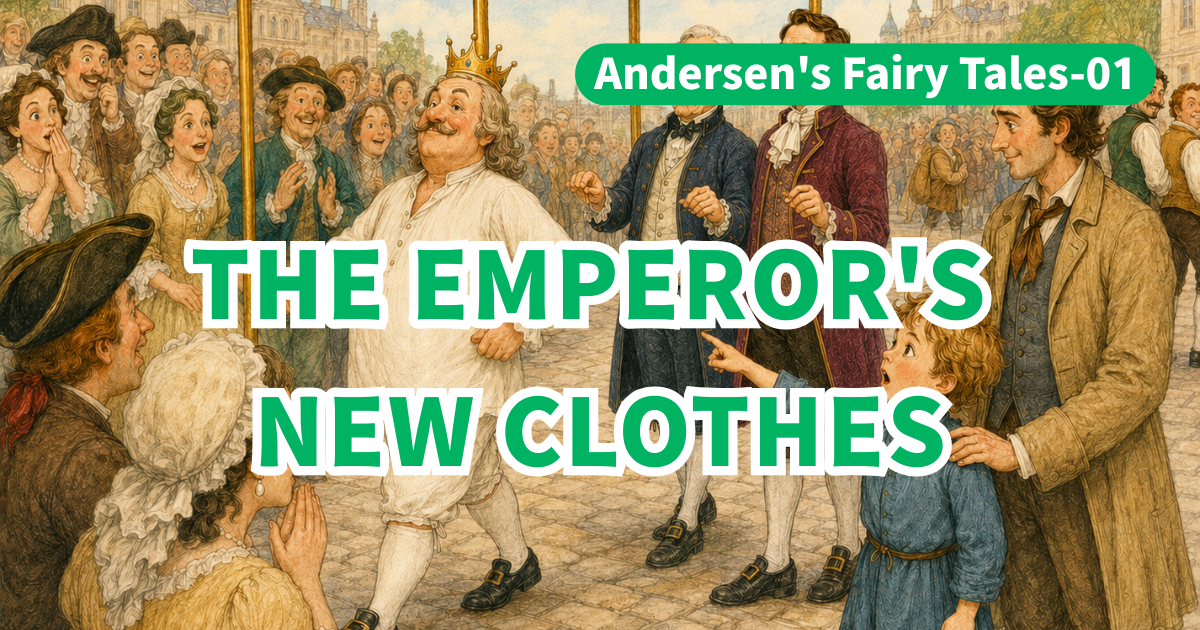
CEFR A2-B1(初級-中級) | British English | 1,466 words
この作品について
「みんなには見えているのに、自分にだけ見えないのかもしれない」
そんな不安を感じたとき、私たちは自分の目よりも、周りの声を信じてしまうことがあります。
アンデルセンの『王様の新しい服』は、その心の動きを、思わず笑ってしまうような物語の中に鮮やかに描いた作品です。
日本では『裸の王様』のタイトルで有名ですね。
おしゃれが何よりも好きな王様の前に、二人の詐欺師が現れます。
二人が作るという布は、愚かな人や、その地位にふさわしくない人には見えない特別な布。
もちろん、本当は布など存在しません。
それでも、大臣も役人も王様も、「何も見えない」と言えば、自分の無能さを認めることになるのではないかと恐れ、美しい布が見えるふりをします。
そして、その小さな嘘は宮廷から町じゅうへ広がっていきます。
この物語のおもしろさは、詐欺師の大胆さだけではありません。
登場人物の多くは、心の中では何が起きているかに気づきながら、周囲に合わせてしまいます。
読んでいる私たちは、その滑稽さを笑いながらも、似たような経験がなかったかと、そっと問いかけられます。
難しいところがあっても、一語ずつ完璧に理解しようとせず、まずは人々の気持ちがどのように変化していくかを追ってみてください。
最後に響く、たった一人の子どもの言葉が、きっと印象深く感じられるはずです。
THE EMPEROR'S NEW CLOTHES
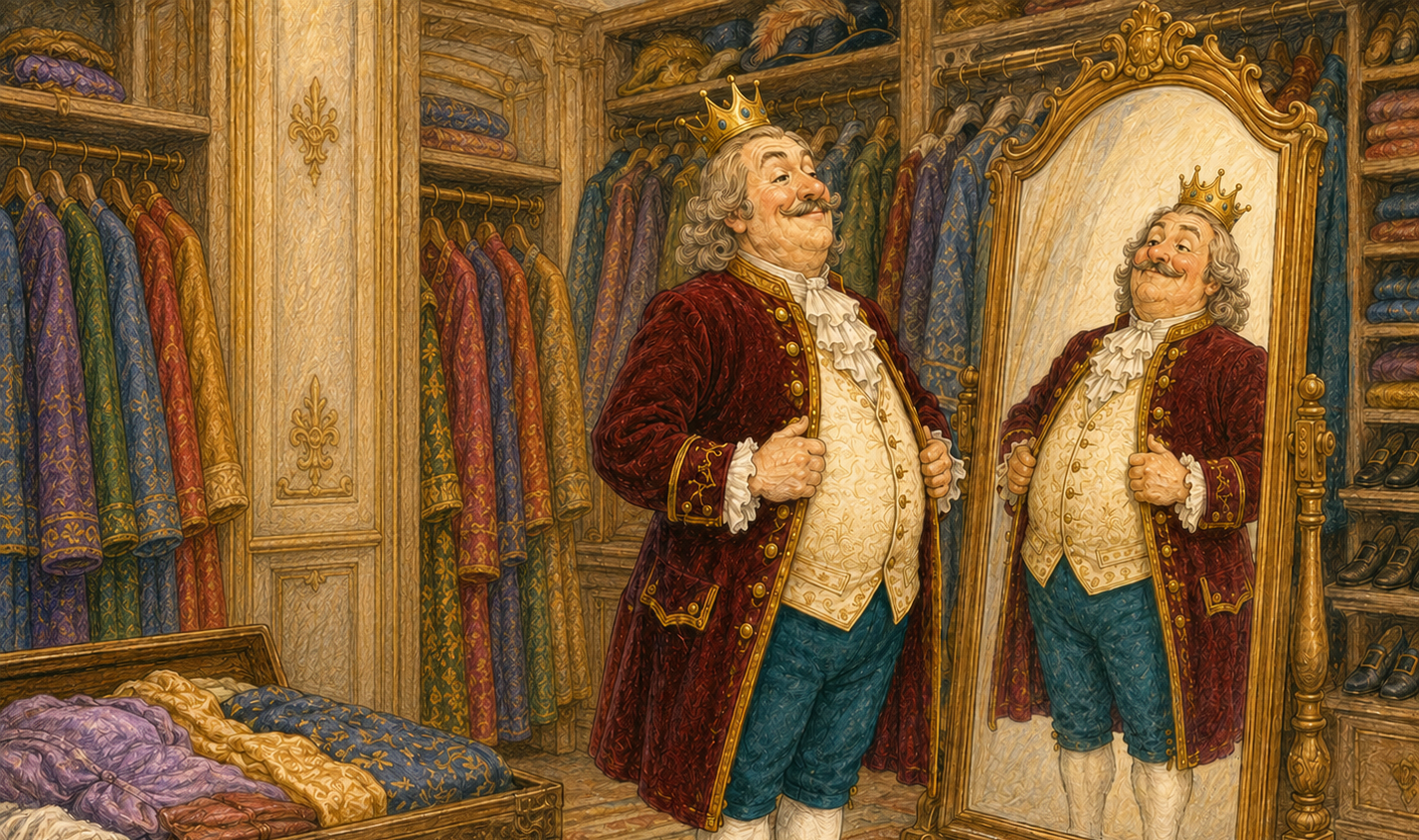
Many years ago, there lived an Emperor who loved new clothes more than anything else.
He spent nearly all his money on them.
He did not care much about his soldiers or the affairs of his country.
He went to the theatre or out hunting only when these activities gave him a chance to show off a new outfit.
He had a different suit for every hour of the day.
People usually said of a ruler, "The Emperor is meeting with his council."
But in this country, they often said, "The Emperor is in his wardrobe."
Life was lively in the Emperor's capital, and visitors arrived from many places.
One day, two swindlers came to the city.
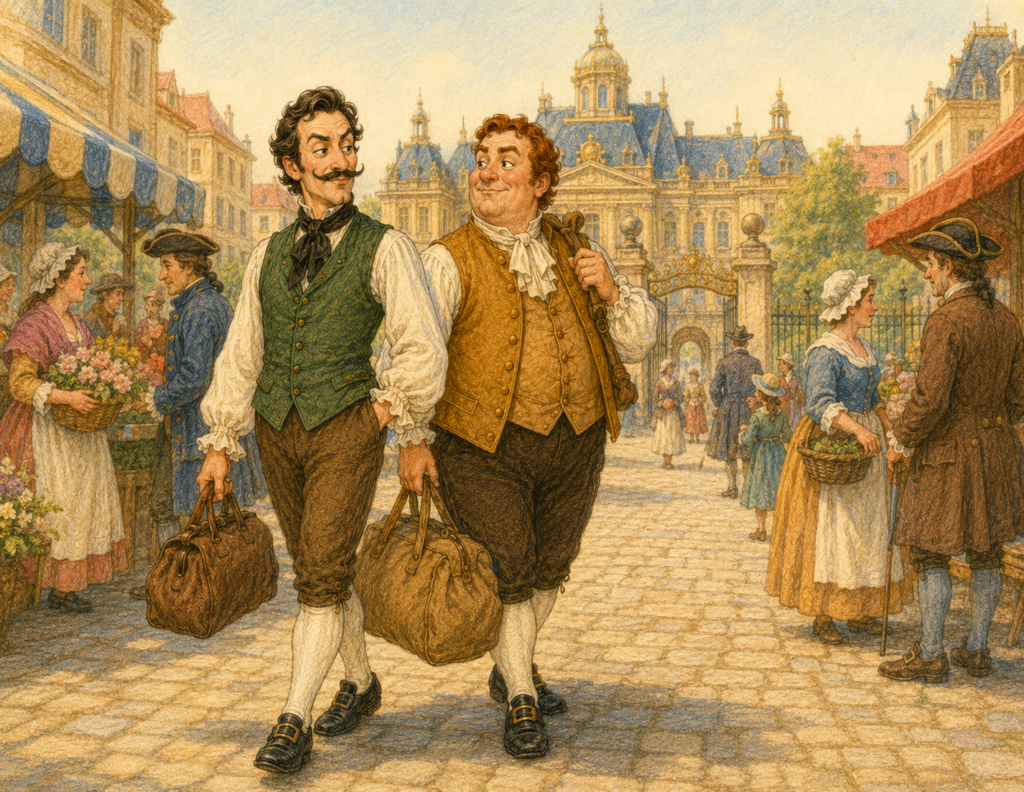
They introduced themselves as weavers and claimed that they could make the most beautiful cloth anyone had ever seen.
Its colours and patterns, they said, were extraordinary.
But the cloth had an even more remarkable quality: it was invisible to anyone who was unfit for their position or who was very foolish.
"What wonderful cloth!" thought the Emperor.
"If I had clothes made from it, I could discover which people in my kingdom are unfit for their jobs. I could also tell the wise from the foolish. I must have this cloth at once."
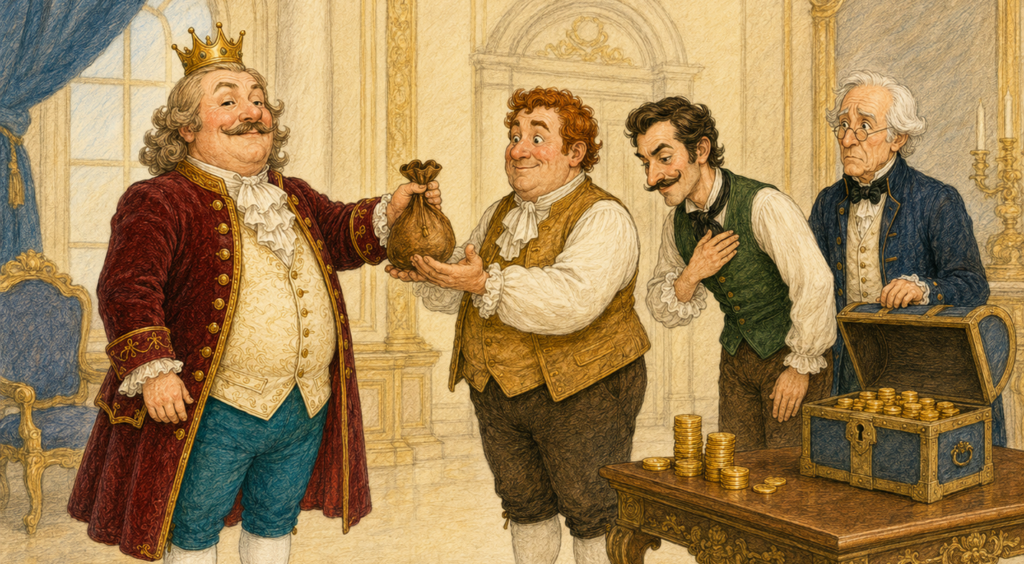
He paid the two men a large amount of money so that they could begin immediately.
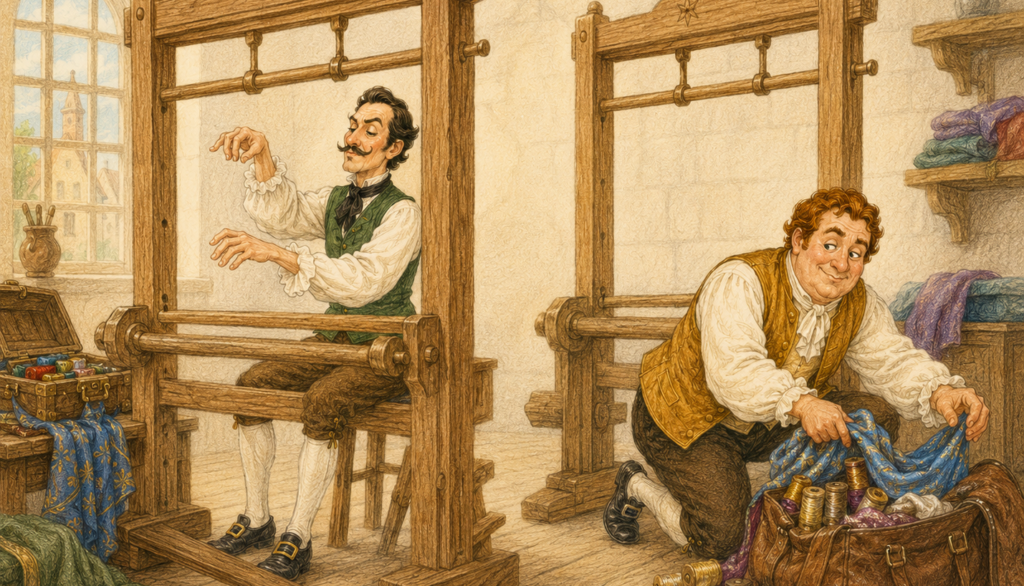
The swindlers set up two looms and pretended to work very hard, although there was nothing on either loom.
They asked for the finest silk and the purest gold thread.
Then they hid these valuable materials in their bags and continued working at the empty looms until late at night.
After some time, the Emperor began to wonder how the work was progressing.
Then he remembered that anyone who was foolish or unfit for their position would be unable to see the cloth.
He was certain that he had nothing to fear, but he still preferred to send someone else first.
By then, everyone in the city had heard about the cloth's strange power.
Each person was curious to discover whether their neighbours were wise or foolish.
"I will send my faithful old minister," the Emperor decided.
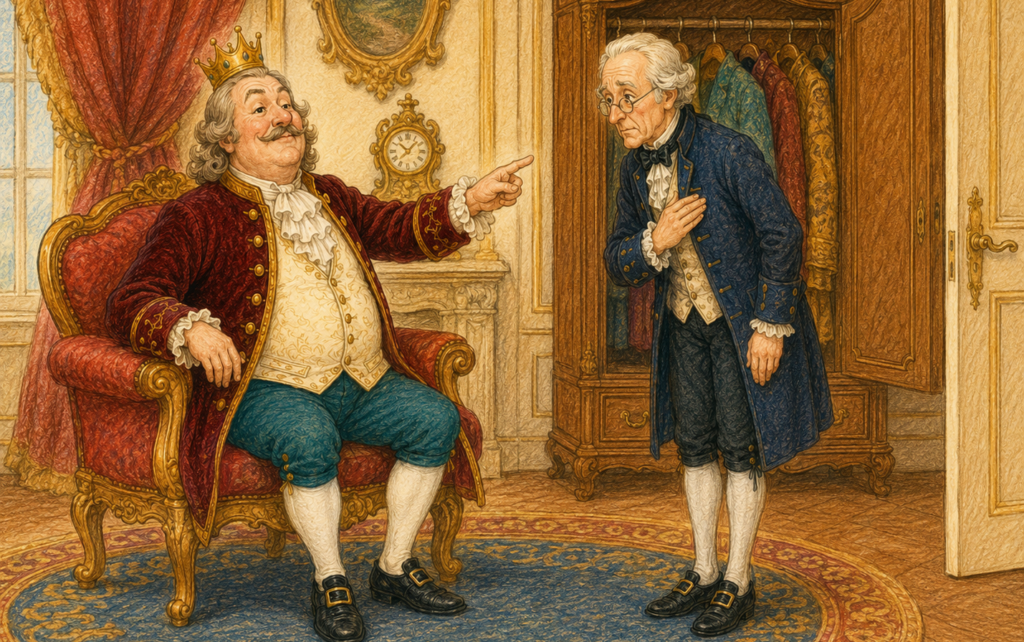
"He is sensible, and no one is better suited to his position. He will know whether the cloth is beautiful."
The old minister entered the room where the two men were pretending to work at the empty looms.
He opened his eyes wide and stared.
"What is happening?" he thought.
"I cannot see a single thread!"
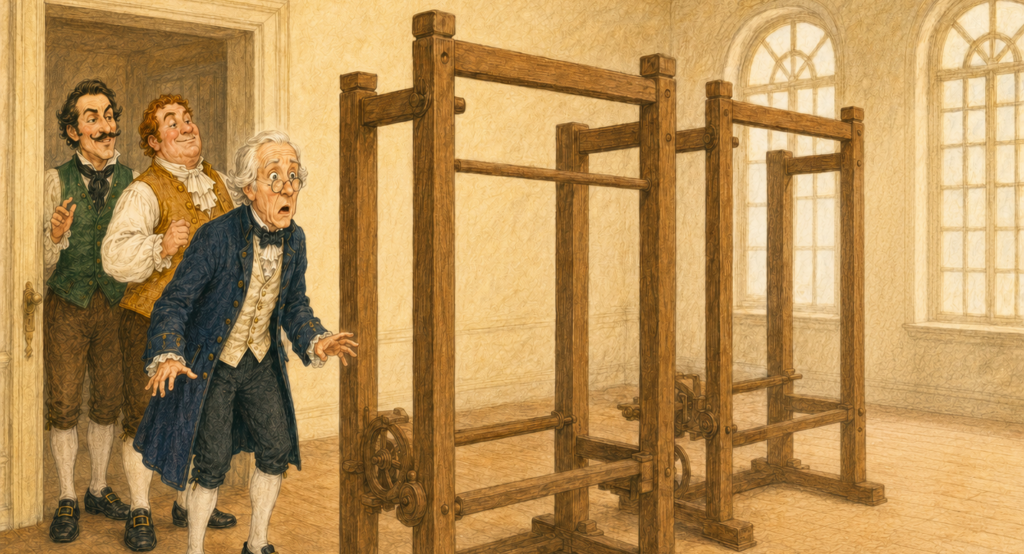
But he said nothing.
The swindlers politely asked him to come closer.
They pointed to the empty frames and asked whether he admired the design and the beautiful colours.
The minister looked and looked, but he could see nothing because there was nothing to see.
"Can I really be a fool?" he wondered.
"I have never believed that. And could I be unfit for my position? No one must ever know. I cannot admit that I cannot see the cloth."
"Well, Minister," said one of the swindlers, still pretending to weave.
"You have not told us what you think."
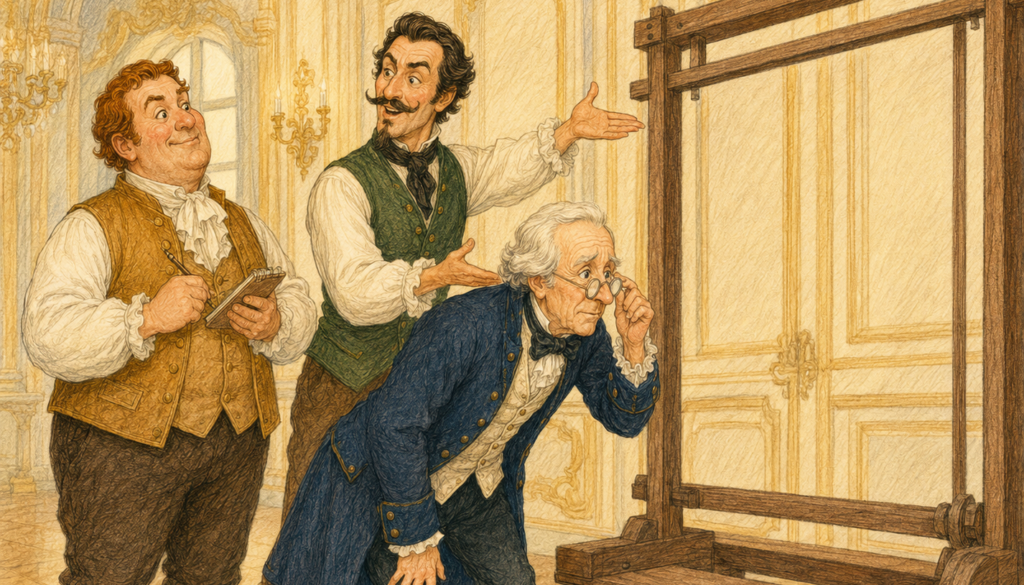
"Oh, it is excellent!" the minister replied, peering through his glasses.
"The pattern and the colours are beautiful. I will tell the Emperor how much I admire them."
The swindlers were delighted.
They named several colours and described an elaborate pattern that did not exist.
The old minister listened carefully so that he could repeat every detail to the Emperor.
Before he left, the men asked for more silk and gold to continue their work.
Once again, they put everything into their own bags and returned to their empty looms.
Soon afterward, the Emperor sent another trusted official to see the cloth and find out when it would be ready.
The same thing happened to him. He examined the looms from every side, but he saw only the empty frames.
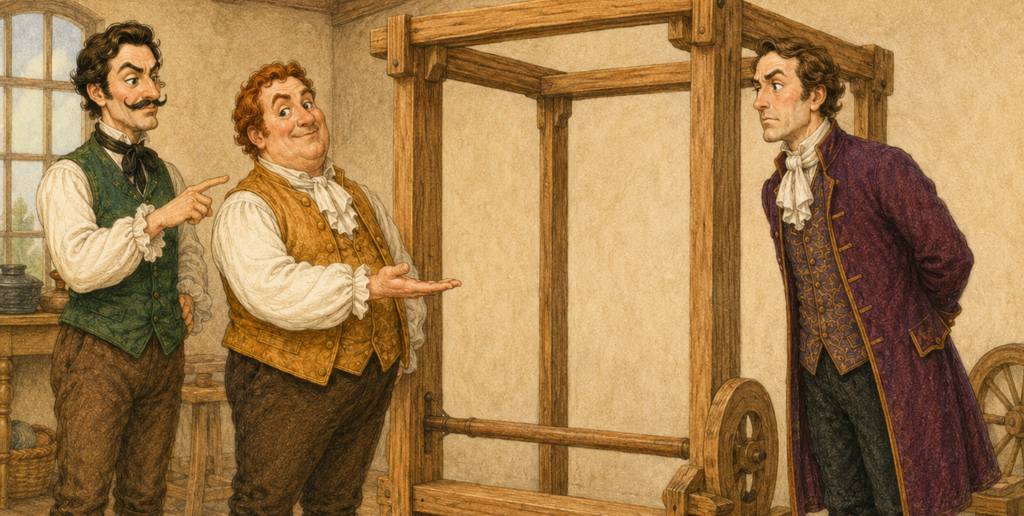
"Do you not think the cloth is beautiful?" the swindlers asked.
They pointed to the empty space and described the colours and patterns again.
"I am not foolish," the official thought.
"Then perhaps I am unfit for my excellent position. How strange! But no one must find out."
So he praised the cloth he could not see.
When he returned to the palace, he told the Emperor, "The cloth is truly magnificent."
Before long, the entire city was talking about the Emperor's extraordinary new cloth.
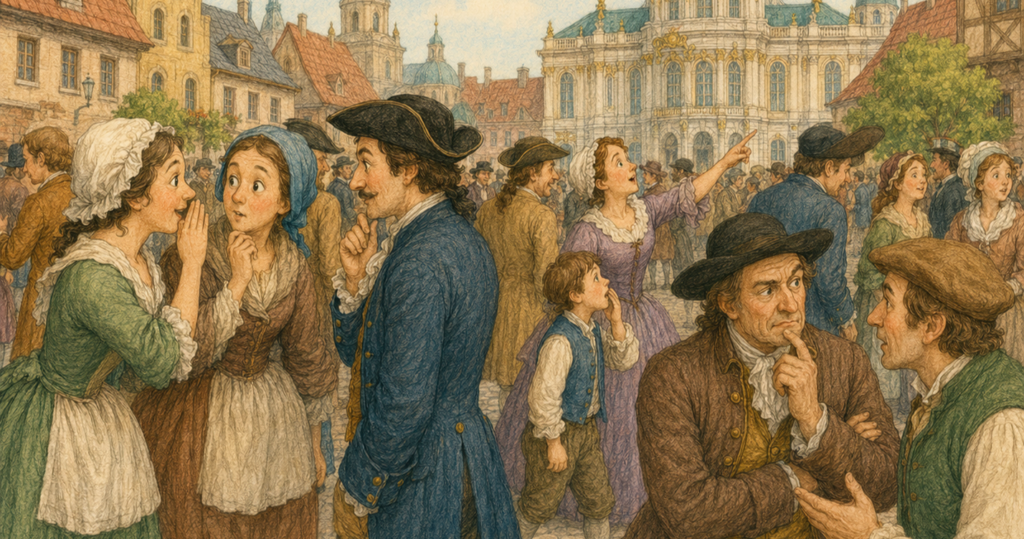
At last, the Emperor decided to see it himself.
He went to the weavers with several important members of his court, including the two officials who had already visited them.
As soon as the swindlers heard the group approaching, they began working even harder at the empty looms.
"Is it not magnificent?" said the two officials.
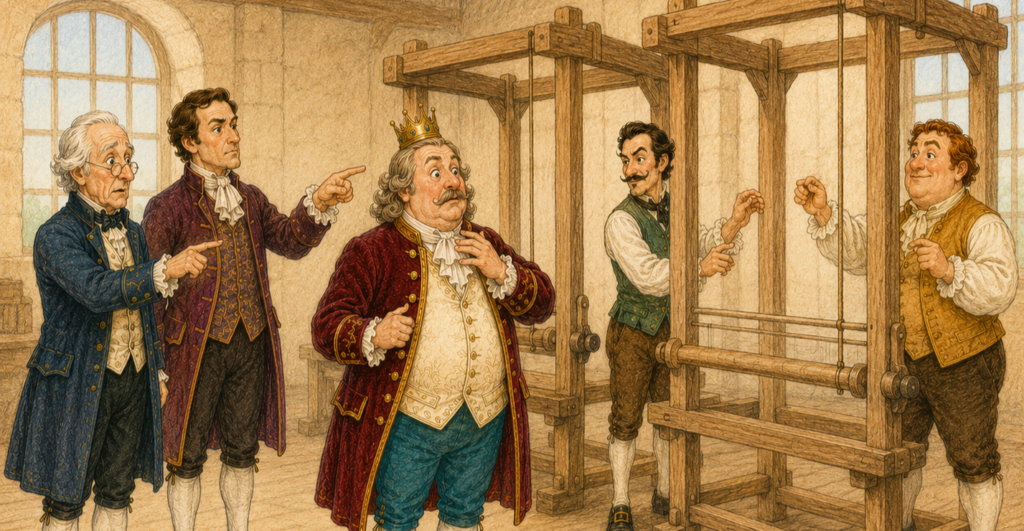
"Your Majesty, look at this splendid design and these glorious colours!"
They pointed eagerly at the empty frames because each believed that everyone else could see the cloth.
The Emperor stared at the looms in horror.
"What can this mean?" he thought.
"I cannot see anything! Am I a fool? Am I unfit to be Emperor? That would be the worst thing imaginable."
Then he smiled and said aloud, "Oh, the cloth is charming. I completely approve of it."
He leaned closer to the empty looms and pretended to study the material.
He could not admit that he saw nothing after his two officials had praised it.
The rest of the court stared as hard as they could, but they saw no more than the Emperor.
Still, one after another, they cried, "Beautiful! Magnificent! Excellent!"
They advised the Emperor to have a new suit made from the cloth for the grand procession that was coming soon.
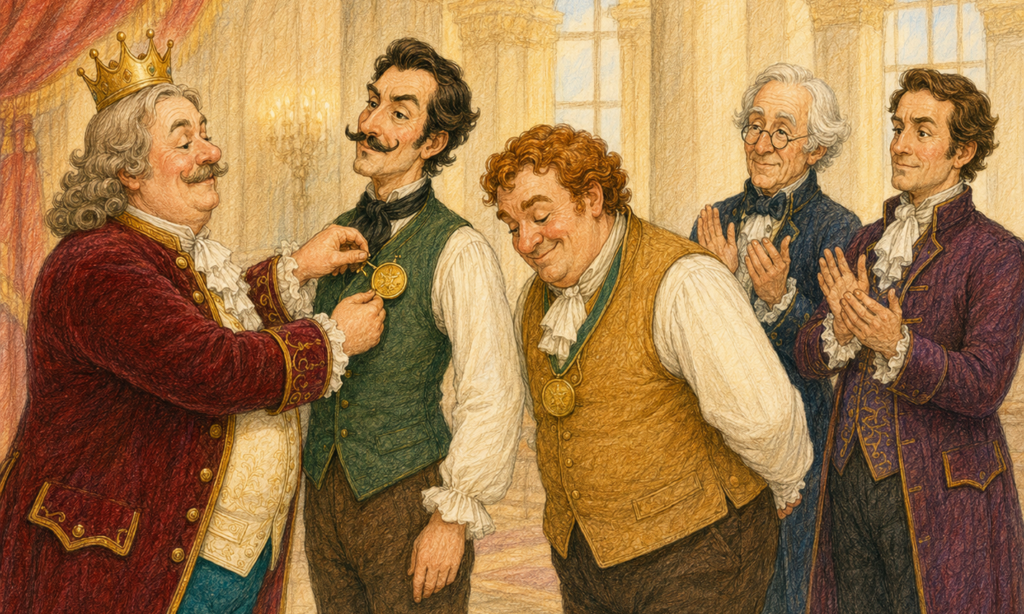
Everyone seemed delighted.
The Emperor gave the two swindlers medals and honoured them with the title of Royal Weavers.
On the night before the procession, the swindlers kept sixteen lamps burning.
They wanted everyone to believe that they were working desperately to finish the Emperor's suit.
They pretended to remove cloth from the looms.
They cut the air with their scissors and sewed with needles that had no thread.
At last, they announced, "The Emperor's new clothes are ready!"
The Emperor arrived with the most important people of his court.
The swindlers lifted their arms as if they were holding pieces of clothing.
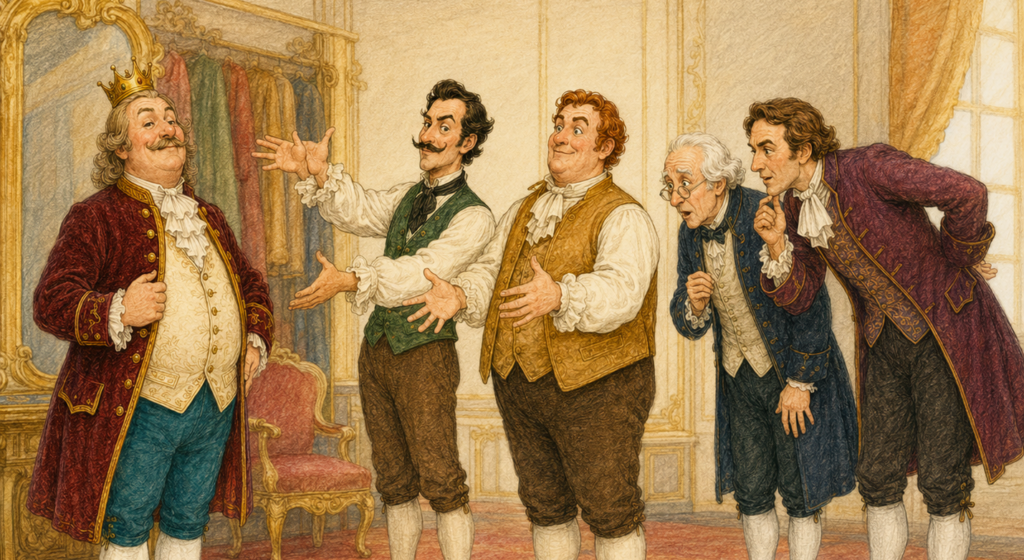
"Here are Your Majesty's trousers," they said.
"Here is the scarf, and here is the mantle. The whole suit is as light as a spider's web. You may feel as if you are wearing nothing at all, but that is the wonderful thing about this delicate cloth."
"Yes, indeed," agreed the courtiers, although none of them could see a thing.
The swindlers asked the Emperor to take off his clothes so that they could dress him in the new suit in front of a large mirror.
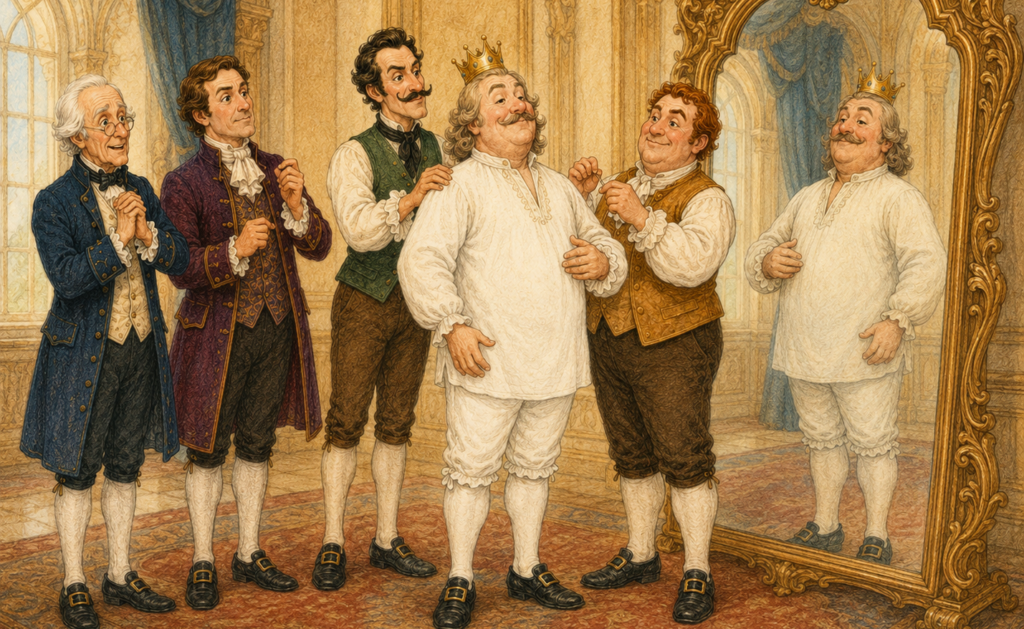
The Emperor did as they asked.
The two men moved their hands around him, pretending to put on each piece of the invisible outfit.
The Emperor turned from side to side and studied himself in the mirror.
"How splendid His Majesty looks!" cried the courtiers.
"How perfectly the clothes fit! What a design! What colours! These are truly royal robes!"
The master of ceremonies entered the room.
"The canopy for the procession is waiting for Your Majesty," he announced.
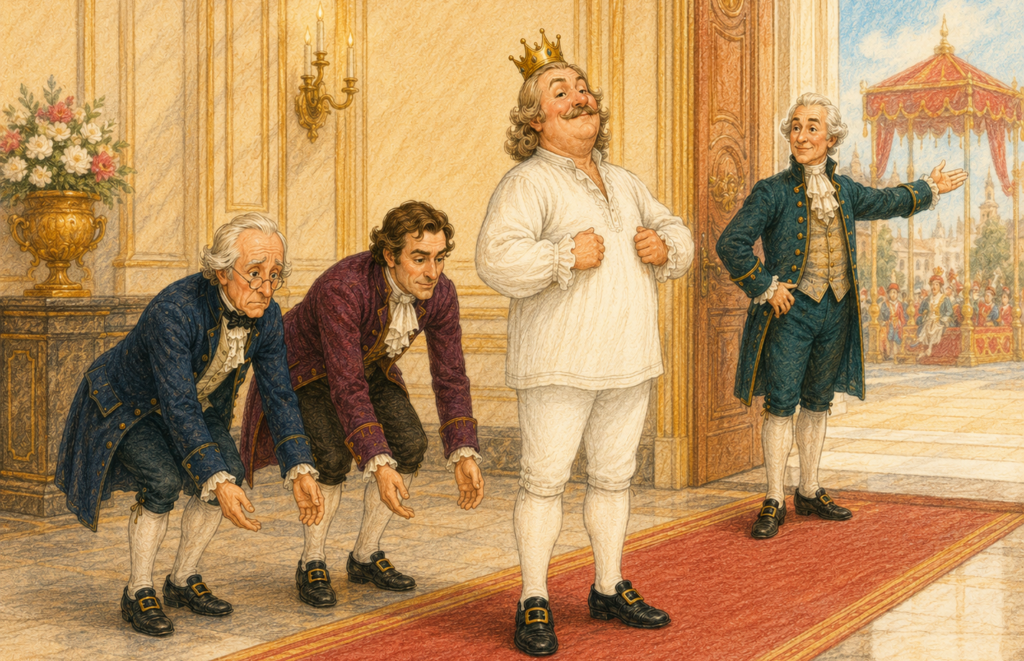
"I am ready," said the Emperor.
He turned once more before the mirror.
"Do my new clothes fit well?" he asked, pretending to admire them.
The court officials who were supposed to carry the long train of his mantle bent down and moved their hands across the floor.
They acted as if they were lifting the end of the robe.
None of them dared to admit that there was no train to carry.
The procession began.
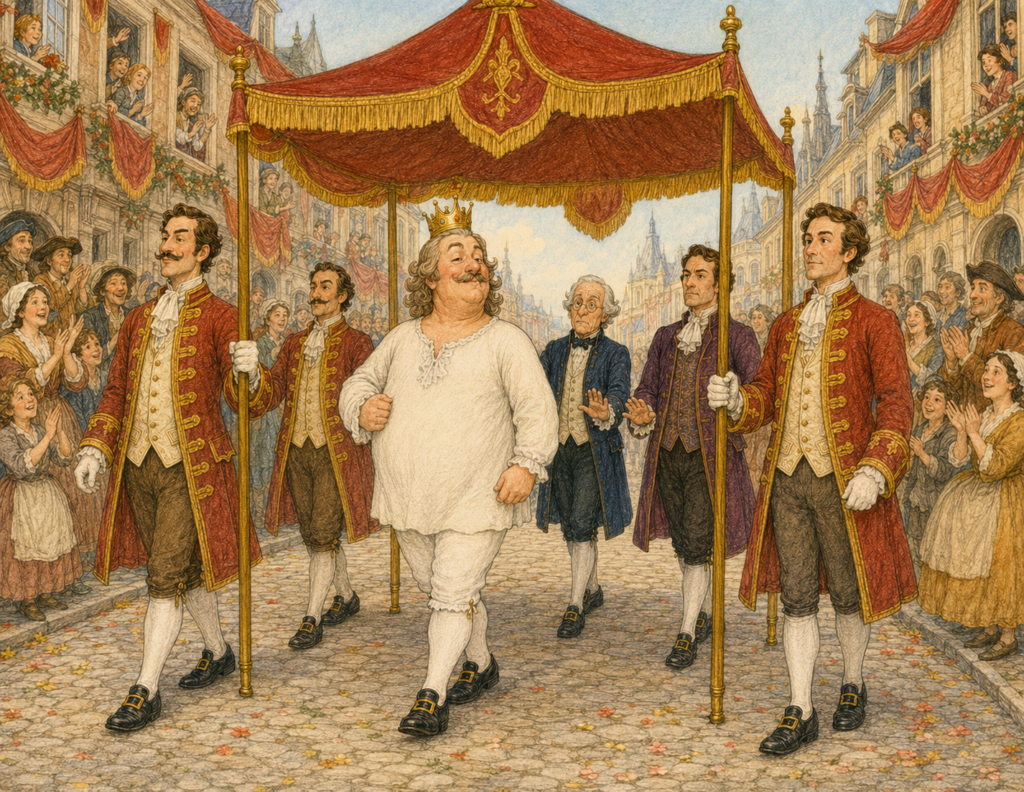
The Emperor walked through the streets of his capital beneath a high canopy.
Crowds lined the road and watched from windows.
"How beautiful the Emperor's new clothes are!" people shouted.
"What a magnificent train! Look how gracefully the scarf hangs!"
No one wanted to admit that they could not see the clothes.
If they did, others might think they were foolish or unfit for their work.
Of all the Emperor's outfits, none had ever attracted so much attention as this invisible one.
Then a little child spoke.
"But the Emperor is not wearing any clothes!"
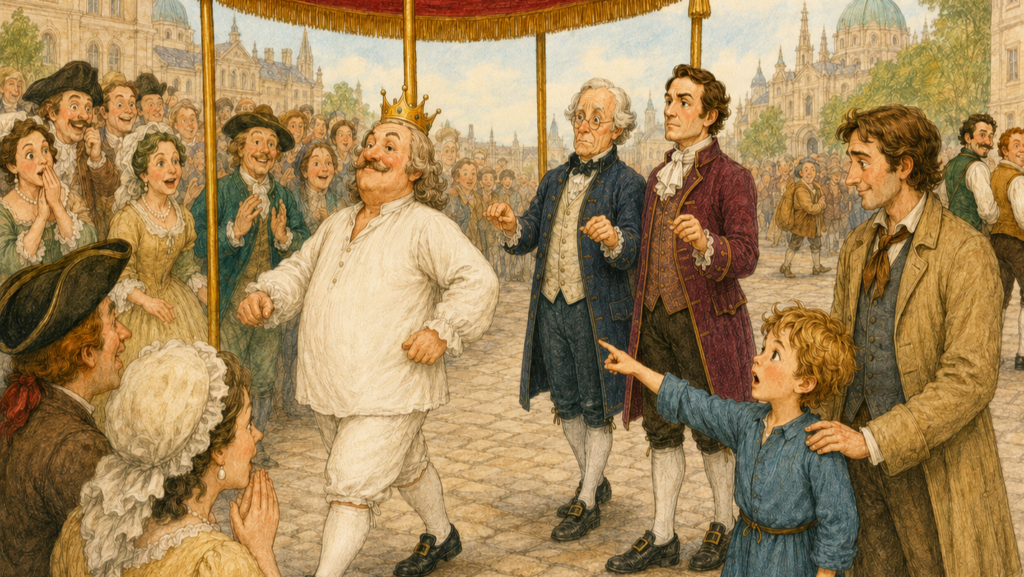
"Listen to the innocent child," said the child's father.
People began whispering the child's words to one another.
"The Emperor is not wearing any clothes!" the crowd finally cried.
The Emperor felt deeply embarrassed because he knew they were right.
But he thought, "The procession has already begun. I must continue."
So he held his head even higher and walked on.
Behind him, the court officials tried harder than ever to carry the train of a mantle that did not exist.
— END —
王様の新しい服(はだかの王様)|本文和訳
むかしむかし、新しい服が何よりも大好きな王様がいました。
王様は、持っているお金のほとんどを服につぎ込んでいました。
兵士のことにも、国の仕事にも、あまり関心がありません。
劇場へ行くのも狩りに出かけるのも、新しい服を人々に見せる機会になるときだけでした。
一日のどの時間にも、それぞれ違う服を用意していたほどです。
ふつう、王様については「王様は会議中です」と言うものですが、この国では、みんながよく「王様は衣装部屋にいらっしゃいます」と言っていました。
王様の都はいつもにぎやかで、さまざまな土地から大勢の人が訪れていました。
ある日、二人の詐欺師が都へやって来ました。
二人は自分たちを織物職人だと名乗り、これまで誰も見たことがないほど美しい布を織れると言いました。
その布の色も模様も、それは見事なものだというのです。
けれども、もっと驚くべき特徴がありました。
その布は、今の地位にふさわしくない者や、たいへんな愚か者には見えないというのです。
「なんとすばらしい布だ!」と王様は思いました。
「その布で服を作れば、わが国で誰が仕事にふさわしくないかがわかる。それに、賢い者と愚かな者を見分けることもできる。すぐにその布を作らせよう」
王様は、すぐに仕事を始めさせるため、二人に大金を渡しました。
詐欺師たちは織り機を二台据えつけ、何もかかっていないのに、懸命に働いているふりをしました。
そして、最高級の絹糸と、純金でできた金糸を求めました。
二人は受け取った貴重な材料を自分たちの袋へこっそりしまい込み、夜遅くまで空の織り機に向かって働き続けました。
もちろん、すべてふりにすぎません。
しばらくすると、王様は布作りがどこまで進んだのか気になり始めました。
ところが、愚かな者や地位にふさわしくない者には、その布が見えないという話を思い出しました。
自分には何も恐れることなどないと信じていましたが、それでも、まずは誰かほかの者を見に行かせたいと思いました。
そのころには、布の不思議な力のことが都じゅうに広まっていました。
誰もが、身近な人が賢いのか、それとも愚かなのか、確かめてみたいと思っていたのです。
「忠実な老大臣を行かせよう」と王様は決めました。
「あれは分別のある男だし、あの地位にこれほどふさわしい者はいない。布が美しいかどうか、きちんと見極めてくれるだろう」
老大臣は、二人の男が空の織り機で仕事をしているふりをしている部屋へ入りました。
目を大きく見開き、じっと織り機を見つめます。
「これはどういうことだ?」と大臣は思いました。
「糸一本さえ見えないではないか!」けれども、口には出しませんでした。
詐欺師たちは丁寧な口調で、大臣にもっと近くへ来るよう勧めました。
そして空の織り機を指さし、見事な模様と美しい色をどう思うかと尋ねました。
大臣は何度も目をこらしましたが、何も見えません。
そこには、初めから何もなかったのです。
「まさか、わしは本当に愚か者なのか?」と大臣は考えました。
「そんなはずはないと思っていた。それとも、この役目にふさわしくないというのか? 誰にも知られてはならない。布が見えないなどとは、決して言えないぞ」
「さて、大臣さま」と、詐欺師の一人が織るふりをしながら言いました。
「まだご感想を聞かせていただいておりませんが」
「ああ、実にすばらしい!」大臣は眼鏡越しに目をこらしながら答えました。
「模様も色も、なんと美しいことか。どれほど気に入ったか、王様にお伝えしよう」
詐欺師たちは大喜びしました。
いくつもの色の名を挙げ、実際には存在しない手の込んだ模様を説明しました。
老大臣は、その一つ一つを王様に伝えられるよう、注意深く聞きました。
大臣が帰る前に、二人は仕事を続けるためだと言って、さらに絹糸と金糸を求めました。
二人はまたしても、受け取ったものをすべて自分たちの袋へ入れ、空の織り機で仕事をするふりに戻りました。
その後まもなく、王様はもう一人の信頼する役人を送り、布の出来具合と、いつ完成するのかを確かめさせました。
その役人にも、まったく同じことが起こりました。
織り機をあらゆる角度から調べましたが、見えるのは空の枠だけでした。
「この布を美しいとは思いませんか?」と詐欺師たちは尋ねました。
二人は何もない場所を指さし、また色や模様を説明しました。
「私は愚か者ではない」と役人は思いました。
「だとすれば、この立派な役目にふさわしくないのだろうか。なんとおかしなことだ! だが、誰にも知られてはならない」
そこで役人は、見えもしない布をほめたたえました。
そして宮殿へ戻ると、王様に「まことに見事な布でございます」と報告しました。
やがて、都じゅうの人々が、王様の世にも珍しい新しい布について話すようになりました。
ついに王様は、自分の目で布を見ることにしました。
すでに見に行った二人の役人をはじめ、宮廷の重臣たちを何人も連れて、織物職人のもとへ向かいます。
一行が近づいて来る気配を感じると、詐欺師たちは空の織り機に向かって、いっそう懸命に働くふりを始めました。
「なんと見事なのでしょう!」と、先に訪れた二人の役人が言いました。
「陛下、このすばらしい模様と、輝くような色をご覧ください!」
二人はしきりに空の織り機を指さしました。
自分以外の者には布が見えていると、それぞれが思い込んでいたのです。
王様は、恐ろしさのあまり、織り機をじっと見つめました。
「これは、いったいどういうことだ?」と王様は思いました。
「何も見えない! 私は愚か者なのか? 王様の地位にふさわしくないのか? そんなことになれば、これ以上ひどいことはない」
それから王様はにっこり笑い、声に出して言いました。
「おお、なんと美しい布だ。たいへん気に入ったぞ」
王様は空の織り機へ顔を近づけ、布を細かく確かめているふりをしました。
すでに二人の役人がほめているのですから、自分には何も見えないなどとは言えませんでした。
ほかの家臣たちも、目をこらして懸命に見ましたが、王様と同じく何も見えません。
それでも一人、また一人と、「美しい!」「見事だ!」「すばらしい!」と声を上げました。
そして、もうすぐ行われる盛大な行列のために、この布で新しい衣装を作ってはいかがでしょうと、王様に勧めました。
誰もが喜んでいるように見えました。
王様は二人の詐欺師に勲章を与え、「皇室御用達の織物師」という称号まで授けました。
行列の前夜、詐欺師たちは十六個もの明かりをともしておきました。
王様の衣装を仕上げるため、必死に働いていると皆に信じ込ませたかったのです。
二人は織り機から布を外すふりをし、はさみで空中を切り、糸のついていない針で縫うまねをしました。
そしてとうとう、「王様の新しいお召し物が完成しました!」と告げました。
王様は、宮廷で最も身分の高い人々を連れてやって来ました。
詐欺師たちは、まるで衣服を手に持っているかのように、両腕を持ち上げました。
「こちらが陛下のズボンでございます」と二人は言いました。
「そして、こちらがスカーフ、こちらがマントでございます。どれもクモの巣のように軽く、何も身につけていないようにお感じになるかもしれません。ですが、それこそが、この繊細な布のすばらしいところなのです」
「まさしく、そのとおりだ」と家臣たちはうなずきましたが、もちろん誰の目にも何一つ見えてはいませんでした。
詐欺師たちは、大きな鏡の前で新しい衣装を着せるので、服を脱いでくださいと王様に頼みました。
王様は言われたとおりにしました。
二人は王様のまわりで手を動かし、見えない衣装を一つずつ着せているふりをします。
王様は鏡の前で体の向きをあちらこちらへ変えながら、自分の姿を念入りに眺めました。
「陛下はなんとりりしく見えることでしょう!」と家臣たちは声を上げました。
「お召し物も、ぴったりでございます! なんと見事な模様! なんと美しい色! まさしく王様にふさわしい衣装です!」
そこへ、儀式を取り仕切る役人が部屋に入って来ました。
「行列でお使いになる天蓋の用意が整い、陛下をお待ちしております」と告げました。
「では、参ろう」と王様は言いました。そして、もう一度鏡の前でくるりと向きを変えました。
「新しい服は、よく似合っているか?」と、うっとり眺めているふりをしながら尋ねました。
マントの長い裾を持つ役目の家臣たちは、かがみ込んで床の上に手を滑らせました。
まるで、衣装の裾を持ち上げているかのように振る舞ったのです。
持ち上げる裾など、どこにもないとは、誰一人として言えませんでした。
いよいよ行列が始まりました。王様は高い天蓋の下で、都の通りを歩いていきました。
道の両側には人々が並び、窓から見物する人も大勢いました。
「王様の新しいお召し物は、なんて美しいのでしょう!」と人々は叫びました。
「なんと立派な裾でしょう! スカーフも、なんて優雅に垂れているのでしょう!」
服が見えないと認めたがる者は、一人もいませんでした。
そんなことを言えば、愚か者か、仕事にふさわしくない者だと思われるかもしれません。
王様がこれまで身につけたどの衣装よりも、見えないこの衣装のほうが、はるかに大きな注目を集めていました。
そのとき、小さな子どもが言いました。
「でも、王様は何も着ていないよ!」
「無邪気な子どもの言うことを聞いてみなさい」と、その子の父親が言いました。
すると、人々は子どもの言葉を隣の人へ、またその隣の人へと、ささやき伝え始めました。
「王様は何も着ていないぞ!」ついに群衆全体が叫びました。
王様は、ひどく恥ずかしくなりました。
人々の言うとおりだと、自分でもわかっていたからです。
それでも心の中で、「行列はもう始まっている。最後まで続けなければならない」と思いました。
そこで王様は、いっそう高く頭を上げ、そのまま歩き続けました。
後ろでは家臣たちが、存在しないマントの裾を、前にもまして懸命に持ち上げるふりをしていました。
— おわり —
まとめ
『王様の新しい服』を読み終えたあと、心に残るのは、やはり子どもの率直な一言ではないでしょうか。
大人たちが立場や評判を守ろうとして言えなかった真実を、子どもは何の飾りもなく口にします。
その言葉をきっかけに、群衆もようやく、自分たちが本当は気づいていたことを認め始めます。
けれども、この物語は「正直な子どもが真実を明らかにして、すべて解決しました」という気持ちのよい終わり方ではありません。
王様は、自分がだまされていたとわかっても、行列を止めません。
恥ずかしさを隠すように頭を高く上げ、家臣たちも存在しないマントの裾を持つふりを続けます。
この結末には、間違いに気づくことと、それを認めて立ち止まることは別なのだ、というアンデルセンの鋭いまなざしが感じられます。
私たちの日常にも、周囲と違う意見を言いにくい場面があります。
多くの人が賛成していると、自分の違和感のほうが間違っているように思えることもあるでしょう。
そんなとき、この物語は「あなたには本当は何が見えていますか」と静かに問いかけてきます。
いつでも子どものように迷いなく発言できるわけではありません。
それでも、まず自分の感じたことをごまかさずに受け止めることはできます。
やさしい英語で物語を読むことは、英語表現を覚えるだけでなく、昔から読み継がれてきた問いに、自分の言葉で向き合う時間にもなります。
今回、心に残った場面や言葉が一つでもあれば、ぜひ少し時間を置いてから、もう一度英語で読み返してみてください。
最初とは違う人物の表情や、言葉の裏にある恐れまで見えてくるかもしれません。



 | British English | 1,466 words この童話は、パブリックドメインとなっている英語作品をもと)