
CEFR A2(初級) | American English | 539 words
はじめに
大皿の中央に、唐揚げが1個だけ残っている。
誰も箸を伸ばさないのに、誰も皿を下げようとはしない。
「どうぞ」「もうおなかいっぱいだから」と譲り合いながら、心のどこかでは相手の表情をうかがっている。
多くの人が経験したことのある、わずか数秒の気まずさです。
このエッセイは、そんな食卓の小さな場面から、遠慮や思いやり、欲しいという気持ち、そして周囲からどう見られるかという意識を丁寧にすくい上げています。
最後の1個は、ただの食べ物ではなく、その場にいる人たちの関係を静かに映すものなのかもしれません。
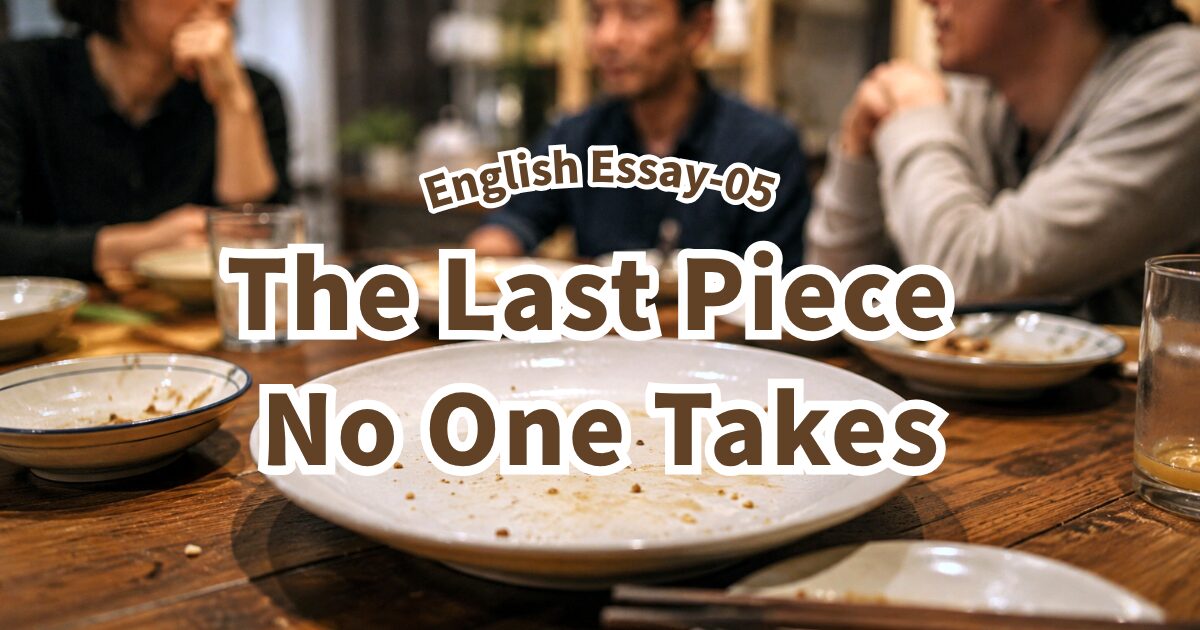
The Last Piece No One Takes
What Is Left on the Plate
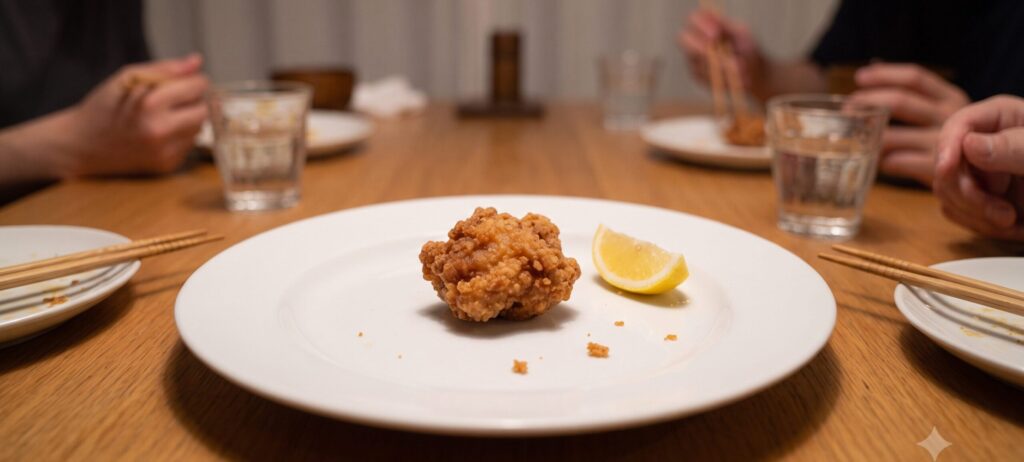
One piece of fried chicken sits in the middle of a large white plate.
Its golden coating still looks crisp, but the steam has disappeared. The smell of lemon and warm chicken is not as strong as it was before. People around the table keep talking, yet their eyes sometimes return to the center of the plate.
A pair of chopsticks starts to move, then stops.
“Go ahead. You can have the last one.”
The other person quickly shakes their head.
“No, I’m full. You take it.”
Someone else smiles and says the same thing. If no one wants it, the problem should be easy. However, no one asks for the plate to be taken away. The last piece is still food, but it has also become a question: Who will take it, and who is watching?
What “Go Ahead” Can Mean
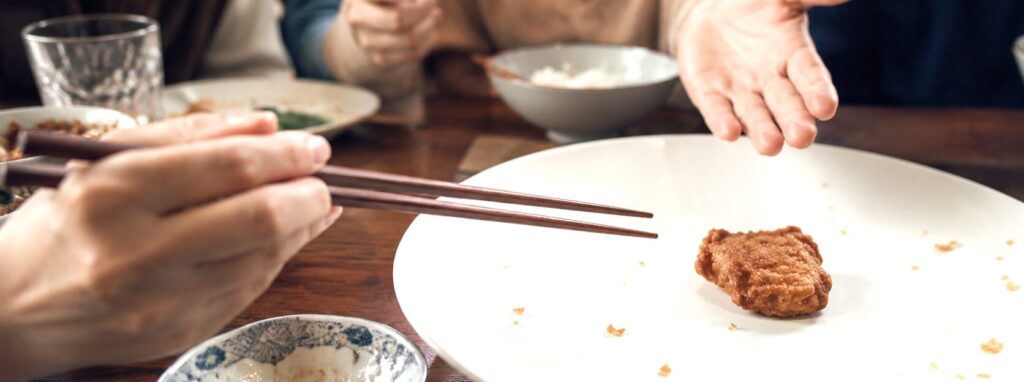
When there are five pieces on the plate, taking one means very little. Everyone can move freely. When only one piece remains, reaching for it suddenly feels different. The person who takes it also receives a few quiet looks.
“Go ahead” can be a kind offer. We may truly want someone else to enjoy the food. But the words can hide other feelings too. We may want the last piece but not want to look greedy. We may wait for someone to offer it again. It is easier to accept the food after we have been given permission.
Sometimes a person who is not very hungry takes the last piece simply to end the uncomfortable moment. The person who wants it waits, while the person who does not want it eats it. Around one small plate, kindness, good manners, and private wishes become mixed together.
A child may reach for the last piece without thinking. An adult might say, “Ask if anyone else wants it first.” After hearing this many times, the child learns to look at people’s faces before reaching toward the plate. Years later, that child may say the same words to someone younger.
Food memories are not made from taste alone. A smell, the color of a plate, the sound of chopsticks, or someone’s voice can all become part of a meal. We may forget exactly what we ate, but remember the moment when someone said, “Ask the others first.”
A Few Seconds That Stay
This does not mean that polite people are only pretending. Wanting the food and caring about other people can happen at the same time. We may also care about how we look to others. Kindness does not have to be perfect to be real.
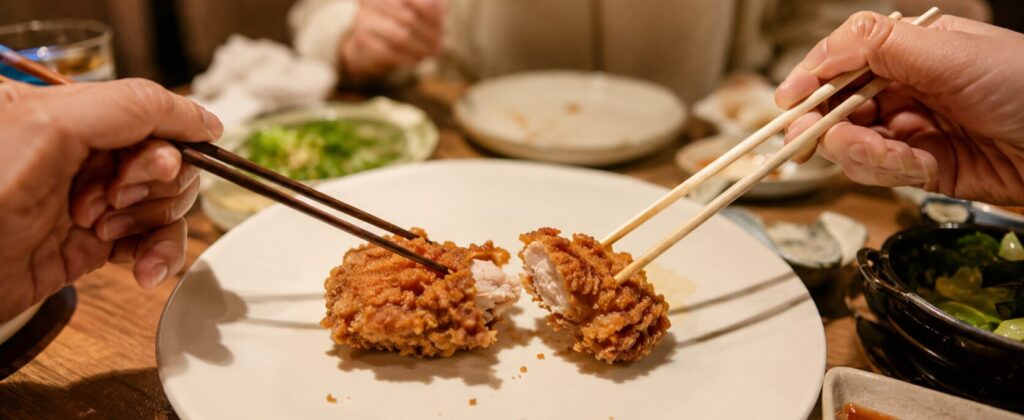
After a short silence, someone says, “Why don’t we cut it in half?”
The crisp coating breaks with a small sound. One piece becomes two, and each half moves to a different plate. No one has won, and no one has lost. The fried chicken becomes ordinary food again.
Later, the large plate is taken away. Only a few crumbs and a small mark of oil remain.
The last piece stays on the table longer than the first one. It quietly watches who makes the first offer, who smiles, and who really wants it. The flavor slowly fades from memory, but those few seconds, when no one reached for the plate, can remain surprisingly clear.
最後の一個を誰も取らない食卓|本文和訳
皿に残っているもの
白い大皿の真ん中に、唐揚げが1個置かれています。
きつね色の衣はまだカリッとしているように見えますが、湯気はもう消えています。レモンと温かい唐揚げの香りも、先ほどほど強くありません。食卓を囲む人たちは会話を続けていますが、その視線はときどき皿の中央へ戻ります。
ひと組の箸が動きかけて、止まります。
「どうぞ。最後の1個、食べていいですよ」
そう言われた人は、すぐに首を横に振ります。
「いいえ、もうおなかいっぱいです。あなたが食べてください」
別の人も笑いながら、同じことを言います。もし誰も欲しくないのなら、問題は簡単なはずです。
しかし、誰もその皿を下げてもらおうとはしません。
最後の1個はまだ食べ物ですが、同時に1つの問いにもなっています。
誰がそれを取るのでしょう。
そして、誰がその様子を見ているのでしょう。
「どうぞ」に込められた意味
皿に5個の料理があるとき、そのうちの1個を取ることには、ほとんど意味がありません。誰もが自由に手を動かせます。
ところが、1個だけ残っていると、それに手を伸ばすことが急に違って感じられます。最後の1個を取る人は、いくつかの静かな視線も受け取ることになります。
「どうぞ」は、親切な申し出になることがあります。相手にその料理を楽しんでほしいと、本当に思っている場合もあります。
しかし、その言葉には別の気持ちが隠れていることもあります。最後の1個を食べたいけれど、欲張りに見られたくないのかもしれません。誰かがもう一度勧めてくれるのを待っているのかもしれません。食べてもよいと認めてもらったあとなら、受け取りやすくなります。
それほどおなかがすいていない人が、気まずい時間を終わらせるためだけに、最後の1個を取ることもあります。食べたい人が待ち、食べたくない人がそれを食べるのです。
1枚の小さな皿を囲んで、優しさ、礼儀、そして心に隠した望みが混ざり合います。
子どもは、何も考えずに最後の1個へ手を伸ばすかもしれません。すると大人は、「ほかに欲しい人がいないか、先に聞きなさい」と言うでしょう。この言葉を何度も聞くうちに、子どもは皿へ手を伸ばす前に、人の顔を見ることを覚えます。
何年かたつと、その子どもが、今度は自分より幼い誰かに同じ言葉を伝えるかもしれません。
食べ物の記憶は、味だけで作られるものではありません。
香り、皿の色、箸の音、誰かの声。そのすべてが、食事の一部になることがあります。
何を食べたのかは忘れても、誰かに「先にほかの人へ聞きなさい」と言われた瞬間は覚えているかもしれません。
記憶に残る数秒間
だからといって、礼儀正しい人たちが、ただふりをしているという意味ではありません。
食べ物を欲しいと思うことと、ほかの人を気遣うことは、同時に起こり得ます。自分がほかの人からどう見えるかを気にすることもあるでしょう。優しさは、本物であるために完璧である必要はありません。
短い沈黙のあと、誰かが言います。
「半分に切りませんか」
カリッとした衣が、小さな音を立てて割れます。1個だった料理が2つになり、それぞれの半分が別の皿へ移されます。
誰かが勝ったわけでも、誰かが負けたわけでもありません。唐揚げは、もう一度ただの食べ物に戻ります。しばらくすると、大皿は下げられます。残っているのは、いくつかの衣のかけらと、小さな油の跡だけです。
最後の1個は、最初の1個よりも長く食卓に残ります。そして、誰が最初に勧めるのか、誰が笑うのか、誰が本当は食べたがっているのかを、静かに見ています。
味の記憶は少しずつ薄れていきます。それでも、誰も皿へ手を伸ばさなかったあの数秒間は、驚くほどはっきりと残ることがあります。
おわりに
このエッセイを読んでいると、食事の記憶には、料理の味だけでなく、誰かの声や箸が止まった瞬間まで残っているのだと気づかされます。
最後の1個を譲る気持ちも、少しだけ食べたいと思う気持ちも、相手によく見られたい気持ちも、きれいに分けられるものではありません。
それらが混ざり合っているからこそ、食卓のやり取りはどこか人間らしく、時に可笑しく感じられます。
半分に分ければすぐに終わる場面でも、その前に流れた短い沈黙は、意外なほど長く心に残ります。
次に大皿の最後の1個を見たとき、少しだけ周囲の表情を眺めてしまいそうです。


 | American English | 539 words はじめに 大皿の中央に、唐揚げが1個だけ残っている。 誰も箸を伸ば)