
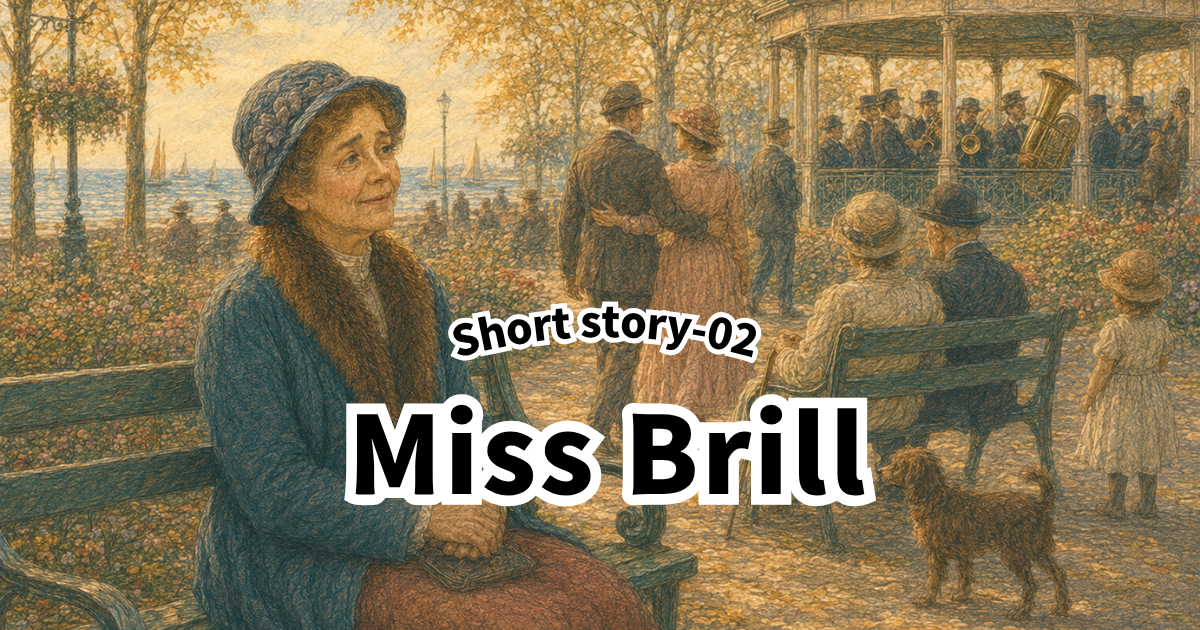
CEFR B1(中級) | British English | 2,083 words
この作品について
Katherine Mansfield
Katherine Mansfield(1888-1923)は、ニュージーランド生まれの作家で、20世紀初頭のモダニズム文学を代表する1人です。
大事件よりも、日常の一瞬に生まれる感情の変化や、本人さえ説明できない心の動きを描くことに優れています。
「Miss Brill」は1920年に発表され、1922年の短編集『The Garden Party, and Other Stories』に収録されました。
作品について
舞台は、フランス語で「公共庭園」を意味する Jardins Publiques です。
都市名は示されませんが、海やシーズン客の描写はフランスの保養地を思わせます。Miss Brill は英語を教え、病気の老紳士へ新聞を読む仕事もしていますが、家族や親しい友人は語られません。
作者は「孤独だった」と説明せず、毎週同じ席へ通い、他人の会話を楽しみにする姿から、その暮らしを感じ取らせます。
古い毛皮の襟巻きは、最も重要な象徴です。
Miss Brill はそれを「かわいい子」と呼び、壊れかけた鼻を直そうと考えます。そのいたわりは、彼女自身へのいたわりにも見えます。
しかし若い女性には、毛皮は「揚げた魚」のような滑稽な物にすぎません。
音楽も彼女の感情に寄り添うように変化します。
Mansfield は三人称で語りながら、感嘆符や問いかけを Miss Brill の心へ近づけ、内側の世界と外側の現実が衝突する瞬間まで、読者を想像の中へ招きます。
最後に泣いているのは、毛皮でしょうか、それとも Miss Brill でしょうか。作者は答えを示しません。
帰宅後も、彼女が泣いたとは書かれず、箱の蓋の向こうから声が聞こえたように感じるだけです。この距離が、感情を言葉にできない痛みを深く伝えます。
観察することと見られること、想像力の救いと危うさ、社会の中に居場所を求める気持ちを、長い余韻とともに残す作品です。
はじめにIntroduction
毎週日曜日、同じ時刻に家を出て、同じ公園の、同じベンチに座る。
そんな小さな習慣が、誰かにとっては1週間を支える大切な舞台なのかもしれません。
Katherine Mansfield の「Miss Brill」は、海辺の町で英語を教えながら暮らす1人の女性が、日曜の午後を公園で過ごす、ごく短い時間を描いた物語です。
大事件は起こりません。それでも、読み終えたあとには、誰かの心の奥を思いがけず見てしまったような感覚が残ります。
Miss Brill が楽しみにしているのは、音楽と、人々を眺めることです。
すぐ隣の会話へ耳を澄まし、行き交う人々の仕草から、それぞれの物語を想像します。
やがて彼女の目には、公園全体が1つの劇場のように見えてきます。若い恋人たちも、静かに座る老人たちも、楽団も、そして自分自身も、同じ舞台に立つ出演者なのだと感じるのです。
その発見は、彼女の日常を一瞬、明るく意味のあるものへ変えます。
けれども、人の心を豊かにする想像力は、ときに傷つきやすさとも隣り合わせです。
大切にしまっていた毛皮の襟巻き、公園で出会う似た境遇の人々、日曜だけの蜂蜜ケーキ。
作者の Mansfield は、それらの小さなものに Miss Brill の孤独を語らせます。
作者は彼女を説明しすぎず、笑うことも裁くこともしません。
読者は、ただ彼女と同じベンチに座り、音楽の変化と心の揺れを静かに感じ取りながら、自分自身のココロに向き合うことになる、そんな物語です。
Miss BrillKatherine Mansfield(1888-1923)
The afternoon was brilliantly fine. Gold seemed to dust the blue sky, and broad patches of light lay over the Jardins Publiques like white wine splashed across a table. The air did not move, yet when Miss Brill opened her mouth she felt a faint chill, as if she were about to sip iced water. From time to time, a yellow leaf drifted down from nowhere.
She was glad she had chosen to wear her fur. She lifted one hand and touched it. Dear little thing! It was pleasant to feel it against her again, warm along her neck and familiar beside her cheek. That afternoon she had taken it from its box, shaken away the moth powder, brushed it carefully and rubbed some life back into its dim glass eyes. Preparing it had felt almost like waking a small companion after a long sleep.
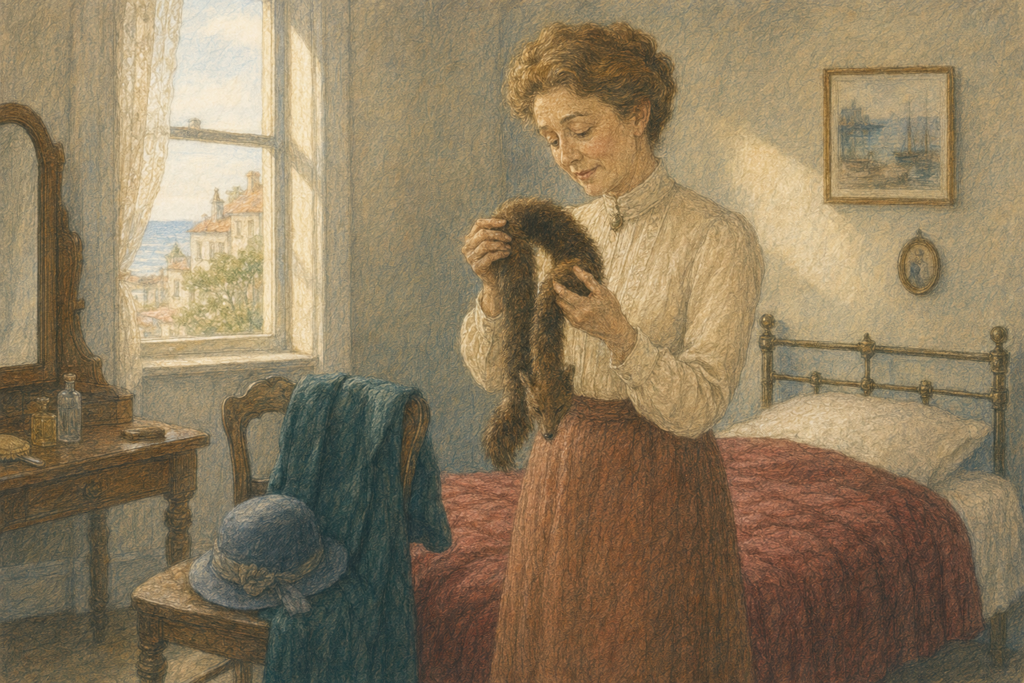
Those sad eyes had seemed to ask, "What has been happening to me?" How sweet it was to see them shine again above the red eiderdown on her bed. The black nose was not quite firm; it must have received a knock. Never mind. A tiny touch of black sealing wax would repair it when that became absolutely necessary.
The little creature held its own tail near her left ear as though it were biting it. What a rogue! She almost wanted to take it off, lay it across her knees and stroke it. A tingling ran through her hands and arms, but that must have come from walking. When she breathed, something light and gentle moved in her chest. It was not sadness. No, not sadness exactly.
More people than usual had come to the gardens. The Season had begun, and the Sunday band sounded louder and brighter than it had the week before. It played throughout the year, but outside the Season it was like a musician performing only for the family, careless because no visitors were listening.
The conductor seemed to be wearing a new coat. Miss Brill was almost certain of it, and the thought pleased her; the Season deserved a fresh beginning. He scraped one foot against the floor and flapped his arms like a cock preparing to crow. Inside the green rotunda, the bandsmen filled their cheeks and stared fiercely at the pages before them. Then the music became light and flute-like, a little chain of bright drops. Miss Brill followed it carefully, holding the pattern in her mind. She felt sure the phrase would return. It did, and she lifted her head with a smile, pleased to have known the music's intention.
Only two people shared her special bench: a fine old man in a velvet coat, both hands resting on a large carved walking stick, and a heavy old woman who sat very straight with some rolled knitting on her embroidered apron. Neither of them spoke.
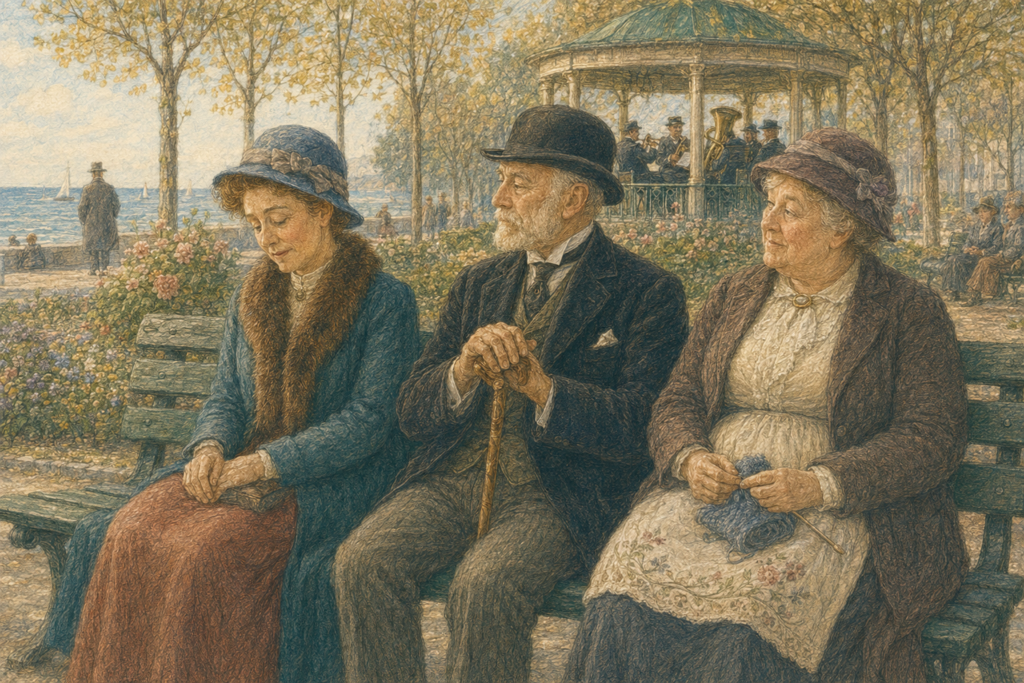
That was disappointing. Miss Brill always looked forward to hearing a conversation. She believed she had become quite skilled at listening while appearing not to listen. For a few minutes she could sit quietly inside other people's lives while their words moved around her.
She glanced sideways at the old couple and hoped they might leave soon. The previous Sunday had not been especially interesting either. An Englishman and his wife had occupied the bench. He wore a dreadful Panama hat, while she wore buttoned boots and talked without stopping about spectacles.
She knew she needed glasses, the wife had said, but buying them would be useless. They would certainly break; they would never stay in place. Her husband had patiently suggested gold rims, arms that curved around the ears and little pads at the bridge of the nose. Nothing pleased her. "They will always slide down my nose," she had insisted. Miss Brill had wanted to shake her.
Today the old pair remained as silent as statues. Never mind. There was always the crowd, and a crowded Sunday offered dozens of stories. Couples and groups moved backwards and forwards before the flower beds and the band rotunda. Some walked with purpose; others slowed as though waiting for the right person to notice them. They stopped to talk, exchanged greetings and bought small bunches of flowers from an old seller whose tray was fastened to the railings. Every greeting seemed to open a scene, even when Miss Brill could not hear the words.
Children rushed between the adults, swooping and laughing. Little boys wore large white silk bows beneath their chins; little girls looked like French dolls in velvet and lace. Now and then a very small child rocked suddenly out from under the trees, stopped, stared and dropped down with a soft bump. Its neat young mother hurried forward like a worried hen and carried it away.
Other people sat on benches and green chairs. They were nearly always the same people, Sunday after Sunday, and Miss Brill had often noticed something curious about most of them. They were silent, rather odd and nearly all old. From the fixed way they stared, they looked as if they had just stepped out of dark little rooms, or perhaps even out of cupboards.
Behind the rotunda, slender trees bent under yellowing leaves. Through their narrow trunks appeared a single line of sea, and above the water stretched a blue sky crossed by clouds veined with gold.
Tum-tum-tum, tiddle-um! Tiddle-um, tum! sang the band.
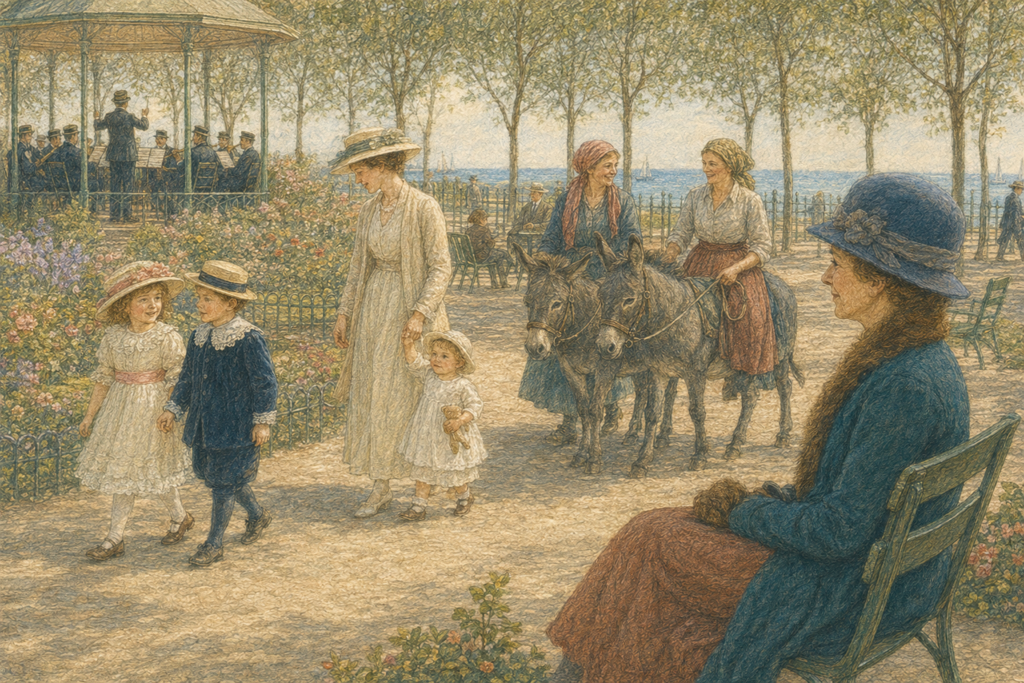
Two young women in red walked past, met two young soldiers in blue and went off with them, laughing, arm in arm. Two country women in strange straw hats passed solemnly, leading beautiful smoke-grey donkeys. A pale nun hurried by. A fashionable woman dropped a bunch of violets, and a little boy ran after her to return them. She took the flowers and threw them away as if they had been poisoned.
Miss Brill could not decide whether that gesture was admirable or dreadful. Before she had settled the question, a woman in an old ermine toque met a tall, stiff gentleman dressed in grey. The toque had been bought when the woman's hair was yellow. Now her hair, face and even her eyes had almost the same faded colour as the worn fur.
The woman's cleaned glove rose to touch her lips like a tiny yellow paw. She was delighted to see the gentleman. She had expected they might meet that afternoon, she said. She told him where she had been: here, there, everywhere, along the sea. Was the day not charming? And might he perhaps...?
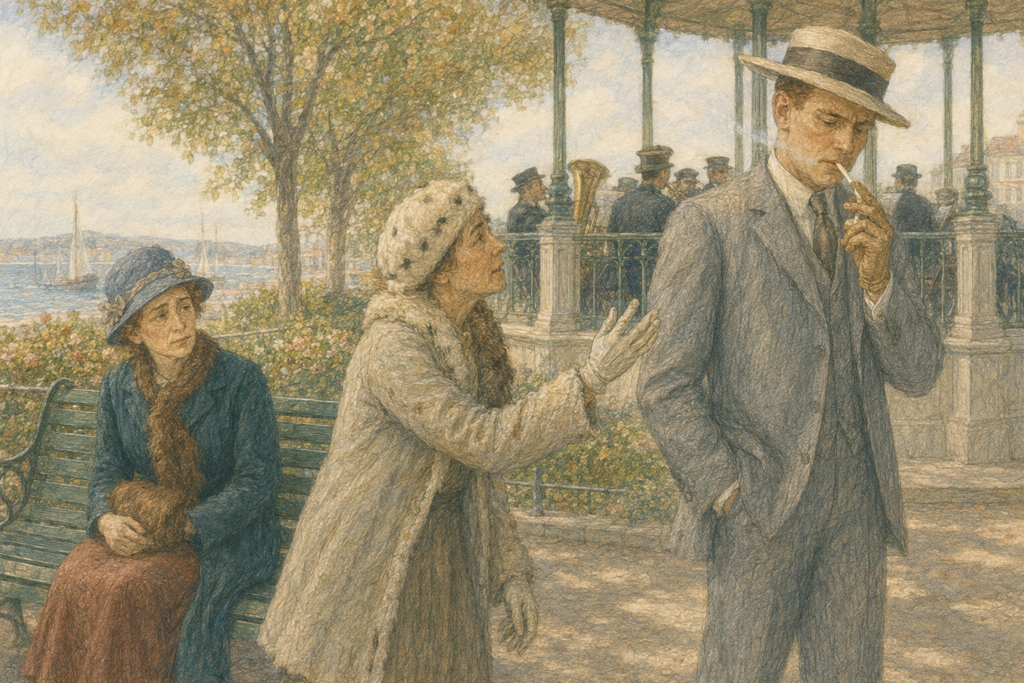
He shook his head. He lit a cigarette, breathed out slowly and walked away while she was still smiling and speaking. The ermine toque stood alone, but her smile only became brighter.
Even the band appeared to understand. It played softly and tenderly, while the drum seemed to repeat, "The brute! The brute!" What would the woman do now? What could happen next? Miss Brill watched closely. The woman suddenly raised her hand as if she had noticed someone far more pleasant and hurried away in that direction.
At once the music changed. It grew faster and gayer. The silent old couple rose from Miss Brill's bench and marched away. A funny old man with long whiskers came hobbling along in time to the music and was almost knocked over by four girls walking side by side.
How fascinating it all was! How Miss Brill enjoyed it! Sitting there and watching everyone was like watching a play. No. It was exactly like a play. The sky itself might have been a painted background.
Then a little brown dog trotted solemnly into view and slowly trotted out again. It looked so much like a trained theatre dog making its brief entrance that Miss Brill suddenly understood what made the afternoon so exciting.
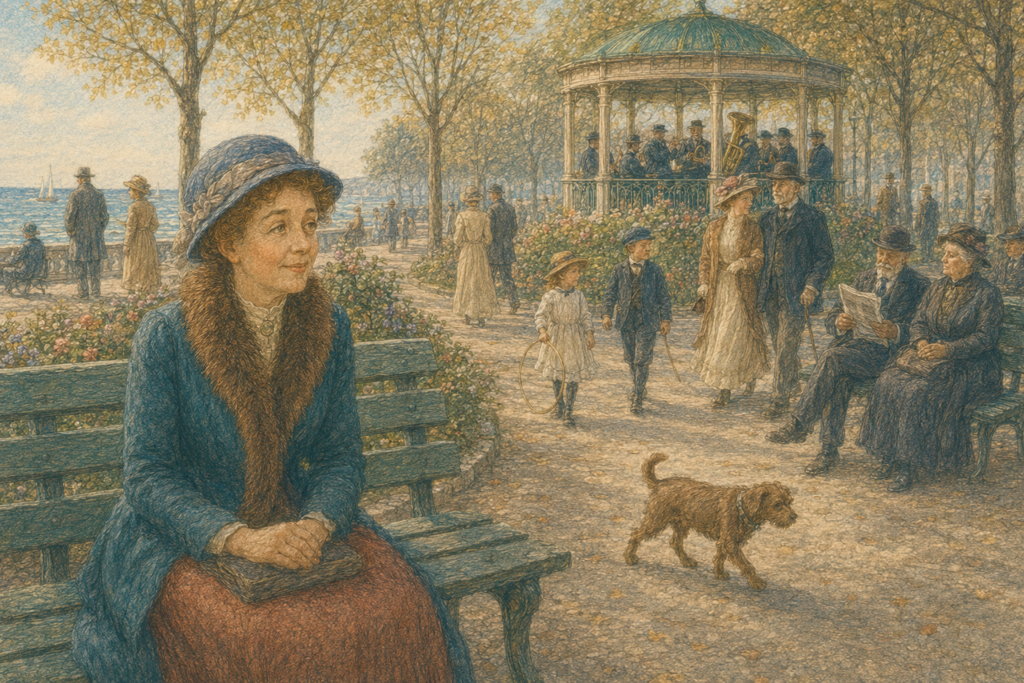
They were all on a stage. They were not merely an audience, looking at something from outside. Every one of them was acting. Even Miss Brill had a part, and she appeared every Sunday. Surely someone would notice if she failed to come. She belonged to the performance after all.
How strange that she had never seen it before. It explained why she always left home at exactly the same time, counting the familiar minutes as she prepared; an actress must not be late. Her regular arrival was not an empty habit but an entrance. It also explained why she felt shy when she told her English pupils how she spent her Sunday afternoons. She had never known how to describe the importance of it. Of course she felt shy. She was on the stage!
She almost laughed aloud. Then she thought of the old invalid gentleman to whom she read the newspaper four afternoons each week while he slept in his garden. She was used to the fragile head on its cotton pillow, the hollow eyes, the open mouth and the thin, high nose. If he had died, she sometimes thought, she might not have noticed for weeks.
But now, in her imagination, he suddenly understood that an actress was reading to him. "An actress?" he asked, raising his head as two points of light appeared in his eyes. Miss Brill smoothed the newspaper as though it were the script for her role. "Yes," she answered gently. "I have been an actress for a long time."
The band had paused, but now it began again. The music was warm and sunny, though a faint chill ran through it. What was that feeling? Not sadness. No, not sadness. It was something that made a person want to sing.
The melody rose and the light seemed to grow stronger. Miss Brill imagined that in another moment the entire company would begin singing. First would come the young people, the laughing couples moving together through the gardens. The men's voices, brave and certain, would join them.
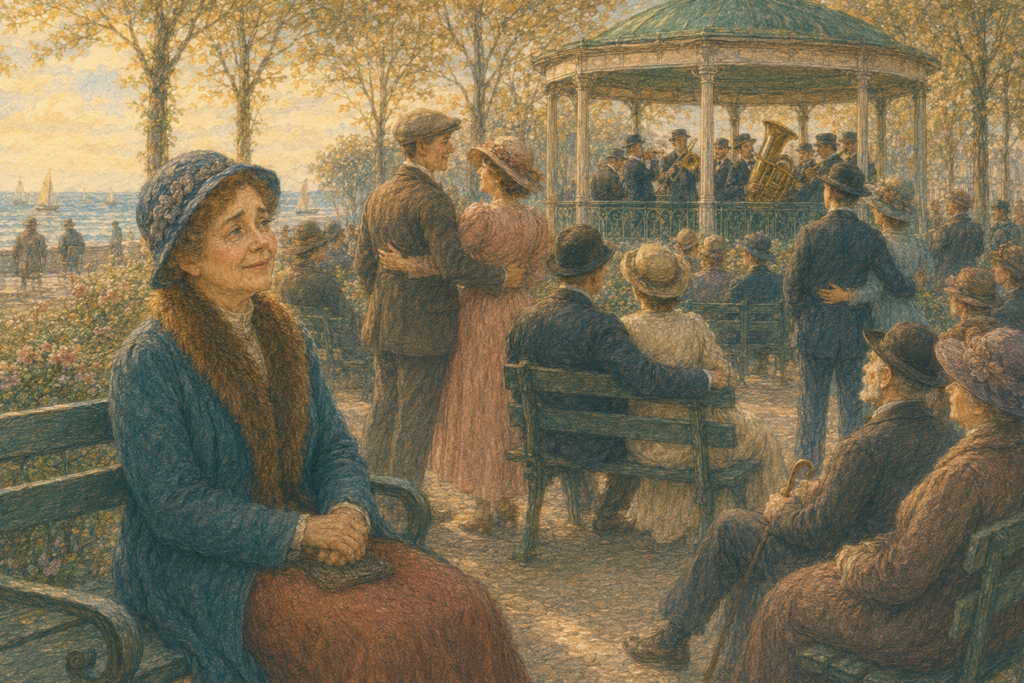
Then Miss Brill would sing too. She and the others on the benches would provide a low accompaniment, a sound that scarcely rose or fell but held everything together. It would be something beautiful, something deeply moving.
Her eyes filled with tears. Smiling, she looked at all the other members of the company. Yes, we understand, she thought. We all understand. Yet she could not have said what it was they understood.
At that moment a young man and a young woman sat down where the old couple had been. They were beautifully dressed and clearly in love. The hero and heroine, Miss Brill decided. They had probably just arrived from his father's yacht.
Still singing without a sound and wearing her trembling smile, Miss Brill prepared to listen.
"No, not now," said the girl. "I cannot. Not here."
"Why not? Is it because of that stupid old woman at the end?" the young man whispered. "Why does she come here at all? Nobody wants her. Why does she not keep her silly old face at home?"
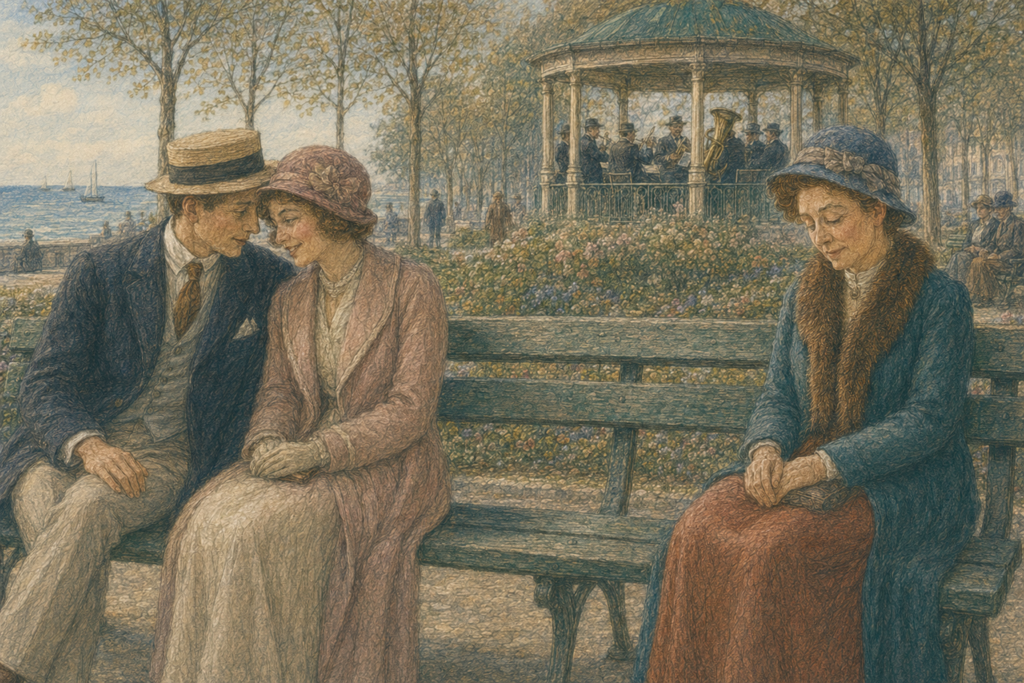
The girl gave a little laugh. "It is her fur that is so funny. It looks exactly like a fried fish."
"Oh, forget her," the young man said impatiently. Then his voice became tender again as he turned back to the girl. "Tell me, my darling..."
"No," she repeated. "Not here. Not yet."
On her way home, Miss Brill usually stopped at the baker's and bought a slice of honey cake. It was her Sunday treat. Sometimes the slice contained an almond and sometimes it did not, and the difference seemed very important.
When there was an almond, it was like carrying home a tiny present, a surprise that might so easily not have been there. She would discover it only when she cut into the cake, and the possibility gave the little parcel an air of adventure. On those Sundays, she walked more quickly, set out her cup with special care and struck the match for her kettle with a bold, cheerful movement. The room seemed less narrow while the water began to sing.
But today she passed the baker's without going in. She climbed the stairs to her little dark room. It was a room like a cupboard. She entered, closed the door and sat down on the red eiderdown.
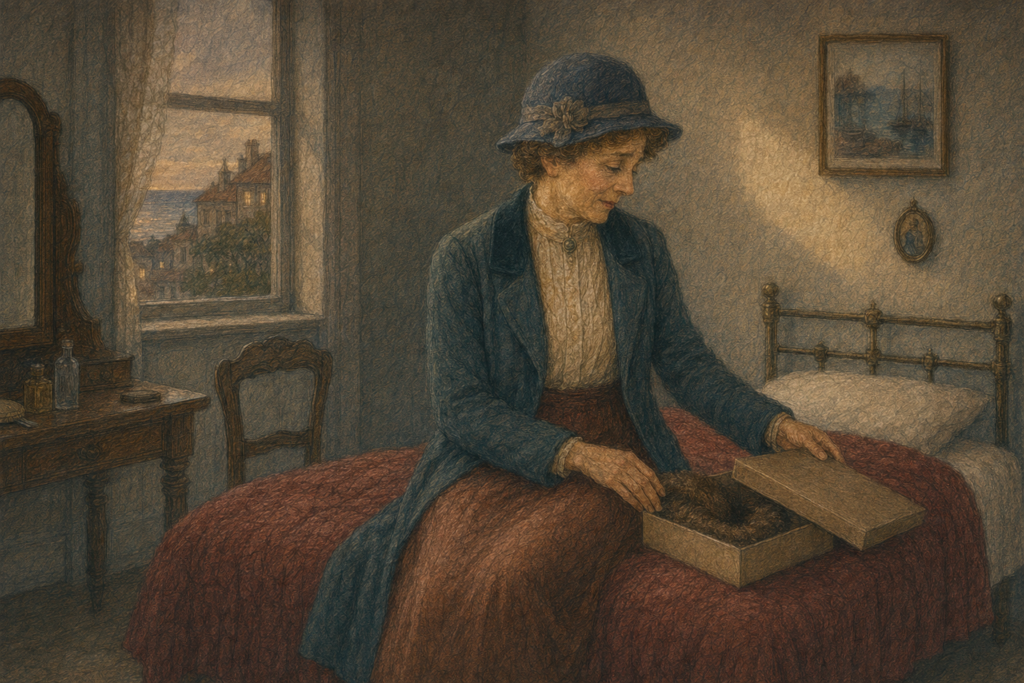
For a long time she did not move. The box from which the fur had come lay on the bed beside her.
She unclasped the necklet quickly. Without looking at it, she placed it inside the box and put on the lid.
Then she thought she heard something crying.
— END —
ミス・ブリル|本文和訳Stephen Leacock (1869–1944)
午後は目が覚めるほど晴れ渡っていた。
青い空には金色の粉が振りかけられ、広い光の斑点が、白ワインをテーブルいっぱいにこぼしたようにジャルダン・ピュブリックを覆っていた。
空気は動かなかったが、ミス・ブリルが口を開くと、氷水を飲む直前のような、かすかな冷たさを感じた。ときおり、黄色い葉がどこからともなく舞い降りてきた。
毛皮を身につけてきてよかった、と彼女は思った。
片手を上げて触れてみる。かわいい子。首に沿う温かさも、頬のそばのなじんだ感触も、もう1度味わえるのがうれしかった。
その日の午後、箱から取り出し、防虫剤の粉を払い、丁寧にブラシをかけ、くすんだガラスの目に少しばかり生気を戻してやったのだ。長い眠りから小さな相棒を起こしてやるような支度だった。
その悲しげな目は、「私に何が起きていたの?」と尋ねているようだった。
ベッドの赤い羽根布団の上で、その目が再び輝くのを見るのは、なんとすてきだったことだろう。
黒い鼻は少しぐらついていた。どこかにぶつけたに違いない。でも構わない。本当に必要になったら、黒い封蝋をほんの少しつければ直せる。
その小さな生き物は、自分の尻尾に噛みつくように、左の耳元で尻尾をくわえていた。
いたずらっ子ね。
襟巻きを外して膝に載せ、なでてやりたいくらいだった。
手から腕へ、ぴりぴりする感覚が走ったが、歩いてきたせいだろう。息をするたび、胸の中で軽く優しい何かが動いた。
それは悲しみではない。そう、悲しみとは少し違っていた。
公園には、いつもより大勢の人が来ていた。シーズンが始まり、日曜の楽団は先週よりも大きく、明るい音を響かせていた。
演奏は1年中続いていたが、シーズン外は、家族だけを前に演奏する音楽家のようだった。
客がいないので、どのように演奏しても構わないと思っているように聞こえた。
指揮者は新しい上着を着ているように見えた。
ほとんど間違いない、とミス・ブリルは思った。そのことがうれしかった。シーズンの始まりには、新しい装いがふさわしい。
指揮者は片足で床をこすり、今にも時を告げようとする雄鶏のように両腕を羽ばたかせる。緑色の円形楽堂の中では、楽団員たちが頬を膨らませ、目の前の楽譜を厳しい顔でにらんでいた。
やがて音楽は軽く、フルートのようになり、明るい雫をつないだ小さな鎖のように流れた。
ミス・ブリルは、その形を心の中に保ちながら注意深く追った。同じ旋律がもう1度戻る、と分かった。実際に戻ってくると、彼女は顔を上げ、音楽の意図を言い当てたことを喜ぶようにほほえんだ。
彼女の「特別なベンチ」を共有しているのは2人だけだった。
1人は上等なベルベットの上着を着て、大きな彫刻入りの杖に両手を載せた老紳士。
もう1人は体格のよい老婦人で、刺繍のあるエプロンに編み物を丸めて載せ、背筋を伸ばして座っていた。
2人とも何も話さなかった。
それは残念だった。ミス・ブリルはいつも、会話を聞くことを楽しみにしていた。聞いていないような顔で耳を傾けることなら、かなり上手になったと思っていた。
言葉が自分の周りを流れるあいだ、ほんの数分だけ、ほかの人の人生の中に静かに座っていられるのだ。
彼女は老夫婦を横目で見て、早く立ち去ってくれないかと思った。前の日曜も、それほど面白くはなかった。
ベンチに座っていたのはイギリス人の夫婦で、夫はひどいパナマ帽をかぶり、妻はボタン留めのブーツを履いて、眼鏡についてひっきりなしに話していた。
眼鏡が必要なのは分かっているけれど、買っても無駄だ、と妻は言った。きっと壊れるし、どうせ顔からずれてしまう。夫は辛抱強く、金縁、耳の周りに曲がるつる、鼻に当てる小さなパッドなどを提案した。けれども、妻はどれも気に入らない。
「いつだって鼻からずり落ちるに決まっているわ」と言い張った。
ミス・ブリルは、彼女を揺さぶってやりたくなった。
今日の老夫婦は、彫像のように黙ったままだった。
でも構わない。人混みなら、いつでも眺められるし、大勢が集まる日曜には、いくつもの物語がある。
花壇と円形楽堂の前を、恋人や集団が行ったり来たりしていた。目的地へまっすぐ歩く人もいれば、ふさわしい誰かに見つけてもらうのを待つように、足を緩める人もいる。
彼らは立ち止まって話し、挨拶を交わし、柵に盆を固定した年老いた花売りから、小さな花束を買っていった。
言葉が聞こえなくても、挨拶の1つ1つが新しい場面を開くようだった。
子どもたちは、大人たちのあいだを飛び回るように駆け抜け、笑い声を上げた。男の子は顎の下に大きな白い絹の蝶結びをつけ、女の子はベルベットとレースをまとったフランス人形のようだった。
ときおり、ごく小さな子どもが木陰から急によちよちと現れ、立ち止まり、見つめ、柔らかな音を立てて尻もちをついた。
身なりのよい若い母親が、心配する雌鶏のように駆け寄り、抱き上げて連れていった。
ほかの人々はベンチや緑色の椅子に座っていた。
日曜ごとに、ほとんどいつも同じ顔ぶれで、その多くには何か不思議なところがあると、ミス・ブリルはたびたび感じていた。
彼らは無口で、少し変わっていて、ほとんどが年老いていた。
じっと見つめる様子は、暗い小部屋から出てきたばかりのようだった。あるいは、戸棚の中からさえ。
円形楽堂の後ろでは、細い木々が黄色くなりかけた葉を垂らしていた。その幹の隙間から海が1本の線のように見え、水の上には金色の筋が入った雲を横切らせて、青空が広がっていた。
タン、タン、タン、ティドル・アン。ティドル・アン、タン。
楽団が歌った。
赤い服を着た若い女性が2人通り過ぎ、青い制服の若い兵士2人と出会うと、腕を組んで笑いながら歩き去った。
風変わりな麦わら帽子の田舎の女性2人が、美しい煙色のロバを引いて、厳かな顔で通った。
青白い修道女が急ぎ足で過ぎていった。
おしゃれな女性がスミレの花束を落とし、小さな男の子が拾って追いかけた。ところが女性は受け取ると、毒でも塗られているかのように投げ捨てた。
その仕草を立派だと思うべきか、ひどいと思うべきか、ミス・ブリルには決められなかった。
答えが出る前に、古びたアーミン帽の女性が、灰色の服を着た背の高い堅苦しそうな紳士と出会った。その帽子を買ったころ、女性の髪は黄色かった。今では髪も、顔も、目までが、くたびれた毛皮と同じような色にあせていた。
きれいに洗った手袋をはめた手が、小さな黄色い前足のように唇へ上がった。女性は紳士に会えて心から喜んでいた。
今日の午後、会えるかもしれないと思っていたのだという。海辺を、あちらこちら、いたるところへ行ってきたと話した。
すてきな日だと思いませんか。それで、もしよければ……。
紳士は首を横に振った。
たばこに火をつけ、ゆっくり煙を吐き、女性がまだほほえみながら話しているうちに歩き去った。
アーミン帽の女性は1人で残されたが、その笑顔はかえって明るくなった。
楽団まで彼女の気持ちを理解したようだった。音楽は優しく柔らかくなり、太鼓は「ひどい男、ひどい男」と繰り返しているように聞こえた。
女性はこれからどうするのだろう。次に何が起きるのだろう。ミス・ブリルはじっと見守った。
すると女性は、はるかに感じのよい誰かを見つけたように突然片手を上げ、そちらへ急いでいった。
たちまち音楽が変わった。速く、いっそう陽気になった。
黙っていた老夫婦がミス・ブリルのベンチから立ち上がり、行進するように去っていった。長い頬ひげの面白い老人が、音楽に合わせて足を引きずりながら歩いてきて、横1列に並んだ4人の少女に危うくぶつかりそうになった。
なんて魅力的なのだろう。ミス・ブリルは、どれほどこの時間を楽しんでいることか。
ここに座り、すべてを眺めていると、芝居を見ているようだった。いや、まさに芝居そのものだった。空さえも、舞台の背景として描かれたものに見えるほどだった。
そのとき、小さな茶色い犬が厳かな様子で視界に入り、またゆっくりと去っていった。
ほんの短い出番のために登場する、訓練された劇場の犬にあまりにもよく似ていたので、ミス・ブリルは、この午後をこれほど胸躍るものにしている理由を突然理解した。
みんな同じ舞台に立っているのだ。ただ外から何かを眺める観客ではない。全員が演じている。ミス・ブリルにさえ役があり、毎週日曜に出演している。もし来なければ、きっと誰かが気づくだろう。何といっても、彼女もこの公演の一部なのだから。
今まで気づかなかったのが不思議だった。だから毎回、支度をしながらなじんだ時間を数え、きっかり同じ時刻に家を出るのだ。
女優は遅刻してはいけない。決まった時刻に到着することは、空しい習慣ではなく、舞台への登場だった。
そして、英語の生徒たちに日曜の午後の過ごし方を話すとき、なぜか気恥ずかしくなる理由も分かった。これがどれほど大切なのか、うまく説明できたことがなかったのだ。
恥ずかしくて当然だ。自分は舞台に立っているのだから。
彼女は思わず声を上げて笑いそうになった。
それから、週に4日の午後、庭で新聞を読んで聞かせている、病気の老紳士のことを思った。
木綿の枕に載った弱々しい頭、くぼんだ目、開いた口、細く高い鼻には、すっかり慣れていた。もし彼が亡くなっても、何週間も気づかないかもしれない、と考えることさえあった。
ところが今、想像の中で老紳士は、自分に新聞を読んでいるのが女優だと突然理解した。
「女優さんだって?」と彼は頭を持ち上げ、両目に2つの光を宿して尋ねる。
ミス・ブリルは、新聞が自分の役の台本であるかのように紙面をなでた。
「ええ」と優しく答える。
「私は長いあいだ、女優をしているんです」
楽団はしばらく休んでいたが、再び演奏を始めた。音楽は温かく、陽光に満ちていたが、その中をかすかな冷たさが流れていた。
これは何だろう。悲しみではない。そう、悲しみではない。人に歌いたいと思わせる何かだった。
旋律が高まり、光はいっそう強くなったように見えた。
あと少しで、出演者全員が歌い始める、とミス・ブリルは想像した。
まず若者たち、公園の中を一緒に歩く、笑い合う恋人たちが歌い出す。そこへ、勇ましく確かな男たちの声が加わる。
それからミス・ブリルも歌うのだ。
ベンチに座る人々と一緒に、低い伴奏を受け持つ。ほとんど上がりも下がりもしないけれど、全体を1つにつなぎ止める音。
それは美しく、深く心を動かすものになるだろう。
彼女の目に涙があふれた。ほほえみながら、ほかの出演者たちを見つめる。
そう、私たちは分かり合っている、と彼女は思った。みんな分かっている。でも、いったい何を分かっているのかは、彼女自身にも言葉にできなかった。
その瞬間、先ほどの老夫婦がいた場所へ、若い男性と女性が腰を下ろした。2人は美しく着飾り、明らかに恋をしていた。
主人公の男女だ、とミス・ブリルは考えた。きっと父親のヨットから到着したばかりなのだろう。
声を出さずに歌い続け、震えるような笑みを浮かべたまま、ミス・ブリルは2人の会話へ耳を澄ませた。
「今はだめ」と女性が言った。「無理よ。ここでは」
「どうして。端にいる、あのばかな年寄りのせい?」と若い男性がささやいた。
「そもそも、なぜここへ来るんだ。誰もあの人を必要としていないのに。あんな間抜けな顔は家に置いてくればいい」
女性は小さく笑った。「あの毛皮がおかしいのよ。揚げた魚にそっくりだわ」
「もう、あの人のことはいいだろう」と若い男性はいら立った声で言った。
それから女性へ向き直ると、また優しい声になった。「ねえ、僕のかわいい人……」
「だめ」と女性は繰り返した。「ここではだめ。まだよ」
家へ帰る途中、ミス・ブリルはいつもパン屋へ寄り、蜂蜜ケーキを1切れ買った。日曜だけの楽しみだった。ケーキにはアーモンドが入っているときと、入っていないときがあり、その違いはとても重要に思えた。
アーモンドが入っていれば、小さな贈り物を家へ持ち帰るようだった。なくてもおかしくなかったものが、思いがけずそこにある。
ケーキにナイフを入れて初めて分かるので、その可能性が小さな包みに冒険の気配を与えた。
そんな日曜には足取りが速くなり、いつもより丁寧にカップを用意し、やかんの火をつけるマッチも、大胆で陽気な動作で擦った。
湯が歌い始めるあいだ、部屋は少しだけ広く感じられた。
けれども今日は、パン屋へ入らずに通り過ぎた。階段を上り、自分の小さな暗い部屋へ戻った。戸棚のような部屋だった。
中へ入り、扉を閉め、赤い羽根布団の上に腰を下ろした。
彼女は長いあいだ動かなかった。ベッドの隣には、毛皮を取り出した箱が置いてあった。
ミス・ブリルは襟巻きの留め金を急いで外した。それを見ないまま箱の中へ置き、蓋を閉じた。
そのとき彼女は、何かが泣いている声を聞いたように思った。
— おわり —
まとめ
公園にいる人々を舞台の出演者だと考えたとき、Miss Brill は初めて、自分も世界の一部なのだと確信します。
それは決して大げさな夢ではありません。いつも同じ場所に座ること、音楽へほほえむこと、誰かの会話に関心を持つこと。そうした小さな行為にも、その人だけの役割と意味があるのだという、切実で美しい発見です。
だからこそ、若い2人の何気ない言葉は強く響きます。
彼らにとっては、すぐに忘れてしまう短い冗談だったでしょう。けれどもその言葉は、Miss Brill が大切に育ててきた舞台を、一瞬で暗い小部屋へ戻してしまいます。
人は、目の前の誰かがどのような思いでそこにいるのかを、ほとんど知りません。知らないまま放った言葉が、その人の1週間を支える小さな喜びまで傷つけることがあります。
物語の最後に聞こえる「泣き声」は、説明されないからこそ、読む人の中に残ります。
私たちも日常のどこかで、誰かを背景の人物として見てはいないでしょうか。そして、自分自身が背景に追いやられたように感じる日はないでしょうか。
「Miss Brill」は、見知らぬ人にも見えない物語があることを思い出させます。
次に公園や電車、店の片隅で誰かと同じ時間を過ごすとき、その人もまた同じ舞台を生きる1人なのだと、ほんの少し想像してみたくなったのではないでしょうか。



 | British English | 2,083 words この小説は、パブリックドメインとなっている英語作品をもとに、原作)