
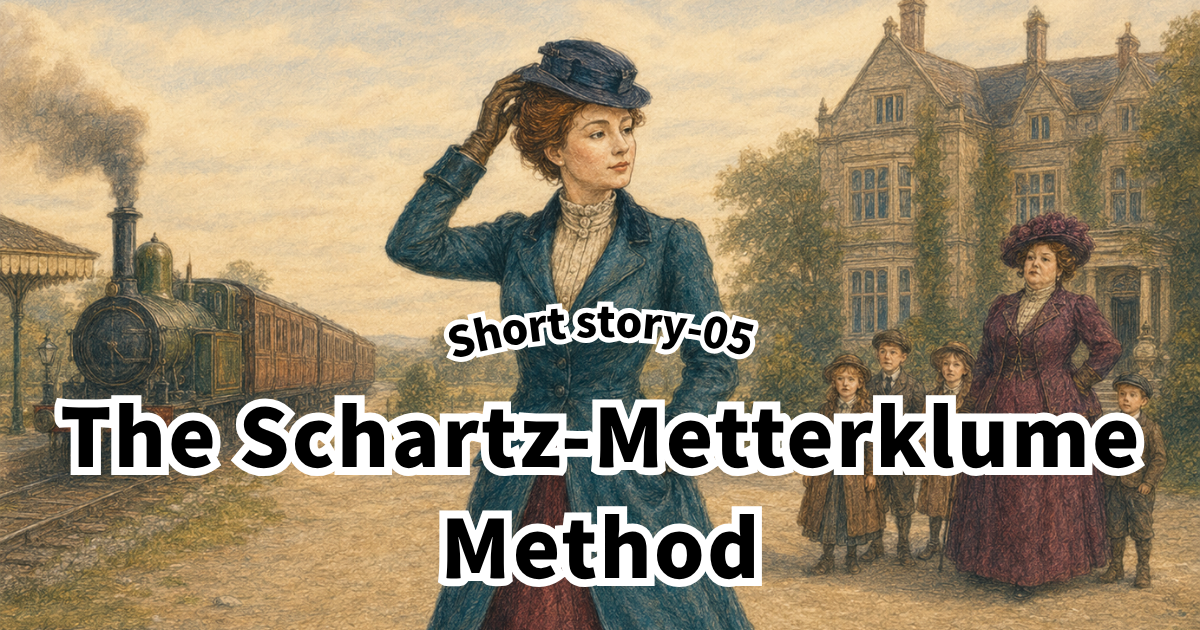
CEFR B1(中級) | British English | 2,058 words
作者と時代背景について
Saki (Hector Hugh Munro, 1870–1916)
Sakiは、英国の作家Hector Hugh Munro(1870–1916)の筆名です。
ビルマで生まれ、幼いころ英国へ送られた彼は、のちに警察官、新聞記者、海外特派員として働きました。
社交界や中上流階級の家庭を舞台に、礼儀正しい言葉の下へ隠された虚栄、退屈、権力関係を、短く鋭い風刺へ変えることで知られています。
人物を長々と説明せず、会話と小さな行動だけで弱点を見せ、最後の1行で読者の見方を反転させる技法が大きな特徴です。
「The Schartz-Metterklume Method」は、新聞Westminster Gazetteに掲載されたのち、1914年の短編集『Beasts and Super-Beasts』へ収録されました。
自動車、電報、家庭教師、使用人のいる郊外の屋敷は、20世紀初頭の英国上流・中上流家庭を示します。
当時のgovernessは、子どもの教育を担いながらも、家族とも一般の使用人とも異なる曖昧な立場に置かれがちでした。
Mrs Quabarlが相手の身元を十分確認せず、服装と到着時刻だけで家庭教師と判断する背景には、こうした階級社会の「役割が人を決める」という感覚があります。
はじめにIntroduction
旅先で列車に乗り遅れたとき、多くの人は次の便を調べ、静かに待つでしょう。
けれどもSakiの「The Schartz-Metterklume Method」の主人公Lady Carlottaは、そんな常識の枠に収まる人物ではありません。
困っている馬を助けたために列車を逃した彼女は、駅で見知らぬ女性から新しい家庭教師だと決めつけられます。
誤解を正す代わりに、彼女はその役を引き受け、退屈な待ち時間を一夜限りの冒険へ変えてしまいます。
物語の面白さは、単なる「人違い」だけにありません。子どもには暗記ではなく、生きた歴史を教えてほしいと語るMrs. Quabarl。
そのもっともらしい理想を、Lady Carlottaは恐ろしいほど忠実に実行します。
古代ローマを学ぶなら、自分たちで演じればよい——その理屈が、上品な家庭の庭をたちまち混乱へ変えていくのです。
Sakiらしいのは、誰が本当に非常識なのかを簡単には決めさせない点です。
勝手に相手の身元を決め、階級や肩書に安心するMrs. Quabarl。
分からない教育法の名前を、知っているふりで受け入れる夫婦。
そして、他人の家へ入り込みながら、観察力と機転で場を支配するLady Carlotta。
会話の一つひとつが人物の弱点を照らし、最後の短い返答まで笑いを積み重ねます。
今回の現代英語版では、20世紀初頭の英国という舞台、人物関係、出来事の順序、結末を保ちながら、長い挿入句や古い言い回しを読みやすく整理しました。Lady Carlottaが最初から最後まで見せる、
静かで危険なほどの落ち着きに注目してください。
彼女は声を荒らげることなく、周囲の思い込みを利用し、退屈な1日を忘れられない物語へ作り替えていきます。
The Schartz-Metterklume MethodSaki (Hector Hugh Munro, 1870–1916)
Lady Carlotta stepped down onto the platform of a small country station and walked slowly from one end to the other. Her train had stopped without explanation, and she needed some way to fill the time until it chose to move again. There was little to study: a quiet booking office, a few unremarkable advertisements, and fields stretching beyond the railway fence.
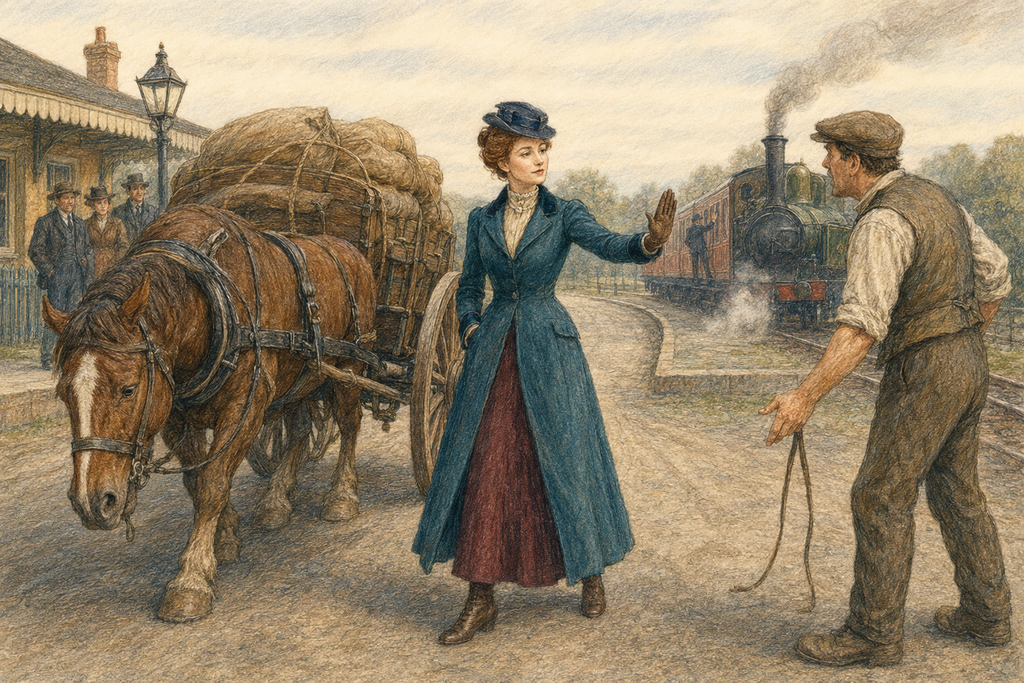
Beyond the station fence, on the road, a tired horse was struggling to pull a load much too heavy for it. The carter seemed to direct all his anger at the animal that earned his living.
Lady Carlotta left the platform at once. She crossed to the road and interfered so effectively that the struggle soon looked very different. She did not argue for long or ask whether assistance was welcome. Her manner suggested that the horse’s comfort had already become her business.
Several of her friends had often warned her that helping distressed animals was none of her business. She had followed that advice only once. On that occasion, one of the women who most strongly supported the rule of non-interference had been trapped for nearly three hours in a small and uncomfortable may tree by an angry boar-pig.
Lady Carlotta had remained on the other side of the fence, calmly finishing a watercolour sketch. She had refused to interfere between the boar and its prisoner. The woman was eventually rescued, but the friendship did not survive.
This time, the only thing Lady Carlotta lost was her train. After showing no impatience for most of the journey, it suddenly steamed away without her.
She accepted the desertion without concern. Her friends and relations were familiar with the arrival of her luggage before, after, or entirely without her.
She sent a vague telegram to the house where she was expected, saying that she would come by another train. The message gave no time and offered no useful explanation, but her hosts were accustomed to interpreting such communications. Before she had decided what to do next, an impressive-looking woman approached and examined her clothes and appearance with open attention.
‘You must be Miss Hope, the governess I have come to meet,’ the woman announced in a tone that allowed very little argument.
‘Very well,’ Lady Carlotta thought. ‘If I must be Miss Hope, then Miss Hope I shall be.’ Her expression became dangerously mild. The mistake offered exactly the sort of unexpected entertainment Lady Carlotta rarely refused.
‘I am Mrs Quabarl,’ the woman continued. ‘And where, may I ask, is your luggage?’
‘It has gone astray,’ said the supposed governess, following the useful principle that absent people and objects can safely be blamed. In reality, her luggage had behaved perfectly and continued towards its proper destination. ‘I have just sent a telegram about it,’ she added, which was nearer to the truth.
Mrs Quabarl complained about careless railway companies and said that her maid could lend Miss Hope anything she needed for the night. Then she led Lady Carlotta to a large, newly purchased motor car.
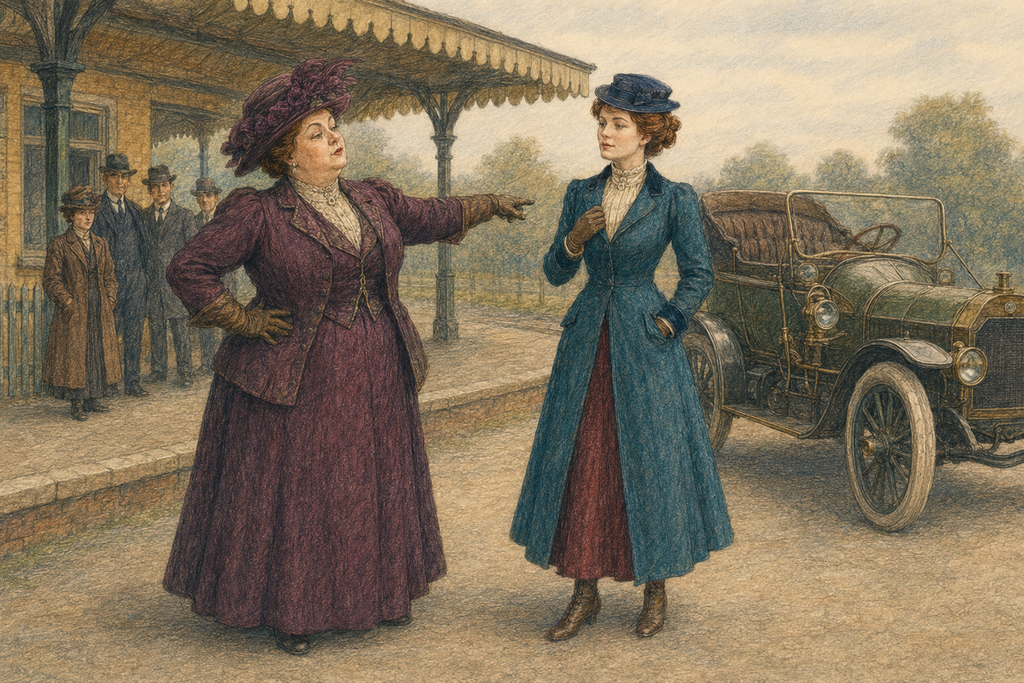
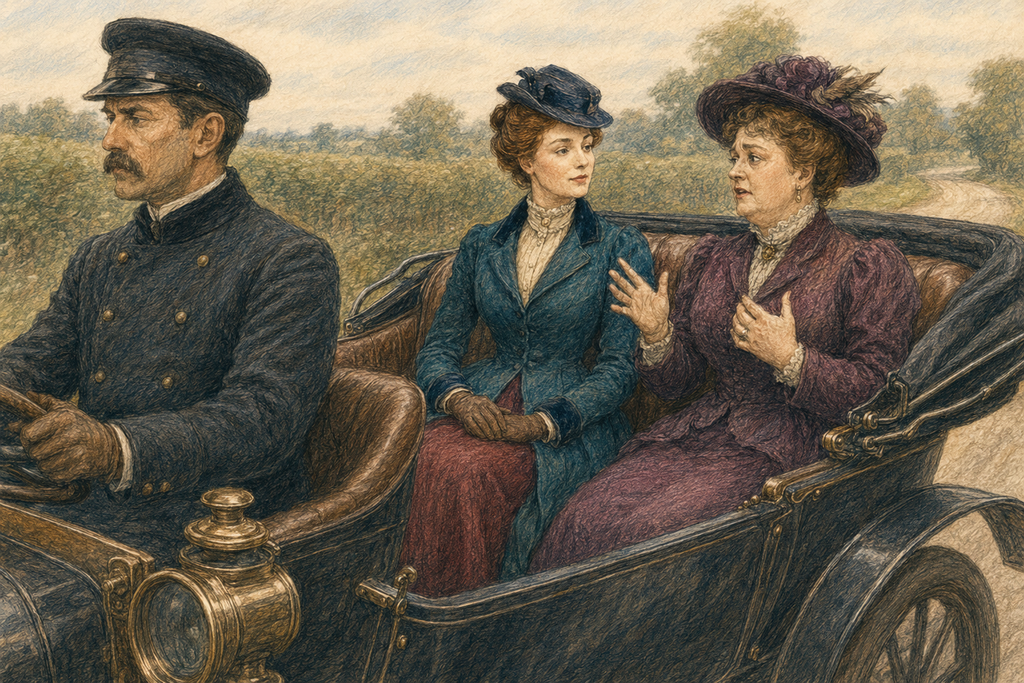
During the drive to the Quabarl house, Mrs Quabarl described the four children who had unexpectedly become Lady Carlotta’s responsibility. Claude and Wilfrid, she explained, were delicate and sensitive. Irene possessed a strongly artistic nature. Viola had another quality that sounded equally fashionable and equally ordinary among the children of prosperous families. Each description seemed designed less to reveal the child than to display the mother’s modern understanding of childhood.
Mrs Quabarl spoke as though each child were a rare object whose special qualities had been discovered by expert examination. Lady Carlotta listened with the seriousness of a person receiving instructions about a collection of expensive but troublesome animals. She asked no questions. The silence encouraged Mrs Quabarl to continue, and every new instruction provided a clearer picture of the household’s confidence in itself.
‘I do not want them merely to be taught,’ Mrs Quabarl said. ‘I want them to be interested in what they learn. In history, for example, you must make them feel that they are meeting men and women who truly lived. They must not simply memorise a crowd of names and dates.’
Lady Carlotta agreed without enthusiasm.
‘And naturally,’ Mrs Quabarl continued, ‘I shall expect you to speak French at meals on several days each week.’
‘I shall speak French four days a week and Russian on the other three,’ Lady Carlotta replied.
Mrs Quabarl stared at her. ‘Russian? My dear Miss Hope, no one in the house speaks or understands Russian.’
‘That will not inconvenience me at all,’ said Lady Carlotta coolly.
The reply disturbed Mrs Quabarl more than a direct refusal would have done. She belonged to the class of people who appear commanding and confident only while no one offers serious resistance. The smallest unexpected objection could make her uncertain and apologetic. She could manage obedience with ease; what she did not know how to manage was a person who accepted her instructions and then quietly changed their meaning.
Her confidence weakened further when the new governess showed no admiration for the expensive car. Lady Carlotta casually mentioned the advantages of two newer models, speaking with enough knowledge to suggest that the Quabarls’ proud purchase was already an unfortunate choice.
By the time they reached the house, Mrs Quabarl had begun to treat her employee with the careful respect usually given to an unpredictable guest.
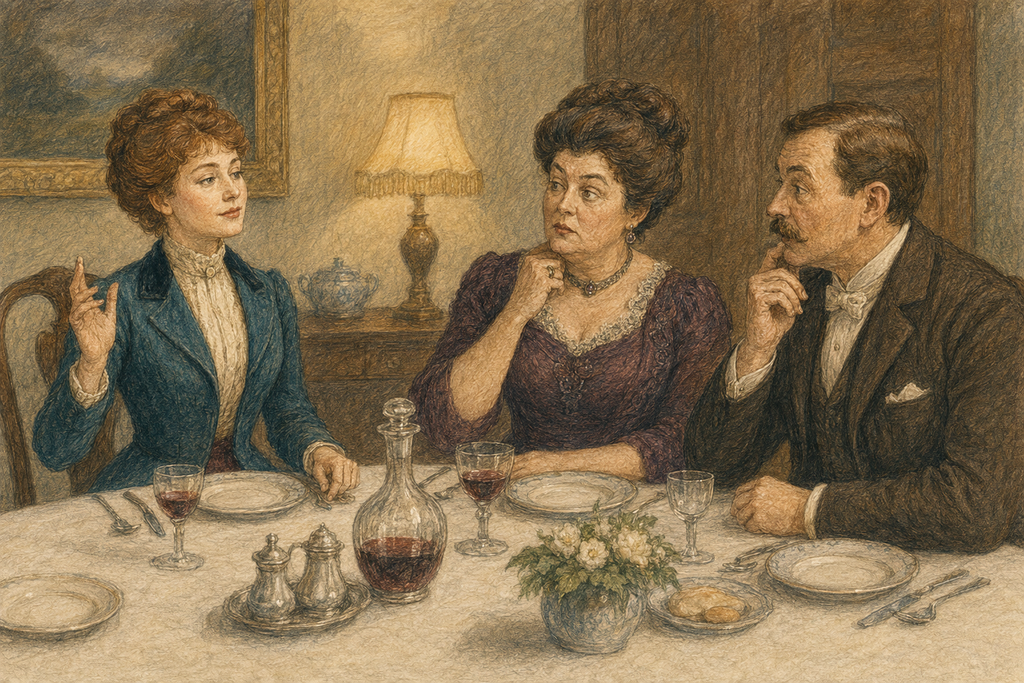
At dinner that evening, Mr Quabarl joined his wife. He usually repeated her opinions and gave them the reassuring appearance of agreement. Even with his support, however, she recovered none of the authority she had lost in the car. Lady Carlotta behaved neither like a servant seeking approval nor like a guest grateful for hospitality. The uncertainty left the couple with no comfortable tone to adopt.
The governess accepted wine and discussed it with calm confidence. Previous governesses had limited their remarks on the subject to a respectful preference for water. This one compared vintages and recommended a reliable wine merchant. Neither Mr nor Mrs Quabarl knew enough to challenge her.
Mrs Quabarl changed the subject. ‘We received very satisfactory references for you from Canon Teep,’ she said. ‘I imagine he is an excellent man.’
Lady Carlotta knew nothing whatever about Canon Teep, but this did not prevent an answer. She invented, with perfect calm, an outrageous private history for him and added that, apart from these alarming habits, he was a very likeable person.
‘My dear Miss Hope!’ cried both Quabarls together. They hoped she was exaggerating.
Lady Carlotta developed the story with further impossible details, presenting them as balanced and charitable judgement. The Quabarls became increasingly uncomfortable. They had wanted impressive references, but they had not expected their new governess to know anything interesting about the person who supplied them. Their embarrassment increased precisely because they could not be certain that she was joking. She delivered every invention in the tone of a witness correcting a minor misunderstanding.
‘We will discuss this another time,’ Mrs Quabarl said quickly.
‘I shall never mention it again,’ Lady Carlotta promised with finality.
Mr Quabarl rescued the conversation by asking what lessons she intended to begin the next morning.
‘History,’ she said.
Mr Quabarl nodded wisely. ‘When teaching history, you must take care to interest the children. You must make them feel that they are being introduced to the lives of real men and women—’
‘I have already explained that,’ his wife interrupted.
‘I teach history by the Schartz-Metterklume Method,’ Lady Carlotta announced proudly.
‘Ah, yes,’ said Mr and Mrs Quabarl. Neither had heard of it, but both decided that it would be safer to behave as though the name were familiar. A foreign-sounding title suggested modern scholarship, and neither wished to appear behind the latest educational fashion. Their pretended recognition gave Lady Carlotta all the permission she required.
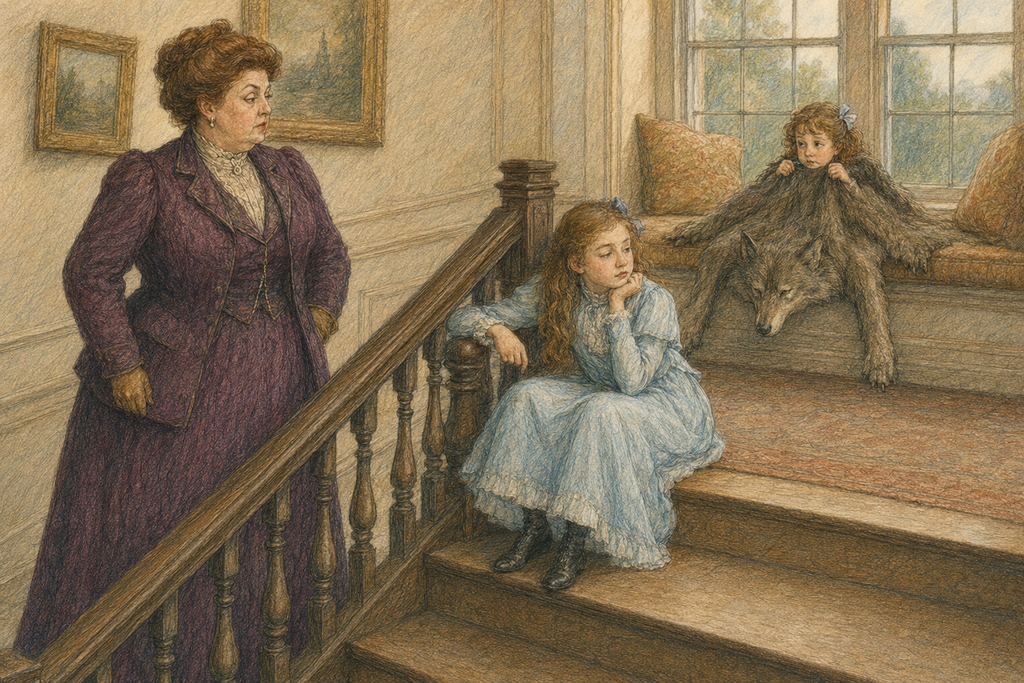
The next morning, Mrs Quabarl found Irene sitting unhappily at the top of the stairs. Viola was balanced on the window-seat behind her, looking uncomfortable beneath a large wolf-skin rug.
‘What are you children doing here?’ Mrs Quabarl demanded.
‘We are having a history lesson,’ Irene answered. ‘I am supposed to be Rome. Viola is the she-wolf—not a real wolf, but the sort the Romans thought important. I have forgotten why.’
‘And where are Claude and Wilfrid?’
‘They have gone to fetch the poorly dressed women.’
Mrs Quabarl repeated the words in alarm.
Irene explained that the boys had not wanted to take part. Miss Hope had picked up their father’s fives bat and threatened a formal school punishment if they refused. No blow had been struck, but the possibility had made the boys suddenly interested in historical action. The lesson had therefore achieved at least one of Mrs Quabarl’s aims: the children were no longer treating the past as a lifeless list of names and dates.
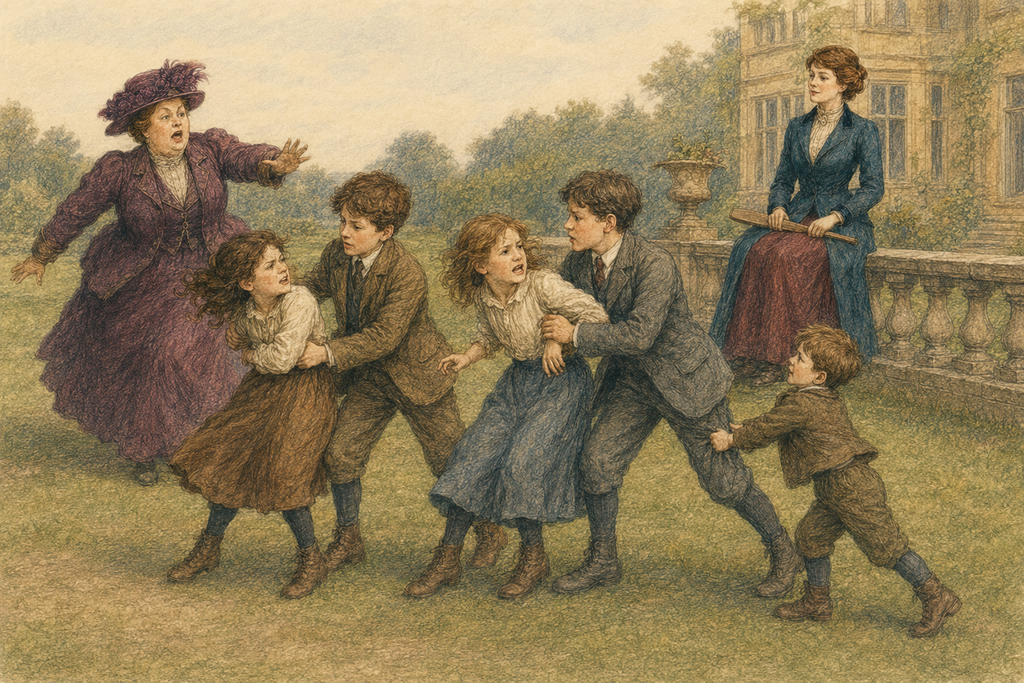
At that moment, loud and angry screams came from the lawn. Mrs Quabarl hurried outside, fearing that the threatened punishment was already being carried out.
Instead, she saw Claude and Wilfrid dragging and pushing the lodge-keeper’s two young daughters towards the house. The boys were breathless and untidy. Their task was made harder by the captured girls’ small brother, who attacked their legs with more determination than effect.
Lady Carlotta sat casually on the stone terrace, the fives bat resting in her hand. She watched the scene with the cold fairness of a goddess presiding over a battle.
The two girls repeatedly shouted that they would tell their mother. Fortunately for the lesson, the lodge-keeper’s wife was hard of hearing and busy with her washing.
Mrs Quabarl glanced nervously towards the lodge. The children’s mother was known to possess a powerful temper. Then she rushed forward to free the struggling captives.
‘Wilfrid! Claude! Let those children go at once. Miss Hope, what on earth does this mean?’
‘Early Roman history,’ Lady Carlotta replied. ‘The Sabine Women, you know.’
Mrs Quabarl did not appear to find the explanation sufficient.
‘The Schartz-Metterklume Method helps children understand history by acting it themselves,’ Lady Carlotta continued. ‘It fixes events in their memories. They experience the uncertainty, effort, and resistance that ordinary textbooks leave out. Of course, if your interference causes the boys to believe for the rest of their lives that the Sabine women escaped, I cannot accept responsibility for their historical error.’
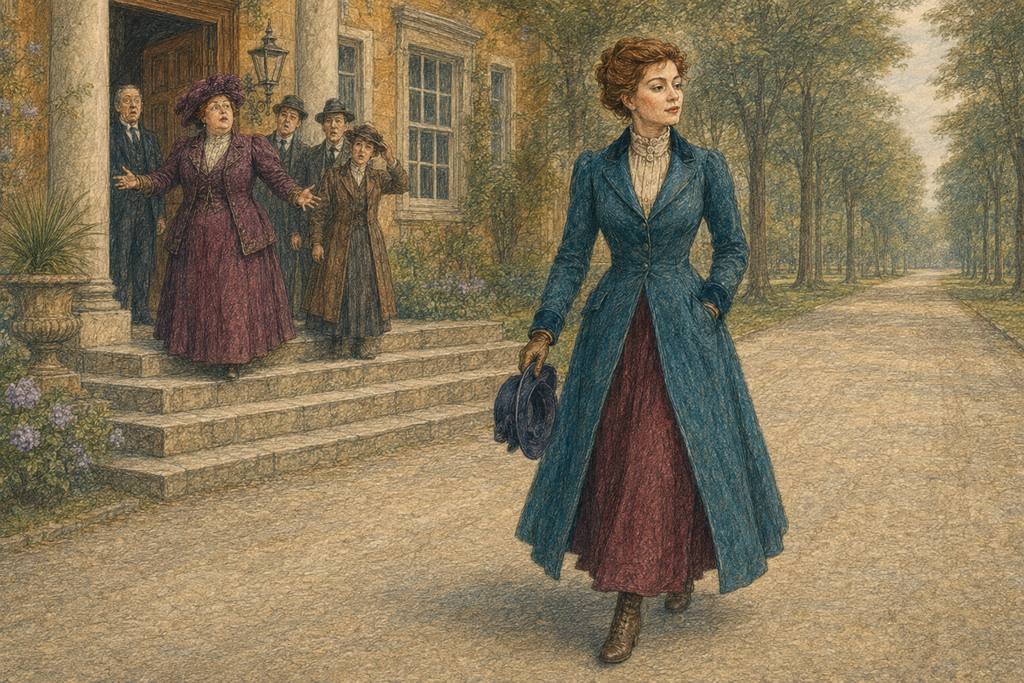
‘You may be clever and modern, Miss Hope,’ Mrs Quabarl said firmly, ‘but I want you to leave on the next train. Your luggage will be sent after you as soon as it arrives.’
Lady Carlotta considered this arrangement. ‘I am not certain where I shall be during the next few days. You had better keep my luggage until I send my address. There are only two trunks, some golf clubs, and a leopard cub.’
‘A leopard cub!’ Mrs Quabarl gasped. Even while leaving, this extraordinary governess seemed determined to create further trouble.
‘It is not much of a cub now,’ Lady Carlotta explained. ‘It is more than half-grown. A chicken every day and a rabbit on Sundays is its usual diet. Raw beef makes it too excitable.’
Mrs Quabarl stared at her, unable to decide which part of this information was most alarming.
‘Please do not trouble to bring the car,’ Lady Carlotta added. ‘I think I would prefer a walk.’
With that, she walked briskly out of the Quabarls’ world.
The real Miss Hope arrived later. She had made a mistake about the date on which she was expected. Her appearance produced more excitement than that quiet woman had probably caused in the whole of her respectable life.
The Quabarls now understood that they had been thoroughly deceived. Even so, the discovery brought a certain amount of relief. The mysterious Canon Teep, the Russian conversation, the experimental history lesson, and the half-grown leopard no longer belonged to their future. The remaining difficulty was to explain how an unknown traveller had entered their home, eaten their dinner, directed their children, and departed without ever being properly questioned.
Lady Carlotta eventually reached the house where she had originally intended to stay. Her hostess greeted her with sympathy.
‘How tiresome for you, dear Carlotta,’ the woman said. ‘Losing your train and having to spend the night in a strange place must have been extremely tiresome.’
‘Oh no,’ said Lady Carlotta. ‘Not at all tiresome—for me.’
— END —
シャルツ=メッテルクルーメ方式|本文和訳Saki (Hector Hugh Munro, 1870–1916)
Lady Carlottaは、小さな田舎駅のホームへ降りると、端から端までゆっくり歩いた。
列車は何の説明もなく停車しており、再び動き出す気になるまで、時間をつぶす方法が必要だった。
見るべき物はほとんどない。
静かな切符売り場、ありふれた広告が数枚、そして線路の柵の向こうへ広がる畑だけだった。
駅の柵の向こうの道路では、疲れた馬が、あまりにも重い荷を引こうともがいていた。
御者は、生活を支えてくれるその動物へ、怒りのすべてをぶつけているように見えた。
Lady Carlottaはすぐにホームを離れた。
道路へ渡り、実に効果的に介入したため、争いの様子はほどなく一変した。長く議論することも、助けが必要か尋ねることもなかった。
その態度は、馬の苦痛がすでに自分の問題になったと告げていた。
友人の何人かは、困っている動物を助けることなど彼女の仕事ではないと、たびたび忠告していた。
Lady Carlottaがその助言に従ったのは、ただ1度だけである。
そのときは、不干渉の原則を最も強く唱えていた女性の1人が、怒ったイノシシに追われ、小さくて居心地の悪いサンザシの木の上に3時間近く閉じ込められていた。
Lady Carlottaは柵の反対側にとどまり、落ち着いて水彩画を描き終えた。
イノシシと、その獲物の間へ割って入ることを拒んだのである。
女性はやがて救出されたが、友情の方は助からなかった。
今回は、Lady Carlottaが失ったのは列車だけだった。
旅の大半ではまったく急ぐ様子を見せなかった列車が、突然、彼女を残して走り去ったのである。
彼女は、その置き去りを気にも留めなかった。友人や親族は、彼女の荷物が本人より先に、本人より後に、あるいは本人抜きで到着することに慣れていた。
彼女は、本来向かうはずだった家へ曖昧な電報を送り、別の列車で行くと伝えた。時刻も役に立つ説明もなかったが、訪問先の人々は、こうした連絡を読み解くことに慣れていた。
次に何をするか決める前に、立派な身なりの女性が近づき、服装から顔立ちまで遠慮なく観察した。
「あなたが、迎えに来た家庭教師のMiss Hopeね」と、その女性は、ほとんど反論を許さない口調で言い切った。
「よろしい」とLady Carlottaは考えた。
「どうしてもMiss Hopeでなければならないのなら、Miss Hopeになりましょう」
彼女の表情は、危険なほど従順になった。その誤解は、Lady Carlottaがめったに断らない種類の、思いがけない娯楽を差し出していた。
「私はMrs Quabarlです」と女性は続けた。
「それで、荷物はどこなのかしら」
「行方不明になりました」と、にわか仕立ての家庭教師は答えた。
そこにいない人や物には、安全に責任を負わせられるという便利な人生の原則に従ったのである。
実際の荷物は完璧に振る舞い、正しい目的地へ向かっていた。
「たった今、その件で電報を打ちました」と付け加えたが、こちらは少しだけ真実に近かった。
Mrs Quabarlは鉄道会社の不注意を責め、今夜必要な物はメイドから借りられると言った。
そしてLady Carlottaを、新しく購入した大きな自動車へ案内した。
Quabarl家までの車中で、Mrs Quabarlは、思いがけずLady Carlottaが受け持つことになった4人の子どもについて説明した。
ClaudeとWilfridは繊細で傷つきやすい。
Ireneには芸術的な気質が強く備わっている。
Violaにも、裕福な家庭の子どもには同じようによく見られる、別の流行めいた資質があるという。
どの説明も、子ども本人を伝えるより、母親が現代的な児童理解を持っていることを示すためのようだった。
Mrs Quabarlは、4人を専門家が特別な性質を発見した珍しい品物のように語った。
Lady Carlottaは、高価だが扱いにくい動物の一団について説明を受ける人のような真剣さで聞いていた。
質問はしなかった。
その沈黙に励まされてMrs Quabarlは話し続け、新しい指示が加わるたび、この家庭の自己評価の高さがさらに明らかになった。
「ただ教えるだけでは困ります」とMrs Quabarlは言った。
「学ぶ内容に興味を持たせてほしいのです。たとえば歴史なら、本当に生きていた男女に出会っているのだと感じさせなければいけません。名前と年代の山を、ただ暗記させるのではありません」
Lady Carlottaは、特に感動した様子もなく同意した。
「それから当然」とMrs Quabarlは続けた。
「週に何日かは、食事中にフランス語を話してもらいます」
「週4日はフランス語、残りの3日はロシア語を話しましょう」とLady Carlottaは答えた。
Mrs Quabarlは彼女を見つめた。
「ロシア語ですって? Miss Hope、わが家にはロシア語を話せる人も、理解できる人もいませんよ」
「私には、まったく不都合ありません」とLady Carlottaは冷静に言った。
その返事は、正面から拒否されるよりMrs Quabarlを動揺させた。
彼女は、誰からも本気で抵抗されない間だけ、威厳と自信に満ちて見える種類の人だった。
予想外の反論をほんの少し受けただけで、不安げになり、謝るような態度になってしまう。
従順な相手なら簡単に扱えた。
ところが、指示を受け入れたうえで、静かに意味を変えてしまう人物には、どう対処すればよいか分からなかった。
新しい家庭教師が高価な自動車に感心しなかったため、彼女の自信はさらに揺らいだ。
Lady Carlottaは、もっと新しい2つの車種の利点を何気なく話した。
その知識ぶりからすると、Quabarl夫妻が誇りにしている買い物は、すでに残念な選択だったらしい。
屋敷へ着くころには、Mrs Quabarlは自分の使用人を、何をするか分からない客に向けるような慎重な敬意をもって扱い始めていた。
その夜の夕食には、Mr Quabarlも加わった。
彼は普段、妻の意見を繰り返し、あたかも賛同者がいるような安心感を与えていた。
しかし彼の応援があっても、Mrs Quabarlは車内で失った権威を少しも取り戻せなかった。
Lady Carlottaは、認められようとする使用人らしくも、もてなしに感謝する客らしくも振る舞わなかった。
夫妻は、どんな口調で接すればよいか決められなかった。
家庭教師はワインを受け取り、落ち着いた自信をもって語った。
これまでの家庭教師は、ワインの話題では、水の方が好きですと丁重に述べる程度だった。
ところが今回は、年代ごとの味を比較し、信頼できるワイン商まで推薦した。夫妻には、反論できるほどの知識がなかった。
Mrs Quabarlは話題を変えた。
「Canon Teepから、とても満足のいく推薦状をいただきました」と言った。
「きっと立派な方なのでしょうね」
Lady CarlottaはCanon Teepについて何一つ知らなかったが、それで返答に困ることはなかった。
平然と、とんでもない私生活をでっち上げ、そうした危険な習慣を除けば、とても感じのよい人物だと付け加えた。
「まあ、Miss Hope!」とQuabarl夫妻は同時に叫んだ。
大げさに言っているのだろう、と期待した。
Lady Carlottaは、さらにあり得ない細部を加え、公平で思いやりのある判断であるかのように話を広げた。
夫妻はますます居心地が悪くなった。
立派な推薦状は欲しかったが、新しい家庭教師が、推薦者について興味深い事情を知っているとは予想していなかったのである。
冗談なのか確信できないからこそ、気まずさは増した。
彼女は、目撃者が小さな誤解を訂正するような口調で、すべての作り話を語った。
「この話は、また別の機会にしましょう」とMrs Quabarlは急いで言った。
「2度と話題にしません」とLady Carlottaは、きっぱり約束した。
Mr Quabarlは、翌朝どの授業から始めるつもりか尋ね、会話を救った。
「歴史です」と彼女は答えた。
Mr Quabarlは賢そうにうなずいた。
「歴史を教えるときは、子どもが興味を持つよう注意しなければなりません。本当に生きていた男女の人生を紹介されているのだと感じさせ——」
「それはもう、私が説明しました」と妻が遮った。
「私はSchartz-Metterklume Methodで歴史を教えます」とLady Carlottaは誇らしげに宣言した。
「ああ、なるほど」と夫妻は言った。2人とも聞いたことはなかったが、その名前を知っているふりをする方が安全だと判断したのである。
外国語風の名称は最新の教育理論らしく響き、流行に遅れていると思われたくなかった。
その知ったかぶりが、Lady Carlottaに必要な許可をすべて与えた。
翌朝、Mrs Quabarlは、階段の上で不満そうに座るIreneを見つけた。
その後ろでは、Violaが窓辺の腰掛けに乗り、大きなオオカミの毛皮をかぶって、居心地悪そうにしていた。
「あなたたち、ここで何をしているの?」とMrs Quabarlは問いただした。
「歴史の授業です」とIreneは答えた。
「私はローマの役。Violaは雌オオカミです。本物のオオカミではなく、ローマ人が大切にしていた種類のものです。どうしてかは忘れました」
「それで、ClaudeとWilfridはどこ?」
「みすぼらしい服の女の人たちを連れてきに行きました」
Mrs Quabarlは、驚いてその言葉を繰り返した。
Ireneの説明では、少年たちは参加したがらなかった。
そこでMiss Hopeは父親のファイブズ用バットを手に取り、従わなければ学校式の正式な罰を与えると脅した。
実際に殴られた者はいなかったが、その可能性のおかげで、少年たちは急に歴史的行動へ興味を持った。
少なくとも、Mrs Quabarlの望みの1つは達成された。
子どもたちはもはや、過去を名前と年代の退屈な一覧として扱ってはいなかった。
そのとき、芝生の方から大きな怒鳴り声と悲鳴が聞こえた。
Mrs Quabarlは、脅されていた罰がすでに行われているのではないかと恐れ、外へ急いだ。
しかし目に入ったのは、門番の2人の幼い娘を、屋敷へ向かって引っ張ったり押したりするClaudeとWilfridだった。
少年たちは息を切らし、服も髪も乱れていた。
捕まった少女たちの弟が、効果は乏しいものの強い決意で少年たちの脚へ攻撃したため、仕事はいっそう難しくなっていた。
Lady Carlottaは石造りのテラスへ気楽に腰かけ、手にはファイブズ用バットを置いていた。
戦いを見守る女神のように、冷たく公平な態度で場面を眺めていた。
2人の少女は、母親に言いつけると何度も叫んだ。
授業にとって幸いなことに、門番の妻は耳が遠く、洗濯に夢中だった。
Mrs Quabarlは、不安そうに門番小屋の方を見た。
子どもたちの母親は、非常に激しい気性の持ち主として知られていた。
それから、もみ合う捕虜たちを解放しようと駆け寄った。
「Wilfrid! Claude! 今すぐその子たちを放しなさい。Miss Hope、これはいったいどういうことです?」
「古代ローマ史です」とLady Carlottaは答えた。「サビニの女たちですよ」
Mrs Quabarlには、その説明だけでは十分と思えなかったらしい。
「Schartz-Metterklume Methodでは、子どもたち自身が歴史を演じることで理解させます」とLady Carlottaは続けた。
「そうすれば出来事が記憶に残ります。普通の教科書が省いてしまう不安や努力、抵抗を、自分で経験するのです。もちろん、あなたが邪魔をしたせいで、少年たちが一生、サビニの女たちは逃げ切ったと思い込んだとしても、私にはその歴史的誤解の責任は負えません」
「あなたは賢くて現代的なのかもしれません、Miss Hope」とMrs Quabarlは断固として言った。
「けれども、次の列車で出ていってください。荷物は到着し次第、後から送ります」
Lady Carlottaは、その手配について考えた。
「この数日、どこにいるかはっきりしません。住所を知らせるまで、荷物を預かっておく方がよいでしょう。トランクが2つ、ゴルフクラブ、それにヒョウの子が1頭だけです」
「ヒョウの子!」とMrs Quabarlは息をのんだ。
去ろうとしている間でさえ、この並外れた家庭教師は、さらに問題を残そうとしているようだった。
「もう、あまり子どもとは言えません」とLady Carlottaは説明した。
「半分以上は成長しています。普段の餌は、毎日ニワトリ1羽、日曜日はウサギ1羽です。生の牛肉を与えると興奮しすぎます」
Mrs Quabarlは、この情報のどの部分が最も恐ろしいのか決められず、彼女を見つめた。
「車を出す必要はありません」とLady Carlottaは付け加えた。
「歩きたい気分です」
そう言うと、彼女はQuabarl家の世界から、大股で立ち去った。
本物のMiss Hopeは、あとになって到着した。
来るべき日付を間違えていたのである。
その登場は、この静かな女性が、きちんとした人生の中で起こしたどんな出来事よりも大きな騒ぎを生んだことだろう。
Quabarl夫妻は、自分たちが完全にだまされたと理解した。
それでも、その事実にはある程度の安堵もあった。
謎めいたCanon Teep、ロシア語の会話、実験的な歴史授業、半分成長したヒョウは、もう彼らの未来の一部ではなかった。
残った問題は、見知らぬ旅行者を家へ入れ、夕食を与え、子どもたちを任せ、一度もまともに質問しないまま立ち去らせた経緯を、どう説明するかだけだった。
Lady Carlottaは、やがて本来泊まるはずだった家へ到着した。女主人は同情を込めて迎えた。
「大変だったでしょう、Carlotta」と女性は言った。
「列車に乗り遅れて、知らない場所で一晩過ごさなければならないなんて、ひどく退屈だったでしょうね」
「いいえ」とLady Carlottaは答えた。
「少しも退屈ではなかったわ——少なくとも、私には」
— おわり —
この作品について
存在しない教育法と、知っているふり
題名のSchartz-Metterklume Methodは、Lady Carlottaがその場で作った、もっともらしい名称です。
ドイツ語風の響きは、当時の新しい教育理論や学術的方法を思わせます。
Quabarl夫妻は名前を聞いたことがありませんが、無知と思われたくないため「ああ、なるほど」と受け入れます。
ここで笑われているのは、新しい方法そのものではなく、内容を確かめず、権威のありそうな名称に安心する態度です。
Mrs Quabarlが求めたのは、名前と年代の暗記ではない「生きた歴史」でした
。Lady Carlottaは、その理想を文字どおり実現します。ローマ建国伝説の雌オオカミと、「サビニの女たちの略奪」を子どもに演じさせるのです。
授業は明らかに行き過ぎていますが、母親自身の抽象的な教育論から生まれたものでもあります。
Sakiは、立派な言葉が現実に移された瞬間の危うさを、混乱した庭の光景へ変えています。
Lady Carlottaの反抗と物語の仕組み
Lady Carlottaは、単なるいたずら好きではありません。
冒頭で、虐待される馬を助けるために列車を逃します。これは、彼女が不正や弱い者への乱暴を見過ごせない人物であることを示します。
一方で、「干渉するな」と説教した友人がイノシシに追われたときには、その教えを皮肉なほど正確に守りました。
彼女の行動原理は、社会的な礼儀より、自分自身の公平感と面白さにあります。
Mrs Quabarlの最大の失敗は、人違いそのものより、相手を一方的に役割へ押し込んだことです。
質問も確認もせず、「あなたは家庭教師」と宣言します。Lady Carlottaは、その強引さを逆利用し、期待された役を過剰なほど演じます。
ロシア語の食事、ワインの知識、架空の醜聞、存在しない教育法。
どれも夫妻が、自分たちの方が上だという前提を崩す仕掛けです。
結末で、友人はLady Carlottaが見知らぬ場所で一夜を過ごし、さぞ退屈だっただろうと同情します。
彼女の答えは「私には退屈ではなかった」。
被害を受けた側にとっては災難でも、彼女にとっては停車時間を埋める見事な娯楽でした。
この短い最後の言葉によって、物語全体がLady Carlottaの視点から、計画されてはいなかったが十分に楽しんだ冒険として締めくくられます。
まとめ
「The Schartz-Metterklume Method」を読み終えると、最も強く残るのはLady Carlottaの落ち着きです。
彼女は自分から家庭教師だと名乗ってはいません。Mrs Quabarlが、服装と到着のタイミングだけでそう決めつけました。
Lady Carlottaは、その誤解を訂正しなかっただけです。
しかし、その小さな沈黙が、Quabarl家の権威や常識を次々と崩していきます。
物語に登場する大人たちは、正しそうな言葉を好みます。
子どもには「生きた歴史」を教えるべきだ。
新しい教育法を理解しているべきだ。
立派な推薦者を持つ家庭教師なら安心だ。
どれも表面上はもっともらしい考えです。
けれども、相手の身元も、教育法の中身も、自分の理想が現実にどう働くかも確かめていません。
Lady Carlottaは、その空白へ、ロシア語、架空の醜聞、古代ローマの実演を次々と流し込みます。
もちろん、彼女の授業は現代の教育として支持できるものではありません。
子どもを脅し、他の子どもを巻き込み、歴史上の暴力をそのまま演じさせます。
それでも、この大げさな混乱が見せる風刺は今も分かりやすいものです。
聞いたことのない言葉を、知っているふりで受け入れていないか。
肩書や服装だけで、人を理解したつもりになっていないか。
理想的な言葉を口にするだけで、実際の結果を想像し忘れていないか。
Lady Carlottaは、そうした問いに答えを与えません。
彼女はただ、他人が用意した役へ堂々と入り込み、十分に楽しんでから歩いて去ります。
最後の「少なくとも、私には退屈ではなかった」という一言は、彼女らしさを完璧に表しています。
退屈な偶然を物語へ変える力と、権威を深刻に受け取りすぎない視線。
Sakiの笑いは、その軽やかさの中に、思い込みへの鋭い警告を残しています。



 | British English | 2,058 words この小説は、パブリックドメインとなっている英語作品をもとに、原作の語り口を保持したまま、学習者向けの分か)