
CEFR B1(中級) | Canadian English | 1,211 words
はじめに
バケットリストというと、私たちはつい「これからしたいこと」を考えます。行ってみたい国、挑戦したい仕事、いつかかなえたい夢。未来へ目を向けることは、日々に新しい光を与えてくれます。一方で、リストへ願いを足すほど、「自分はまだ何も成し遂げていない」という気持ちが強くなることもあります。
今回のエッセイが取り上げるのは、未来ではなく過去へ向かって書く「逆向きのバケットリスト」です。ただし、華やかな経歴や大きな成功だけを数えるリストではありません。怖くても始めたこと、誰にも知られず続けたこと、大切な人を支えた時間、壊れかけた関係を修復したこと。そうした、履歴書や旅行写真には残りにくい経験も含めて、自分がすでに生きてきた人生を見直します。
前作「リストの向こうにある人生」が、これからの願いを自分の価値観に合わせるためのエッセイだったとすれば、今回は視線を反対へ向ける一編です。未来の夢を否定するのではなく、その夢を支えられるだけの経験が、自分の中にすでにあるかもしれないと気づくために。
読みながら、ぜひご自身にも尋ねてみてください。「私はこれまでに、何を生きてきただろう」と。思っていたよりも多くの答えが、静かに戻ってくるかもしれません。
The Reverse Bucket ListWhat Have You Already Lived?
The Lists That Begin with ‘Not Yet’

On the afternoon of my retirement party, my colleagues gave me a blue notebook. On the cover, someone had written, “For the next chapter.” I was sixty-four, newly retired from a public library, and surrounded by people who were certain that I was about to become wonderfully free.
“Now you can make a proper bucket list,” one friend said.
That evening, I sat at my kitchen table and began. See the northern lights. Take the train through the Rockies. Learn Italian. Write a book. Spend a month beside the Atlantic. The list looked cheerful, but I did not feel cheerful. I felt late.
Every line seemed to contain the same quiet confession: not yet. I had not yet travelled far enough, learned enough, created enough, or been brave enough. A list that was supposed to open the future had turned the past into an empty waiting room.
There was nothing wrong with the wishes themselves. I still wanted some of them. The problem was the direction in which I was looking. I was measuring my whole life by what remained undone.
So I turned to the next page and tried a different question. Instead of asking, “What do I want to do before I die?” I asked, “What have I already lived?”
Turning the Page Around

That question became my reverse bucket list. A traditional bucket list faces forward. A reverse bucket list faces backward and records experiences that have already shaped us. It is not meant to replace future dreams. It simply corrects the strange idea that an interesting life exists only in the future.
At first, I wrote the obvious things. I had earned my degree while working evenings. I had moved across two provinces without knowing anyone in the new city. I had travelled alone overseas. I had learned to canoe at fifty-two, after years of being afraid of deep water.
Then the list became quieter. I had stayed with my mother through her final winter. I had kept a Thursday supper with the same friend for fifteen years. I had admitted when I was wrong and repaired a relationship I thought I had lost. I had helped hundreds of children find the first book they truly loved. I had welcomed newcomers who entered the library with little English and watched some of them return years later with their own children.
None of those experiences would attract much attention online. Some were not enjoyable while they were happening. Caregiving was tiring. Starting again was frightening. Apologizing did not make me feel heroic. Yet each item contained evidence of a life: effort, attachment, courage, patience, or change.
If you make this kind of list, achievements are only one category. You might also ask: What have I survived? What did I learn later than expected? Whom have I supported? What have I continued doing when nobody was watching? When did I say yes despite fear? When did I finally say no? What ordinary pleasure have I returned to for years?
A reverse bucket list is not a collection of trophies. It is a private record of evidence that your life has been taking place, even during the years that did not feel remarkable.
The Difference Between a Résumé and a Life
Most public records of a life are selective. A résumé keeps the job but removes the sleepless nights. A photograph keeps the smiling holiday but removes the missed train and the argument in the rain. Even a funeral speech may polish a complicated person into a few admirable qualities.
The reverse list should do something different. It should notice what is easily forgotten without pretending that everything was beautiful.
Psychological research offers useful background here, although a reverse bucket list is not a clinical treatment. Studies of gratitude practices suggest that deliberately noticing benefits already present in life can support well-being for some people. Research on structured life review and reminiscence, especially among older adults, has also found promising links with life satisfaction and quality of life. Work on narrative identity adds another idea: people do not merely store memories; we connect selected experiences into an evolving story about who we are.
That story deserves honesty. A reverse bucket list should not be used to cover pain with forced gratitude. “I left a marriage that was hurting us both” may belong on the list, but it can still carry grief. “I cared for my father” may include love, resentment, exhaustion, and tenderness at the same time. “I survived that year” may be the most truthful sentence you can write.
Nor is memory a perfect camera. We forget, simplify, and reinterpret. The list is not a final verdict on the past. It is one way of looking again, with more attention than we usually give ourselves.
This matters because many of our most demanding acts disappear as soon as they become normal. We stop noticing the language we once struggled to speak, the home we slowly built, the work we learned, the boundaries we finally set, or the kindness we repeated until it looked ordinary. Familiarity can make a hard-won life appear effortless.
The reverse list puts some of that effort back into view.
Let the Past Give Evidence to the Future

After several weeks, I read my two lists side by side. The first was full of destinations. The second was full of relationships, books, beginnings, and returns. It showed me that the moments I valued most often involved helping someone feel less lost.
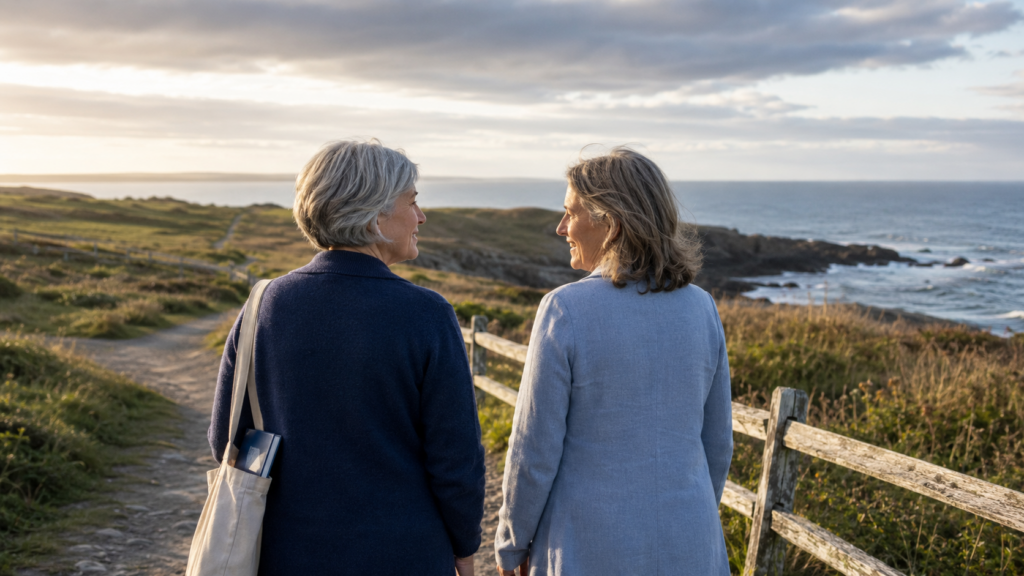
That pattern changed my future list. I did not cancel the train through the Rockies. I simply stopped asking it to prove that my life had been adventurous. I added a smaller project: record the stories behind my family’s recipes. I offered to help at a local reading program. I planned a slow coastal trip with my sister, not because the coast was famous, but because we had postponed time together for too long.
A reverse bucket list can give future dreams a foundation. It reminds us of abilities we have already used. If you have begun again once, you may be able to begin again. If you have built one friendship through steady attention, you know something about building another. If you have endured a difficult season, you do not need to call it a gift, but you may recognize the strength it required.
The exercise can also reveal imbalance. Perhaps the list contains years of caring for everyone except yourself. Perhaps it is full of work but has almost no play. Perhaps you have collected experiences but rarely allowed anyone to know you deeply. The past does not issue orders, but it can offer information.
I still keep the blue notebook. The forward list is shorter now, and the reverse list continues to grow. Sometimes I add a large event. More often I add a sentence that would mean little to anyone else: I learned the name of the neighbour’s shy dog. I asked for help before the problem became a crisis. I made soup from my mother’s recipe and finally got it right.
A life does not become valuable only when it becomes impressive. Before asking what remains, it may be worth asking what has already been given, received, endured, repaired, and loved.
You may discover that you are not standing at the beginning of a meaningful life. You are standing inside one.
逆向きのバケットリスト|本文和訳あなたはすでに何を生きてきたか
「まだ」を並べるリスト
退職祝いの日の午後、同僚たちが青いノートを贈ってくれました。
表紙には、誰かの字で「人生の次の章へ」と書かれていました。私は64歳。
長く勤めた公共図書館を退職したばかりで、周りの人たちは皆、私の前にすばらしく自由な時間が始まると思っていました。
「これで、ちゃんとしたバケットリストを作れるね」
友人の一人が言いました。
その晩、私はキッチンのテーブルでノートを開きました。
オーロラを見る。
ロッキー山脈を列車で旅する。
イタリア語を習う。
本を書く。
大西洋のそばでひと月暮らす。
楽しそうな願いが並んだのに、不思議なことに心は弾みませんでした。
むしろ、何もかも手遅れになりかけているような気がしたのです。
どの一行にも、「まだできていない」という小さな告白が隠れているようでした。
私はまだ、十分に旅をしていない。
学んでいない。
何かを生み出していない。
勇気を出していない。
未来を広げるはずのリストを作っただけなのに、それまでの人生が、何も起こらなかった待合室のように見えてきました。
書いた願いが悪かったわけではありません。
今でも、いくつかは実現したいと思っています。
問題は、私が見ていた方向でした。
人生全体を、「まだ残っていること」だけで測ろうとしていたのです。
そこで次のページを開き、問いを変えてみました。
「死ぬまでに何をしたいか」ではなく、「私はこれまでに、何を生きてきただろう」と。
ページを反対側からめくる
その問いから生まれたのが、「逆向きのバケットリスト」でした。
普通のバケットリストは未来へ向かいます。
逆向きのリストは過去へ目を向け、すでに自分を形づくってきた経験を書き留めます。
未来の夢を捨てるためのものではありません。
「面白い人生は、これから先にしかない」という妙な思い込みを直すためのリストです。
最初は、分かりやすい出来事を書きました。
夜に働きながら大学を卒業したこと。
知り合いのいない町へ、二つの州を越えて引っ越したこと。
一人で海外を旅したこと。
深い水が怖かったのに、52歳でカヌーを覚えたこと。
そのうち、リストはもっと静かなものになりました。
母の最後の冬に、そばにいられたこと。
15年間、同じ友人と木曜日の夕食を続けたこと。
自分の間違いを認め、もう失ったと思っていた関係を修復したこと。
何百人もの子どもたちが「初めて心から好きになれる本」と出会う手助けをしたこと。
英語に不慣れなまま図書館へ来た人たちを迎え、その何年か後、今度は自分の子どもを連れて戻ってくる姿を見たこと。
どれも、SNSで大きな注目を集めるような話ではありません。
経験している最中は、楽しくなかったものもあります。
介護は疲れます。
やり直すのは怖いことです。
謝ったからといって、英雄になった気分にはなれません。
それでも一つひとつの項目には、努力、愛着、勇気、忍耐、変化といった、「確かに人生を生きた証拠」が含まれていました。
このリストには、成功以外のものも書いてかまいません。
何を乗り越えてきただろう。
人より遅くても、何を身につけただろう。
誰を支えてきただろう。
誰も見ていないところで、何を続けてきただろう。
怖くても「やってみよう」と言えたのはいつだろう。
ようやく「もうやめます」と言えたのはいつだろう。
何年も繰り返し楽しんできた、ごく普通のことは何だろう。
逆向きのバケットリストは、トロフィーを並べる棚ではありません。
目立たなかった年月にも、自分の人生がきちんと進んでいたことを確かめる、私的な記録なのです。
履歴書に書ける人生、書けない人生
人の一生を公に記録するものは、たいてい一部分だけを切り取っています。
履歴書には職歴が残りますが、眠れなかった夜は書かれません。
旅行写真には笑顔が残りますが、列車に乗り遅れたことや、雨の中で口論したことは写りません。
葬儀で読まれる言葉でさえ、複雑だった一人の人間を、いくつかの立派な性質に整えてしまうことがあります。
逆向きのリストが目指すのは、それとは違う見方です。
忘れられやすいものに気づきながら、「すべてが美しかった」と塗り替えないことです。
この考え方の背景には、いくつかの心理学研究があります。
ただし、逆向きのバケットリストそのものが心理療法だという意味ではありません。
感謝に関する研究では、すでに人生にある恵みへ意識を向けることが、人によっては幸福感を支える可能性が示されています。
また、特に高齢者を対象に、過去を体系的に振り返るライフレビューや回想法を調べた研究では、人生満足度や生活の質との前向きな関係が報告されています。
ナラティブ・アイデンティティの研究には、私たちは記憶を保管するだけでなく、選んだ経験を結び、自分が何者であるかという物語を少しずつ作り続けている、という考え方があります。
だからこそ、その物語には正直さが必要です。
逆向きのリストを使って、痛みを無理な感謝で覆い隠す必要はありません。
「お互いを傷つけていた結婚生活を終えた」はリストに入れてよい出来事ですが、そこには悲しみも残ります。
「父を介護した」という一行には、愛情だけでなく、苛立ちや疲労、そして優しさが同時に含まれているかもしれません。
「あの一年を生き延びた」。
それが今書ける、最も正直な言葉である場合もあります。
記憶は、正確に保存されるカメラでもありません。
私たちは忘れ、単純化し、そのときどきの自分から過去を解釈し直します。
このリストは人生への最終判決ではなく、普段より少し丁寧に、もう一度自分の人生を眺める方法にすぎません。
それでも振り返ることには意味があります。
難しかったことほど、日常になった途端に見えなくなるからです。
かつて苦労して覚えた言葉、少しずつ築いた家、身につけた仕事、ようやく引けるようになった境界線。
何度も繰り返したために、ごく普通に見えるようになった親切。
慣れてしまうと、努力して手に入れた人生まで、最初から簡単だったように感じられます。
逆向きのリストは、そこに費やしたものを、もう一度見える場所へ戻してくれます。
過去を、未来の証拠にする
何週間かたってから、私は二つのリストを並べて読みました。
最初のリストには、行きたい場所がたくさん書かれていました。
二つ目のリストに多かったのは、人との関係、本、新しい始まり、そして戻っていった場所でした。
私が本当に大切にしてきたのは、誰かが「自分は迷子ではない」と思えるように手助けした時間だったのです。
その傾向に気づくと、未来のリストも変わりました。
ロッキー山脈を走る列車の旅を、削除したわけではありません。
ただ、その旅に「私の人生が冒険に満ちていたと証明する役目」を負わせるのをやめました。
代わりに、家族の料理にまつわる思い出を記録するという、小さな計画を加えました。
地域の読書活動を手伝うことにしました。
有名な海岸だからではなく、長いあいだ先延ばしにしてきた姉妹の時間を取り戻すために、妹とのゆっくりした海辺の旅を計画しました。
逆向きのバケットリストは、これからの夢に土台を与えてくれます。
自分がすでに使ってきた力を、思い出させてくれるからです。
一度やり直せたのなら、もう一度始められるかもしれません。
時間をかけて一つの友情を育てたのなら、新しい関係を育てる方法も少し知っています。
苦しい季節を越えた経験を、無理に「よい経験だった」と呼ぶ必要はありません。
それでも、そこを通り抜けるために力が必要だったことは認められます。
リストから、人生の偏りが見える場合もあります。
自分以外の人の世話ばかりしてきたのかもしれません。
仕事の項目ばかりで、遊びがほとんどないのかもしれません。
多くの経験を集めながら、心の奥を誰にも見せてこなかったのかもしれません。
過去が命令を出すわけではありません。
ただ、これからを選ぶための情報を渡してくれるのです。
私は今も、あの青いノートを使っています。
未来のリストは以前より短くなり、逆向きのリストは少しずつ長くなっています。
大きな出来事を加える日もあります。
でも多くは、ほかの人にとって何の意味もないような一文です。
近所の人が飼っている、臆病な犬の名前を覚えた。問題が大きくなる前に助けを求めた。
母のレシピでスープを作り、ようやく同じ味になった。
人生は、人に感心してもらえるものになったとき、初めて価値を持つわけではありません。
残されたことを数える前に、すでに与えたもの、受け取ったもの、耐えたこと、修復したもの、愛したものを数えてみてもよいのです。
意味のある人生は、これから始まるのではないのかもしれません。
気づいていなかっただけで、私たちはもう、その人生の中に立っています。
おわりに
エッセイを読み終えて、最初にどんな出来事が浮かんだでしょうか。
大きな成功や特別な旅行でなくてもかまいません。
つらい時期を越えたこと、誰かの話を何度も聞いたこと、苦手だったことを少しずつ覚えたこと。
あるいは、もう続けられないと思った日に、それでも翌朝起きたこと。
それらもすべて、自分が確かに生きてきた時間です。
逆向きのバケットリストのよいところは、人生を無理に美談へ変えなくてもよい点にあると思います。
過去の痛みを「よい経験だった」と言い換える必要はありません。
失ったものには悲しみが残り、誰かを支えた時間には疲れや後悔も含まれます。
それでも、その中で自分が何を選び、何を耐え、何を守ろうとしたのかを見つめることはできます。
もしリストを作るなら、一度に立派な項目をたくさん書こうとせず、まず三つだけでもよいかもしれません。
「始めたこと」「続けたこと」「やめる勇気を持てたこと」。
そこから、人との出会いや、戻っていった場所、何度も繰り返した小さな喜びへ広げてみてください。
未来の夢は、何もない場所から始まるわけではありません。
すでに歩いてきた道の上に生まれます。
次の願いを考える前に、ときには後ろを振り返り、「ここまで生きてきた自分」を静かに迎えに行く。
そんな時間があってもよいのではないでしょうか。



 | Canadian English | 1,211 words はじめに バケットリストというと、私たちはつい「これからしたいこと」を考えます。行ってみたい国、挑戦し)